
Capuchin Monkey
Sapajus apellaC tier · Capable124th of 163 mammals
Size & speed

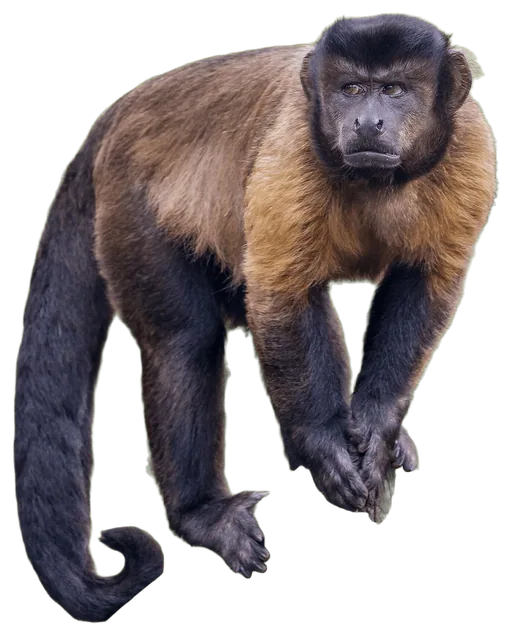
- Weight
- 4 kg9 lb
- Length
- 45 cm17.7 in
About as heavy as a house cat
Heavier than 34% of animalsAbout 1.5 rulers long
Bigger than 21% of animalsThe tufted capuchin is a small but exceptionally versatile South American primate. A mature male weighs around 4 kg and relies on quick arboreal movement, grasping hands, a stabilizing tail, biting and unusually flexible problem solving. Its natural weapons are modest on the full ABS scale, but experiments demonstrate sophisticated memory and functional tool selection. In trees or around manipulable objects it can outmaneuver and outthink many similarly sized opponents; against a much larger predator, however, intelligence cannot compensate for the enormous gap in mass, armor and stopping power.
Detailed ratings
Research-backed ratings on one 0–100 scale for all 344 animals (updated 2026-09-27). How ratings work


Card No. 224 of 344. Every animal on Animal Battle Stats has one: its power, tier and archetype on the front; its six battle stats, abilities and signature move on the back.
Special abilities
Experimental Cebus apella subjects can remember a task, select an appropriate tool while the apparatus is out of view, transport it back and use it. In a matchup with suitable loose objects, this can expand reach and striking options.
Grasping hands and feet, tail-assisted balance and arboreal quadrupedal control allow rapid changes of support, angle and elevation that are difficult for terrestrial opponents to follow.
Unique traits
Hands, behavioral flexibility and an omnivorous foraging strategy let the animal manipulate many food types and physical problems rather than relying on one specialized feeding method.
Male morphology and body condition can vary with social status and female access, showing a meaningful link between social competition and adult male phenotype.
How it fights
Weapons
- The primary built-in weapons are the jaws and canines, backed by strong forelimbs and grasping hands. A capuchin can bite, grab, pull, scratch with nails, wrestle and use rapid positional changes. At roughly 4 kg, however, absolute damage remains far below medium carnivores, great apes and large ungulates.
Struggles vs
- Only about 4 kg in the canonical specimen
- No armor or thick protective tissue
- Bite is dangerous locally but not a high-force roster weapon
- Hands are versatile but not clawed raptor/carnivore weapons
- Vulnerable to one decisive bite, crush or talon strike from much larger opponents
- Weight
- 4 kg9 lb
- Height
- No reliable measurement
- Length
- 45 cm17.7 in
- Top speed
- No reliable measurement
- Bite force
- No reliable measurement
- Lifespan
- 32 years
- Home biome
- Jungle
- Lifestyle
- Social
Rated specimen: Healthy mature adult male, 4.0 kg, 45.0 cm head-body length, plus roughly 47.0 cm tail.
Fun facts
- Controlled brown-capuchin experiments showed subjects could remember which tool was needed after walking 8 m away from the apparatus and losing visual contact with it.
- Captive tufted capuchins have learned tool-food-hindrance problems and generalized solutions to new versions.
- Historical Cebus apella experiments documented hammer use to open nuts as early as 1990.
- Other robust capuchins can routinely handle stones exceeding 1 kg, an extraordinary proportional load, but ABS does not convert that proportional feat into great-ape-level raw power.
- Male appearance and body size can change with dominance context and access to females.
- A 44-month field diet study documented consumption of 71 plant species in one semideciduous-forest population.
Closest rivals by power. Tap one for the full breakdown, or pick any opponent.
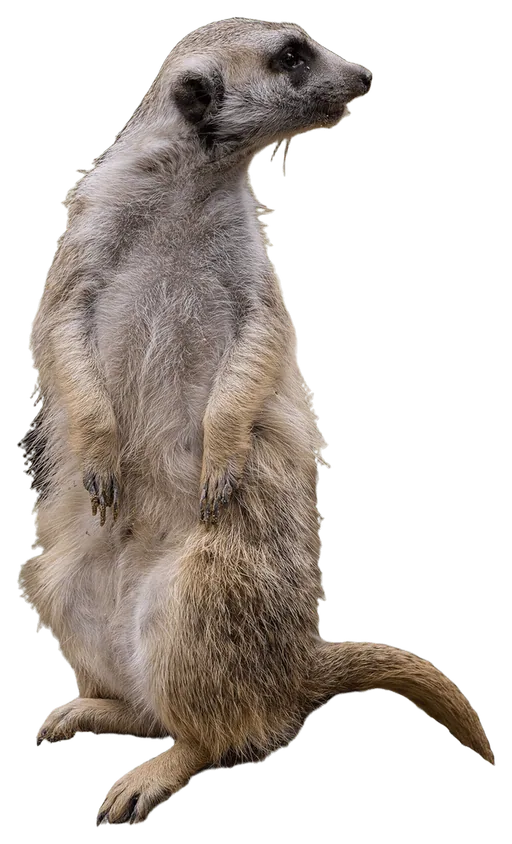
vs QuollWins · 51% · Toss-up 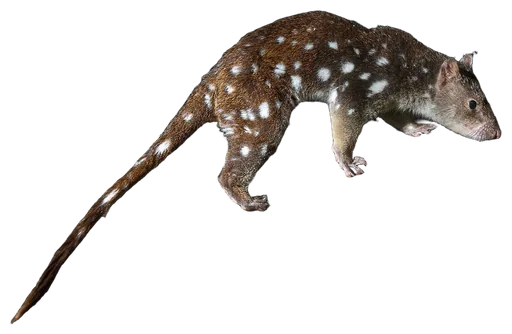 W vs MeerkatWins · 59% · Slight edge
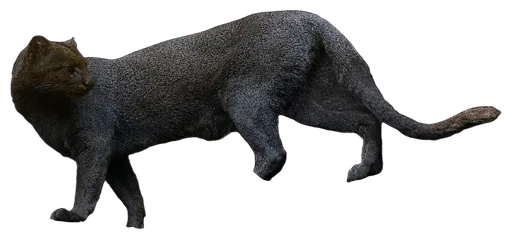
 W vs JaguarundiLoses · 54% · Toss-up
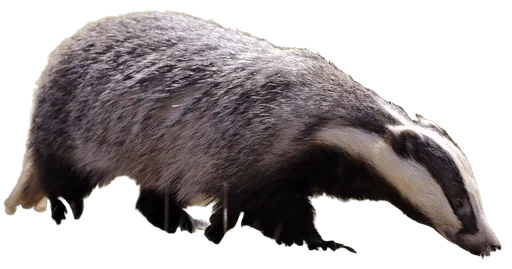
 L vs BadgerLoses · 56% · Toss-up
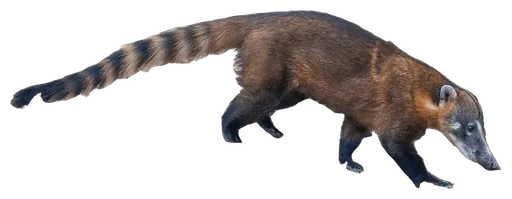
 L vs South American CoatiLoses · 53% · Toss-up
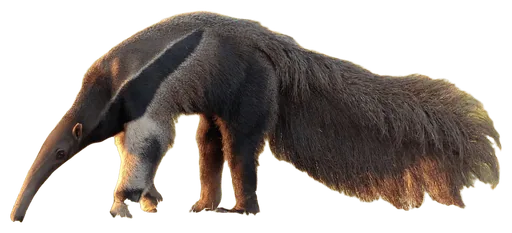
 L vs AnteaterLoses · 62% · Slight edge
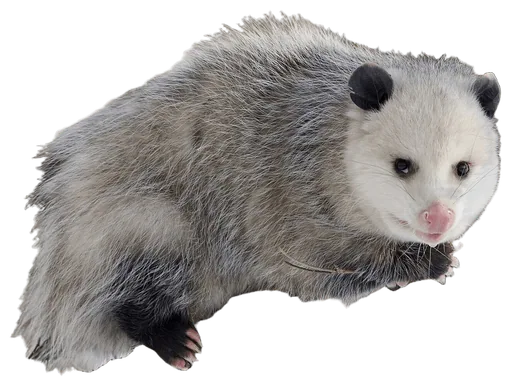
 L vs OpossumWins · 51% · Toss-up
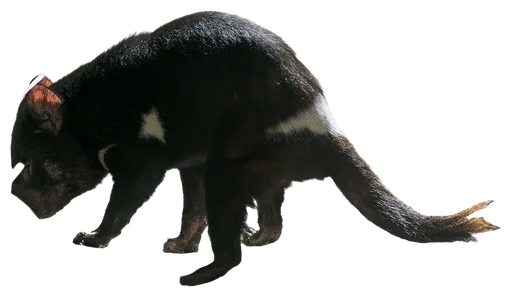
 W vs Tasmanian DevilLoses · 56% · Toss-up
 L
Capuchin Monkey battle analysis
A capuchin does not win by standing still and trading force. Its body is designed for a world of branches, handholds and problems that can be manipulated. Four grasping extremities and a supportive tail let it shift position while keeping multiple contact points, and a curious, flexible brain continually evaluates food, objects, competitors and routes. That combination produces a fighter whose strongest advantages are control and decision-making rather than damage output.
The distinction matters on ABS's absolute scale. A four-kilogram monkey cannot be treated like a miniature ape simply because it can move stones or solve tool tasks. Its jaws can puncture small targets and its hands can wrestle or strike, but it has little passive protection. A wolf-sized predator that secures a bite has crossed the capuchin's main defensive barrier, which is not hide or armor but avoidance.
Its intelligence is much less ambiguous. Brown capuchins have solved multi-part physical tasks, remembered the function of unseen apparatuses, selected suitable tools and transported them for later use. This makes the animal unusually capable of exploiting a complex arena. Still, tool use remains conditional. ABS should not spawn a hammer into its hand by default. The biologically grounded advantage is the capacity to recognize and use an available object, not a guaranteed external weapon.
Habitat & range
Sapajus apella occupies northern and central South America east of the Andes, particularly Amazonian and Guianan forest regions under modern taxonomic treatments. It uses tropical forest and other wooded habitats and is sufficiently behaviorally flexible to exploit disturbed or seasonally variable environments in parts of its range.
Diet & hunting
The species is a highly flexible omnivore. Long-term field research documents heavy fruit use plus seeds, flowers, vegetative matter and opportunistic crop feeding. Colombian Amazon work found arthropods and fruit dominating observations and showed diet shifting with resource availability. Hard-to-process foods reward strong jaws, manual dexterity and learned extraction techniques.
Social life
Brown capuchins live in multi-male, multi-female social groups with clear dominance relationships. Alpha males can receive disproportionate feeding access and grooming. Social bonds and hierarchy affect aggression, affiliation and resource access. This supports high tactical/social cognition but does not mean a lone ABS specimen receives group combat assistance.
Conservation
Mammal Diversity Database links the current S. apella IUCN assessment, and major zoological references list the species as Least Concern. A 2024 habitat-conversion analysis notes that its broad extent of occurrence has nevertheless experienced substantial conversion, especially to pasture. Least Concern should therefore not be interpreted as absence of regional habitat pressure or wildlife-trade risk.
Quick answers
How strong is a Capuchin Monkey?
On the Animal Battle Stats scale, the Capuchin Monkey has an attack rating of 23 and a power index of 45.6 out of 100, which ranks it #224 of 344 animals and puts it in C tier (Capable). Its strongest stat is intelligence (92).
How much does a Capuchin Monkey weigh?
A typical adult Capuchin Monkey weighs about 4 kg (9 lb). Rated specimen: Healthy mature adult male, 4.0 kg, 45.0 cm head-body length, plus roughly 47.0 cm tail.
How fast is a Capuchin Monkey?
There is no reliable measured top speed for the Capuchin Monkey, so we do not publish one. Its agility rating, which covers acceleration, reflexes and evasion, is 84 out of 100.
What does a Capuchin Monkey eat?
The species is a highly flexible omnivore. Long-term field research documents heavy fruit use plus seeds, flowers, vegetative matter and opportunistic crop feeding. Colombian Amazon work found arthropods and fruit dominating observations and showed diet shifting with resource availability. Hard-to-process foods reward strong jaws, manual dexterity and learned extraction techniques.
Is the Capuchin Monkey endangered?
No. The Capuchin Monkey is listed as Least Concern. Mammal Diversity Database links the current S. apella IUCN assessment, and major zoological references list the species as Least Concern. A 2024 habitat-conversion analysis notes that its broad extent of occurrence has nevertheless experienced substantial conversion, especially to pasture. Least Concern should therefore not be interpreted as absence of regional habitat pressure or wildlife-trade r
What animals can beat a Capuchin Monkey?
Among its closest rivals, the Jaguarundi (54%), the Badger (56%), the South American Coati (53%), the Anteater (62%), the Tasmanian Devil (56%) would be favored against the Capuchin Monkey. It would be favored against the Quoll, the Meerkat, the Opossum.
Researched 2026-09-27. Ratings are editorial judgments built from these sources; measurements describe a healthy adult male.
- ASM Mammal Diversity Database v2.5Taxonomy
- Zoo ZagrebDimensions, mass, diet, reproduction
- Zoa Nature FréjusSex-specific dimensions, lifespan, social structure
- Paukner 2021, Ecology and EvolutionDimorphism/dominance
- Gazes et al. 2022, American Journal of PrimatologySocial networks/dominance
- Judge & Bruno 2012Tool memory/selection
- PubMed tool-learning studyCausal flexibility
- Westergaard et al. 1998Symbolic/tool cognition
- Anderson 1990Hammer use
- Galetti & PedroniWild diet
- University of Washington / Colombian Amazon studyDiet/resource response
- Wright 2007Locomotion
- Wild body-mass study 2024Body condition/dominance
- Habitat-conversion study 2024Conservation
- Wikimedia Commons, Basile MorinImage candidate
Photo: “Tufted capuchin on a branch in Singapore.jpg” by Basile Morin, CC BY-SA 4.0, background removed and cropped. Original
Suggest a correction