
Cape Buffalo
Syncerus caffer cafferA tier · Elite19th of 163 mammals
Size & speed

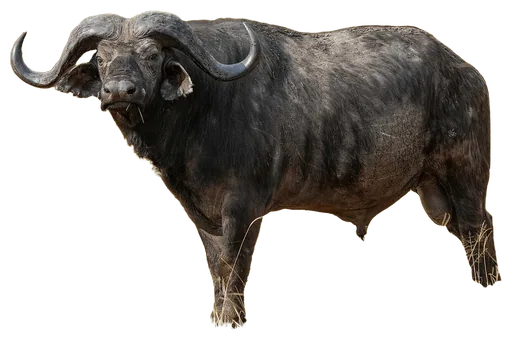
- Weight
- 750 kg1,653 lb
- Length
- 2.7 m8.9 ft
As heavy as 11 people
Heavier than 92% of animals1.5× a person's height
Bigger than 82% of animalsThe Cape buffalo is a massive African savanna bovid whose mature bulls combine roughly three-quarters of a tonne of body mass with sweeping horns and a fused frontal boss built for violent head-on contests. Its strongest matchup tools are a mass-backed charge, hooking/goring horns, exceptional toughness and a willingness to counterattack predators. It is not literally armored or “bulletproof,” and lions remain a real threat, but a prime bull is one of the roster's strongest sub-tonne terrestrial herbivore combatants.
Detailed ratings
Research-backed ratings on one 0–100 scale for all 344 animals (updated 2026-09-27). How ratings work


Card No. 36 of 344. Every animal on Animal Battle Stats has one: its power, tier and archetype on the front; its six battle stats, abilities and signature move on the back.
Special abilities
Mature bulls meet head-on impacts on the fused horn bases, coupling a reinforced frontal contact surface with enormous neck and body momentum. It improves both impact delivery and survival in frontal clashes without constituting whole-body armor.
Buffalo do not rely only on escape. They can switch from vigilance or flight to direct counter-aggression against predators, and groups become more defendable under lion pressure. For solo ABS use, this names the individual's willingness and mechanics of counterattack rather than granting free herd members.
Unique traits
Horns sweep downward and outward before turning upward, giving the bull both a broad frontal collision structure and tips capable of hooking or goring at close range.
Free-ranging buffalo alter grouping and habitat use in response to lion pressure, showing that their defense is behaviorally flexible rather than a fixed charge reflex.
How it fights
Weapons
- The primary weapon system is the horned head backed by a powerful neck, shoulders and hundreds of kilograms of moving mass. Mature bulls can gore with the upturned horn tips, hook laterally, shove, and absorb head-on impacts on the boss. Hooves and body checks are secondary threats, but the report does not invent measured kick forces.
Struggles vs
- No true armor outside the localized horn/boss complex.
- Flanks, hindquarters, abdomen and legs remain vulnerable.
- Direct charge-and-hook combat is powerful but comparatively readable.
- Very large body mass limits fine evasive agility.
- Lions demonstrably kill adult buffalo, particularly males outside mixed herds; one Kruger study found bachelor-group adult males had almost four times the mortality hazard of adult females in mixed herds.
- Weight
- 750 kg1,653 lb
- Height
- 1.5 m4.9 ft
- Length
- 2.7 m8.9 ft
- Top speed
- No reliable measurement
- Bite force
- No reliable measurement
- Lifespan
- 20 years
- Home biome
- Savanna
- Lifestyle
- Social
Rated specimen: Healthy mature adult bull with a fully developed horn boss, approximately 8–10 years old.
Fun facts
- The mature bull's horn bases expand toward the forehead midline to form the characteristic boss.
- Horn development takes years; males around five years complete basic horn development, while the thick-necked middle-aged bull morphology becomes more pronounced later.
- Horn span can exceed one meter.
- Serious bull fights are rare because threat displays and dominance behavior often settle disputes before escalation.
- When serious bulls do collide, accounts describe charge distances of 30 m or more before boss-to-boss impact.
- Buffalo can alter herd size and habitat choice after lion pressure increases.
Closest rivals by power. Tap one for the full breakdown, or pick any opponent.
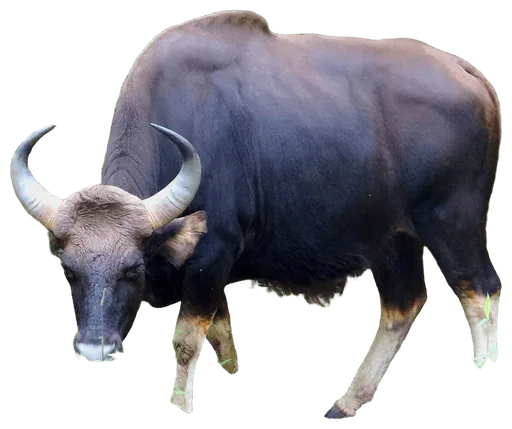
vs BisonLoses · 51% · Toss-up 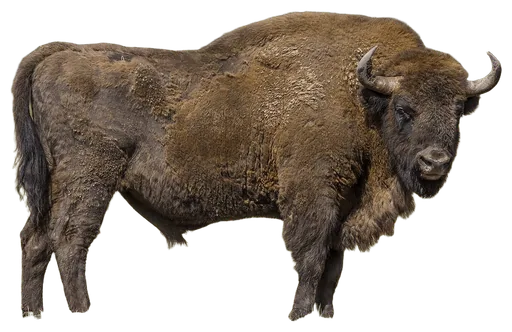 L vs GaurLoses · 52% · Toss-up
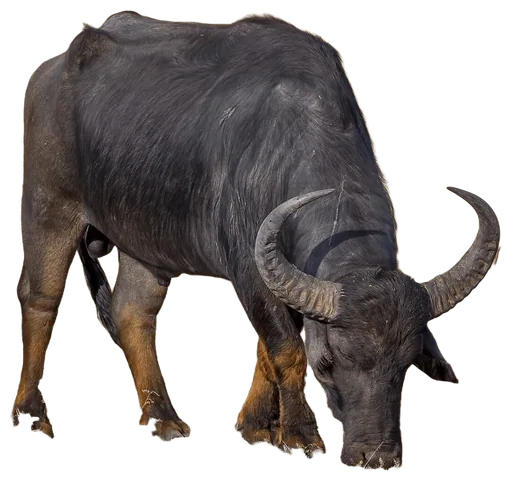
 L vs Water BuffaloDraw · 50-50 · Dead even
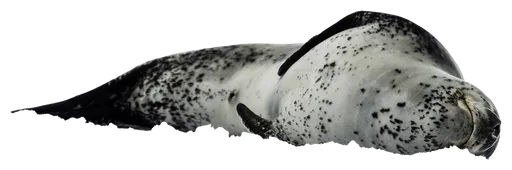
 D vs Leopard SealWins · 52% · Toss-up
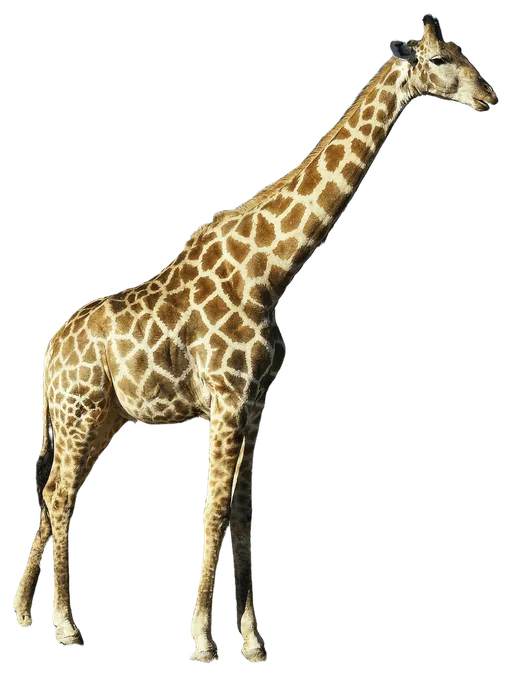
 W vs GiraffeLoses · 51% · Toss-up
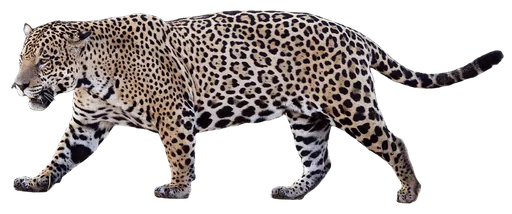
 L vs JaguarWins · 64% · Slight edge
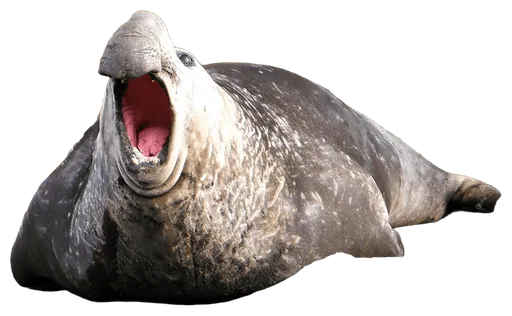
 W vs Elephant SealLoses · 61% · Slight edge
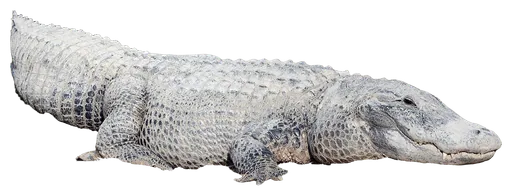
 L vs AlligatorWins · 57% · Toss-up
 W
Cape Buffalo battle analysis
A mature Cape buffalo bull is best understood as a collision specialist rather than a generic “angry cow.” The head and neck are integrated into a fighting system: horn bases thicken into the boss, long horns sweep away from the skull and return upward, and the heavy forequarters drive the entire assembly forward. In serious male contests, evenly matched bulls can charge from tens of meters away and accept the impact on their bosses. That is unusually direct evidence for how the anatomy functions under real combat loading.
Its defensive reputation also needs precision. The boss protects a localized frontal region and the bull's mass makes it difficult for most terrestrial opponents to stop quickly, but the animal is not armored across its body. Lion predation remains ecologically important, especially for males outside the protection of mixed herds. The interesting feature is therefore not invulnerability but the combination of toughness, counter-aggression and flexible social defense. Buffalo can change group size and habitat use when lion pressure changes, demonstrating a behavioral layer on top of the physical weapon system.
For ABS normalization, this places Cape buffalo above Bongo in absolute power and weapon threat, near but not identical to American bison in body scale, and below rhinoceros and elephant anchors in raw force and defense. Its horns are more extensive than a bison's and its boss is a distinctive frontal structure, supporting higher Weaponry and Attack than Bison even though the canonical Bison is heavier. Its Special score stays moderate because the boss is a specialized mechanical structure, not a venom/electric/sensory bypass.
Habitat & range
Cape/savanna buffalo occupy eastern and southern sub-Saharan Africa, including savannas, grasslands, woodlands and river-associated habitat. Across the species, African buffalo use habitats from rainforest to montane grassland, but permanent grass and water are central constraints. The canonical S. c. caffer is the large savanna form, not the forest ecotype.
Diet & hunting
Primarily a grazer, favoring grass leaves and consuming mostly C4 vegetation in many populations. Buffalo grazing alters vegetation structure and can facilitate other grazers. Daily behavior cycles through grazing, rumination and rest.
Social life
Buffalo form mixed-sex/mixed-age herds and smaller male bachelor groups. Group size varies dramatically with habitat and population. Fission-fusion dynamics occur in some populations. Adult males can move between bachelor and mixed herds.
Conservation
Status sources require date/version care. Older ADW text reports Least Concern, while more recent IUCN-derived summaries commonly report Near Threatened with declining populations. Future production migration should pin the current IUCN assessment/version rather than silently treating the older ADW label as current.
Quick answers
How strong is a Cape Buffalo?
On the Animal Battle Stats scale, the Cape Buffalo has an attack rating of 76 and a power index of 66.9 out of 100, which ranks it #36 of 344 animals and puts it in A tier (Elite). Its strongest stat is attack (76).
How much does a Cape Buffalo weigh?
A typical adult Cape Buffalo weighs about 750 kg (1,653 lb). Rated specimen: Healthy mature adult bull with a fully developed horn boss, approximately 8–10 years old.
How fast is a Cape Buffalo?
There is no reliable measured top speed for the Cape Buffalo, so we do not publish one. Its agility rating, which covers acceleration, reflexes and evasion, is 55 out of 100.
What does a Cape Buffalo eat?
Primarily a grazer, favoring grass leaves and consuming mostly C4 vegetation in many populations. Buffalo grazing alters vegetation structure and can facilitate other grazers. Daily behavior cycles through grazing, rumination and rest.
Is the Cape Buffalo endangered?
No. The Cape Buffalo is listed as Least Concern. Status sources require date/version care. Older ADW text reports Least Concern, while more recent IUCN-derived summaries commonly report Near Threatened with declining populations. Future production migration should pin the current IUCN assessment/version rather than silently treating the older ADW label as current.
What animals can beat a Cape Buffalo?
Among its closest rivals, the Bison (51%), the Gaur (52%), the Giraffe (51%), the Elephant Seal (61%) would be favored against the Cape Buffalo. It would be favored against the Leopard Seal, the Jaguar, the Alligator. It is dead even with the Water Buffalo: a draw.
Researched 2026-09-27. Ratings are editorial judgments built from these sources; measurements describe a healthy adult male.
- Animal Diversity Web, Syncerus cafferTaxonomy, dimorphism, mass, height, lifespan, habitat, behavior, senses, diet, predation
- Plazi / Mammalian Species treatmentHorn dimensions and fighting mechanics
- Tambling et al., Ecology 2012Antipredator tactics
- Hay, Cross & Funston, Journal of Animal Ecology 2008 / USGSPredation risk / social context
- Cross, Lloyd-Smith & Getz / USGSSocial structure
- Wikimedia Commons, Charles J. SharpImage provenance
Photo: “029 African buffalo in the Serengeti National Park Photo by Giles Laurent.jpg” by Giles Laurent, CC BY-SA 4.0, background removed and cropped. Original
Suggest a correction