

Canary
Serinus canaria
 #315 of 344
  Forest Bard Least Concern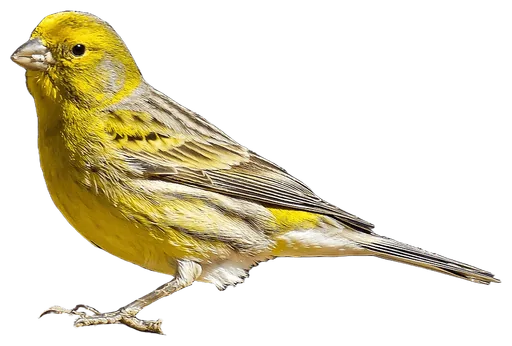
 Fight
FightPhoto: Juan Emilio · CC BY-SA 2.0
The Canary is a 20 g finch from the Canary Islands, Azores and Madeira, bred for centuries into the world's best-known songbird pet. It is a master of learned song and a famous brain-science model, but in a fight it has only a tiny seed-cracking bill and is one of the lightest, most fragile animals on the roster.
 Attack6
  Defense7
  Agility81
  Stamina52
  Intelligence55
  Special42
 Detailed ratings
Research-backed ratings on one 0–100 scale for all 344 animals (updated 2026-09-28). How ratings work
Special abilities
Ability 1Two-Voice SongThe canary sings with both sides of its syrinx, the left side producing low notes and the right side high notes, and can alternate them so fast that it produces special high-repetition "sexy" syllables that females prefer.
 Ability 2Song Duel
Rival males overlap their songs in aggressive vocal exchanges, and the leader stretches his songs to outlast the follower, settling contests without always coming to blows.
Unique traits
 TraitCanary in the Coal Mine
Because canaries breathe rapidly and react to toxic gases quickly, miners carried them underground as carbon monoxide alarms from 1896 until Britain ended the practice in December 1986.
TraitBrain That Adds NeuronsAdult canaries keep producing new neurons in their song-control centre, a discovery that helped overturn the old belief that adult brains cannot add neurons.
How it fights
Weapons
- The canary has almost no weapons. Its small conical bill husks seeds and can peck, and during the breeding season males defend territories fiercely, which can lead to beak fights and chases that draw blood (Wikipedia). Outside the breeding season, flocks settle into a hierarchy and most disputes end with threats: an open bill and raised wings, after which the weaker bird gives way.
 Struggles vs
- About 20 g; among the lightest vertebrates on the roster.
- No armor and no real weapon.
- Very sensitive to airborne toxins.
- Domestic birds lack wild survival skills.
- Weight
- 20 g0.7 oz
- Height
- No reliable measurement
- Length
- 13 cm5.1 in
- Top speed
- No reliable measurement
- Bite force
- No reliable measurement
- Lifespan
- 10 years
- Home biome
- Forest
- Lifestyle
- Social
Rated specimen: Healthy adult male common domestic canary, 0.02 kg, 13.0 cm total length.
Fun facts
- The colour "canary yellow" is named after the domestic canary; wild canaries are mostly green-yellow with brown streaks.
- British coal mines used canaries as gas detectors until December 1986.
- Adult canaries grow new brain cells in their song-control centre.
- A canary can sing two notes at once, one from each side of its voice box.
- Rival male canaries hold song duels, trying to outlast each other's songs.
- The Harz Roller sings with its beak closed at 40 or more notes per second.
Closest rivals by power. Tap one for the full breakdown, or pick any opponent.
vs Huntsman SpiderWins · 50% · Toss-up 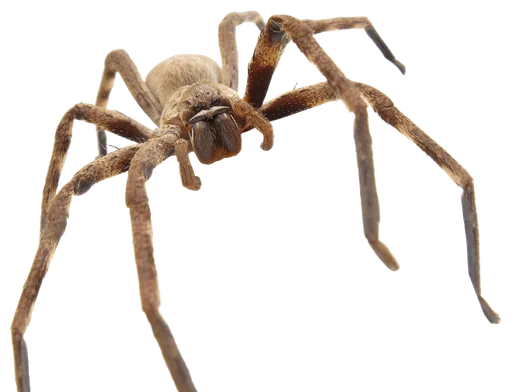 W vs Corn SnakeWins · 51% · Toss-up
 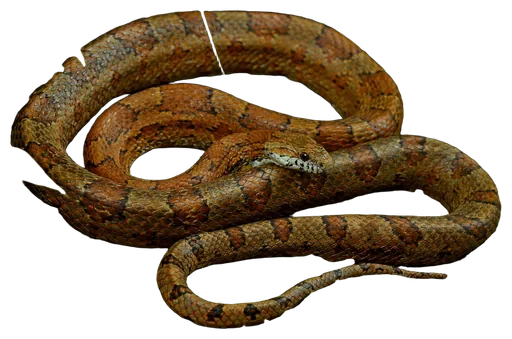 W vs Red-Eyed Tree FrogWins · 51% · Toss-up
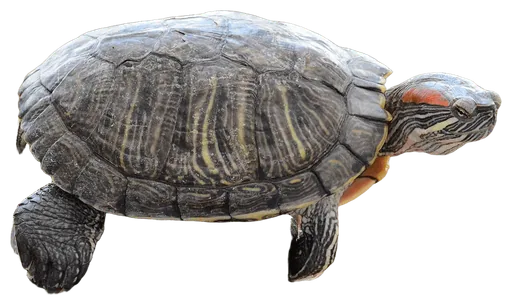
 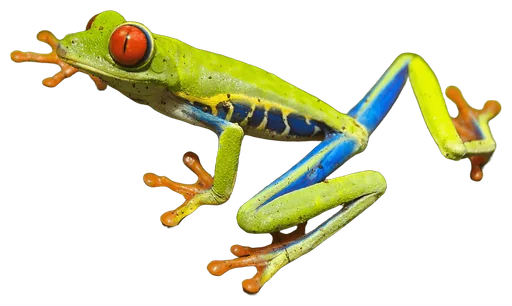 W vs Red-eared SliderWins · 51% · Toss-up
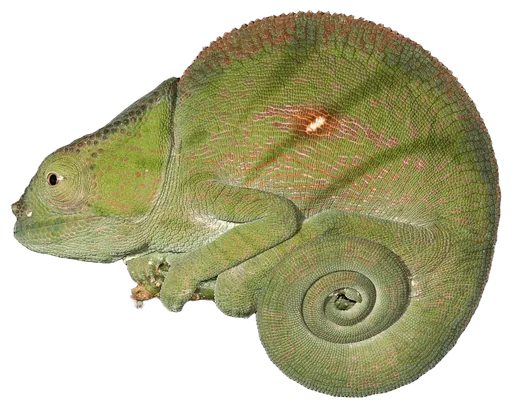
  W vs ChameleonLoses · 51% · Toss-up
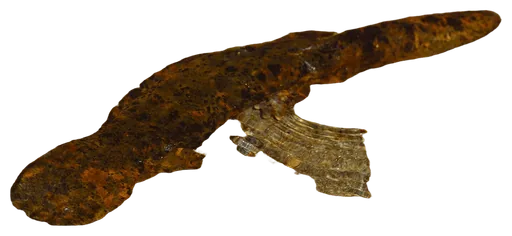
  L vs HellbenderWins · 51% · Toss-up
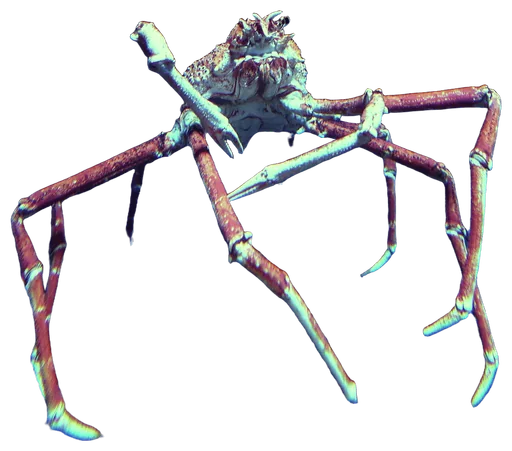
  W vs Japanese Spider CrabWins · 51% · Toss-up
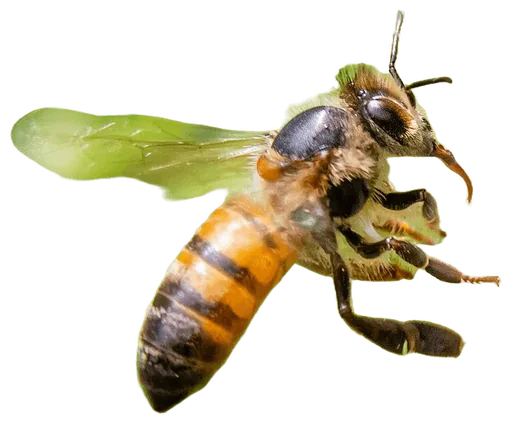
  W vs Africanized Honey BeeWins · 52% · Toss-up
  W
W  Pick any opponent
 Canary battle analysis
The canary began as a small, streaky green-yellow finch in the laurel forests, pine woods and gardens of the Atlantic islands. Sailors and colonists brought it to Europe, where its song made it a treasured pet by the 1600s. Breeders then shaped it into hundreds of forms: bright yellow and red birds, crested and frilled birds, and song breeds trained to roll, bubble or ring.
Its voice is the canary's real specialty. A male learns his song over most of his first year, building 30–40 syllable types on an inborn framework, and uses both sides of his voice box independently to produce rapid two-note syllables that females find especially attractive. Rival males hold song duels, overlapping and stretching their songs. Research on canary brains showed that adult birds keep adding neurons to their song-control centre, changing how scientists think about the adult brain.
In an absolute matchup the canary has almost nothing to fight with. It weighs about 20 g, its bill is built for seeds, and it is so sensitive to toxic air that it served for nearly a century as a living gas alarm. Its survival strategy is to hide, flock and fly.
Habitat & range
The wild Atlantic canary is found only in Macaronesia in the eastern Atlantic: the Canary Islands, the Azores and Madeira. It lives in a wide variety of habitats from pine and laurel forests to sand dunes, most commonly in semi-open areas with small trees such as orchards and copses, and in parks and gardens, from sea level to above 1,500 m in the Canary Islands (Wikipedia). It has been introduced to Midway Atoll (since 1911); a Bermuda population founded in 1930 died out by the 1960s.
Diet & hunting
It feeds in flocks on the ground or in low vegetation, mainly on seeds of weeds and grasses and on figs, plus other plant material and small insects (Wikipedia). Domestic canaries eat seed mixes plus greens, egg food and calcium sources.
Social life
Gregarious; wild canaries often nest in loose groups, each pair defending a small territory. Domestic canaries can live in aviary groups outside the breeding season, where a hierarchy forms and fights become rare.
Conservation
The Atlantic canary is listed as Least Concern by the IUCN. Populations are estimated at 80,000–90,000 pairs in the Canary Islands, 30,000–60,000 pairs in the Azores and 4,000–5,000 pairs in Madeira. The domestic canary is one of the most widely kept cage birds in the world.
Quick answers
How strong is a Canary?
On the Animal Battle Stats scale, the Canary has an attack rating of 6 and a power index of 31.7 out of 100, which ranks it #315 of 344 animals and puts it in F tier (Snack). Its strongest stat is agility (81).
How much does a Canary weigh?
A typical adult Canary weighs about 20 g (0.7 oz). Rated specimen: healthy adult male common domestic canary, 0.02 kg, 13.0 cm total length.
How fast is a Canary?
There is no reliable measured top speed for the Canary, so we do not publish one. Its agility rating, which covers acceleration, reflexes and evasion, is 81 out of 100.
What does a Canary eat?
It feeds in flocks on the ground or in low vegetation, mainly on seeds of weeds and grasses and on figs, plus other plant material and small insects (Wikipedia). Domestic canaries eat seed mixes plus greens, egg food and calcium sources.
Is the Canary endangered?
No. The Canary is listed as Least Concern. The Atlantic canary is listed as Least Concern by the IUCN. Populations are estimated at 80,000–90,000 pairs in the Canary Islands, 30,000–60,000 pairs in the Azores and 4,000–5,000 pairs in Madeira. The domestic canary is one of the most widely kept cage birds in the world.
What animals can beat a Canary?
Among its closest rivals, the Chameleon (51%) would be favored against the Canary. It would be favored against the Huntsman Spider, the Corn Snake, the Red-Eyed Tree Frog, the Red-eared Slider, the Hellbender, the Japanese Spider Crab, the Africanized Honey Bee.
Researched 2026-09-28. Ratings are editorial judgments built from these sources; measurements describe a healthy adult male.
- Wikipedia, Atlantic canarywild size, range, habitat, population, breeding, diet
- Wikipedia, Domestic canarydomestic size, lifespan, behavior, song learning, breeds, fights
- AnAge, House canarylongevity, adult weight
- Goldman and Nottebohm 1983, PNASadult neurogenesis
- Suthers, Vallet and Kreutzer 2012, Journal of Experimental Biologytwo-sided syrinx, "sexy" syllables
- Alcami, Ma and Gahr 2025, Frontiers in Psychologysong duels
- Balthazart 2024, Journal of Neuroendocrinologyphotoperiod and song
- Smithsonian Magazine, What Happened to the Canary in the Coal Mine?mine use, toxin sensitivity
- Wikipedia, Sentinel speciesmine use history
- Harrison et al. 2025, Journal of Anatomyfinch bite context
- Wikimedia Commons, GelbAimage candidate
Photo: “Serinus canaria -Parque Rural del Nublo, Gran Canaria, Spain -male-8a.jpg” by Juan Emilio, CC BY-SA 2.0, background removed and cropped. Original
Suggest a correction