
Bullet Ant
Paraponera clavataD tier · Underdog18th of 30 bugs & spiders
Size & speed
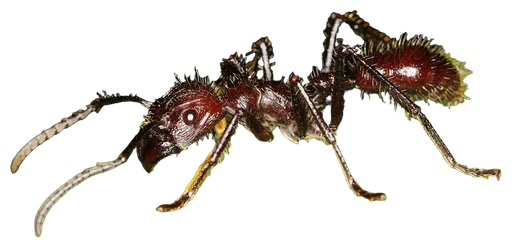
- Length
- 2.2 cm0.9 in
Smaller than a coin
Bigger than 1% of animalsThe bullet ant is a giant Neotropical worker ant whose real superweapon is not strength but chemistry. A mature worker is only about 2.2 cm long, yet its abdominal sting delivers a complex venom dominated by sodium-channel-active δ-paraponeritoxin peptides that strongly stimulate sensory neurons. Its absolute physical Attack and Defense remain low on a roster containing large vertebrates, while its exceptional venom earns an elite Special rating.
Detailed ratings
Research-backed ratings on one 0–100 scale for all 344 animals (updated 2026-09-27). How ratings work


Card No. 312 of 344. Every animal on Animal Battle Stats has one: its power, tier and archetype on the front; its six battle stats, abilities and signature move on the back.
Special abilities
The abdominal sting delivers venom dominated by δ-paraponeritoxin family peptides that alter voltage-gated sodium-channel behavior and strongly activate sensory neurons, producing severe pain and useful prey-subduing neurotoxicity.
Workers adjust recruitment behavior according to food quantity and distance, including recruiting from the canopy and transferring nectar among workers when that improves collection efficiency. In individual ABS combat this supports tactical flexibility, not a free swarm multiplier.
Unique traits
The species' cultural reputation is built around unusually prolonged, intense sting pain. ABS treats this as a nociceptive venom effect rather than evidence of proportional lethality.
At roughly two centimeters or more, the worker is enormous by ant standards while retaining a comparatively uniform worker caste, giving each individual a robust predatory/defensive package without invoking a separate soldier caste.
How it fights
Weapons
- The primary weapon is a repeatable abdominal sting delivering a sodium-channel-active venom. Against insects, venom can disrupt neural transmission and subdue prey. Against mammals, the most conspicuous effect is intense nociceptor activation and pain. Pain severity should not be confused with large-animal lethality.
Struggles vs
- Microscopic absolute mass compared with almost the entire vertebrate roster.
- Exoskeleton does not provide vertebrate-scale armor.
- Contact-range sting can be denied by thick hide, scales, shell, fur or simple size mismatch.
- No high-force bite, horn, claw or impact weapon.
- Individual worker lacks colony-level numerical advantage in one-on-one ABS scoring.
- Weight
- No reliable measurement
- Height
- No reliable measurement
- Length
- 2.2 cm0.9 in
- Top speed
- No reliable measurement
- Bite force
- No reliable measurement
- Lifespan
- No reliable measurement
- Home biome
- Jungle
- Lifestyle
- Social
Rated specimen: One healthy mature worker, 22.0 mm long.
Fun facts
- A photographed La Selva bullet ant was measured at 22 mm long.
- The classic purified poneratoxin peptide is only 25 amino acids long.
- Modern research found natural poneratoxin variants and effects on the mammalian sensory sodium channel NaV1.7.
- Integrated venom analysis found a complex mixture including neurotoxins, phospholipases, proteases and hyaluronidase rather than one unrealistic "pain chemical."
- Workers can learn when and where a food source appears and return at the expected time even when the reward is removed.
- Barro Colorado research found an average density of about 6.2 nests per hectare in a 50-hectare plot.
Closest rivals by power. Tap one for the full breakdown, or pick any opponent.
vs HornetWins · 55% · Toss-up 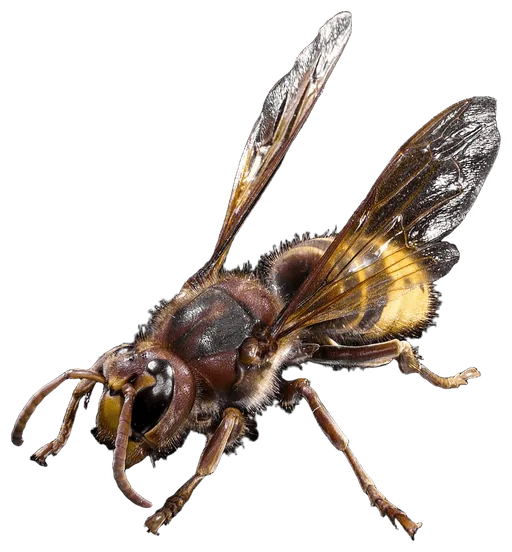 W vs Goliath BirdeaterLoses · 74% · Clear edge
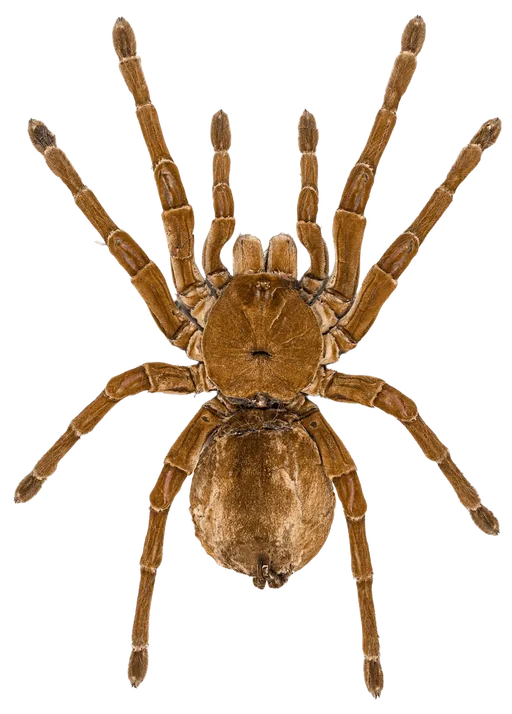 L vs Huntsman SpiderLoses · 72% · Clear edge
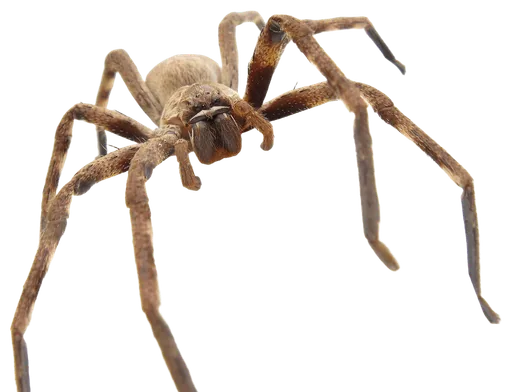 L vs Sydney Funnel-web SpiderLoses · 52% · Toss-up
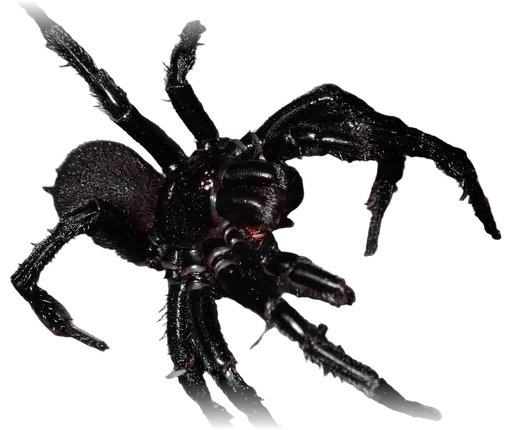 L vs Deathstalker ScorpionLoses · 52% · Toss-up
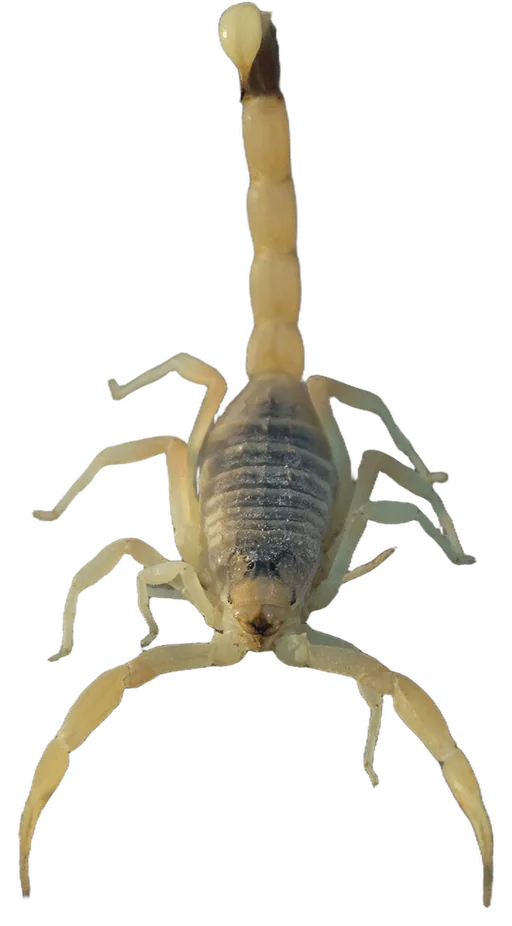 L vs AnglerfishLoses · 68% · Slight edge
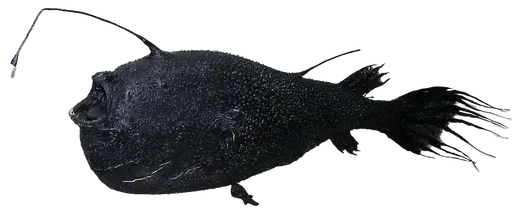 L vs Tarantula HawkWins · 51% · Toss-up
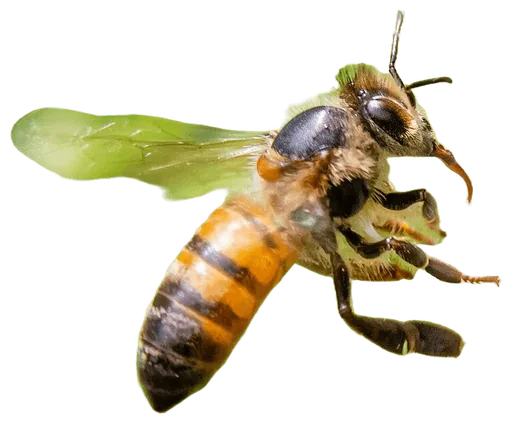
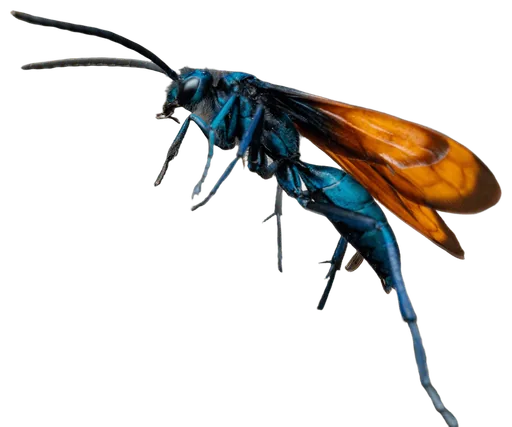 W vs Africanized Honey BeeWins · 71% · Clear edge
 W
Bullet Ant battle analysis
Bullet Ant is exactly the kind of animal that exposes bad pound-for-pound scoring. At roughly 22 mm, one worker has almost no absolute mass, crushing force or armor compared with a bobcat, shark, rhinoceros or whale. A careless rating system would either inflate every ant feat into superhero numbers or dismiss the animal entirely. The biology supports neither extreme.
The worker's mechanical body is tiny, but it carries an unusually sophisticated contact weapon. The sting apparatus is a coordinated muscular system connected to venom glands, and the venom itself is chemically diverse. Poneratoxin research progressed from the original 25-residue peptide to identification of natural analogs and modern transcriptomic/proteomic evidence showing a much richer toxin mixture. Electrophysiology explains why the sting can be so memorable: δ-paraponeritoxin-family peptides interfere with voltage-gated sodium-channel inactivation and strongly excite sensory neurons.
That mechanism deserves elite Special, but not elite general Attack. Against an insect, venom can be a decisive neurotoxic weapon. Against a human-sized animal, the same sting can impose extreme pain while delivering too little material and too little mechanical trauma to behave like a lion bite or crocodilian jaw. Thick hide, dense fur, scales or shell can further interfere with delivery. One accidental footfall can end the matchup despite the ant's biochemical sophistication.
Behavior adds another layer. Bullet ants forage for both nectar and prey, learn predictable food times and locations, and change recruitment strategy with resource profitability. Those are meaningful signs of flexible insect decision-making. Still, ABS scores the worker in front of us, not an invisible colony. Recruitment biology raises Tactics and informs abilities, but does not multiply one ant into hundreds.
Habitat & range
P. clavata inhabits humid lowland Neotropical forests from Central America into northern and central South America. Well-studied populations occur at La Selva Biological Station in Costa Rica and Barro Colorado Island in Panama.
Diet & hunting
Workers are omnivorous foragers that collect nectar and insect prey. Stable-isotope and field work emphasizes that nectar can dominate the number of returned food loads while animal prey contributes disproportionately to nutrition/energy. Experiments also show workers distinguish nutrient composition when deciding whether to drink or grasp liquid food.
Social life
Colonial and eusocial, with reproductive queen(s) and workers. ABS nevertheless treats the canonical fighter as one worker. Recruitment and colony defense are genuine biology but must not be converted into imaginary extra bodies in a one-animal matchup.
Conservation
No global IUCN threat category was relied upon in this report. The species remains widespread across suitable Neotropical forest, but local populations depend on forest habitat and nesting structure. A formal current conservation assessment should be added if an authoritative species-level assessment becomes available.
Quick answers
How strong is a Bullet Ant?
On the Animal Battle Stats scale, the Bullet Ant has an attack rating of 18 and a power index of 32.6 out of 100, which ranks it #312 of 344 animals and puts it in D tier (Underdog). Its strongest stat is special (96).
How much does a Bullet Ant weigh?
A typical adult Bullet Ant weighs about 2 g (0.1 oz). Rated specimen: one healthy mature worker, 22.0 mm long.
How fast is a Bullet Ant?
There is no reliable measured top speed for the Bullet Ant, so we do not publish one. Its agility rating, which covers acceleration, reflexes and evasion, is 62 out of 100.
What does a Bullet Ant eat?
Workers are omnivorous foragers that collect nectar and insect prey. Stable-isotope and field work emphasizes that nectar can dominate the number of returned food loads while animal prey contributes disproportionately to nutrition/energy. Experiments also show workers distinguish nutrient composition when deciding whether to drink or grasp liquid food.
What animals can beat a Bullet Ant?
Among its closest rivals, the Goliath Birdeater (74%), the Huntsman Spider (72%), the Sydney Funnel-web Spider (52%), the Deathstalker Scorpion (52%), the Anglerfish (68%) would be favored against the Bullet Ant. It would be favored against the Hornet, the Tarantula Hawk, the Africanized Honey Bee.
Researched 2026-09-27. Ratings are editorial judgments built from these sources; measurements describe a healthy adult female.
- Wikimedia Commons, Hans HillewaertBody length
- Hermann & Blum, Annals ESA (1966)Sting anatomy
- Piek et al. (1991), PubMedVenom
- Szolajska et al. (2004)Poneratoxin mechanism
- Johnson et al. (2016), PubMedVenom variation / NaV1.7
- Touchard et al. / integrated venom analysis (2020)Venom complexity/pain
- Fewell et al., Oecologia (1996)Foraging energetics
- Harrison (1987)Learning
- Fewell et al. (1992), PubMedRecruitment tactics
- Barrett et al. / USGS (1985)Recruitment
- Breed et al., Journal of Insect Science (2002)Diet/activity
- Pérez, Condit & Lao / ForestGEONest ecology
- PubMed nutrient-handling study (2013)Food decisions
- Wikimedia Commons, Geoff GalliceImage provenance
Photo: “Paraponera clavata (14336838450).jpg” by Graham Wise from Brisbane, Australia, CC BY 2.0, background removed and cropped. Original
Suggest a correction