
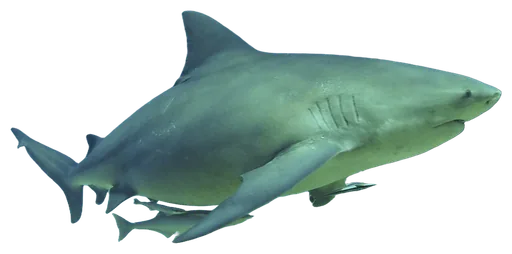
Bull Shark
Carcharhinus leucasA tier · Elite14th of 51 sea creatures
Size & speed

- Weight
- 111 kg245 lb
- Length
- 2.84 m9.3 ft
- Top speed
- 19 km/h12 mph
As heavy as 1.6 people
Heavier than 74% of animals1.6× a person's height
Bigger than 84% of animalsAbout as fast as a person running
Faster than 18% of animalsThe bull shark is a stocky coastal macropredator built around a forceful serrated bite and extraordinary habitat flexibility. A large female can exceed 100 kg, attack substantial aquatic prey, and move between seawater, estuaries and freshwater using specialized osmoregulation. Its unusual river-going physiology gives it a high Special score, while its lack of armor and much smaller mass than giant marine predators keep Defense and absolute power below the roster's upper megafaunal tier.
Detailed ratings
Research-backed ratings on one 0–100 scale for all 344 animals (updated 2026-09-27). How ratings work


Card No. 37 of 344. Every animal on Animal Battle Stats has one: its power, tier and archetype on the front; its six battle stats, abilities and signature move on the back.
Special abilities
Kidney, gill and rectal-gland physiology can shift ion and water handling enough for prolonged freshwater operation, opening river and estuary matchups unavailable to most large sharks.
Broad-head jaw mechanics generate very high bite force for body mass while differentiated teeth seize and cut, making repeated bites effective against large soft-bodied prey.
Unique traits
A large coastal shark can penetrate far upriver while remaining physiologically functional, an exceptionally rare ecological combination among sharks.
The unusually broad, blunt head houses enlarged jaw musculature and leverage that underpin its forceful bite-feeding strategy.
How it fights
Weapons
- The primary weapon is the jaw system: a broad, forceful bite combined with serrated cutting teeth and a head built for force production. The lower jaw can secure prey while upper teeth cut tissue. Repeated biting plus lateral head movement can enlarge wounds and remove tissue.
Struggles vs
- No true armor.
- Gills and fins are vulnerable functional structures.
- Absolute mass is far below giant sharks, large crocodilians and megafauna.
- Burst speed is useful but not an extreme dataset ceiling.
- Freshwater physiology carries osmoregulatory demands rather than being a free combat buff.
- Weight
- 111 kg245 lb
- Height
- No reliable measurement
- Length
- 2.84 m9.3 ft
- Top speed
- 19 km/h12 mph
- Bite force
- No reliable measurement
- Lifespan
- 27 years
- Home biome
- Ocean
- Lifestyle
- Mostly solitary
Rated specimen: Healthy mature adult female, approximately 111.0 kg and 284.0 cm total length.
Fun facts
- Bull sharks can move between seawater and freshwater because their kidneys and salt-handling organs change function with salinity.
- Freshwater acclimation experiments found roughly 10-fold higher expression of a renal Na+-Cl- cotransporter than in seawater-acclimated sharks.
- The strongest peer-reviewed bite study found theoretical posterior forces up to 5,914 N, not a directly measured PSI value.
- Females are larger than males and are therefore the ABS canonical combat sex.
- Juveniles can spend years using rivers and estuaries as nursery habitat before shifting into broader marine environments.
- Reunion Island litters showed frequent multiple paternity, with some litters sired by several males.
Closest rivals by power. Tap one for the full breakdown, or pick any opponent.
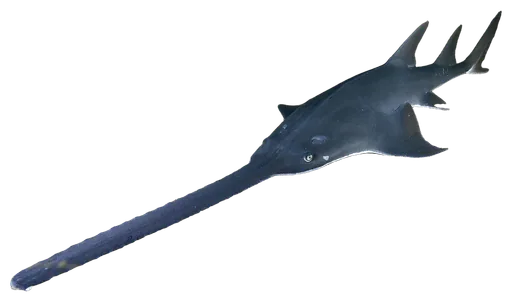
vs NarwhalLoses · 64% · Slight edge 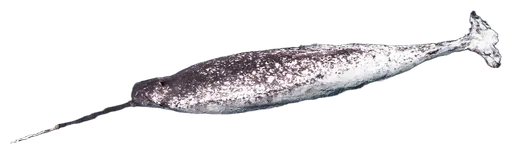 L vs SawfishLoses · 56% · Toss-up
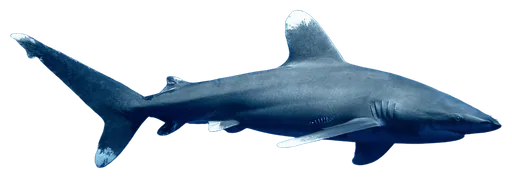
 L vs Oceanic Whitetip SharkLoses · 53% · Toss-up
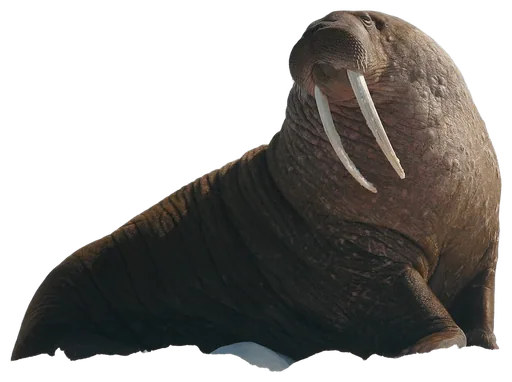
 L vs WalrusLoses · 65% · Slight edge
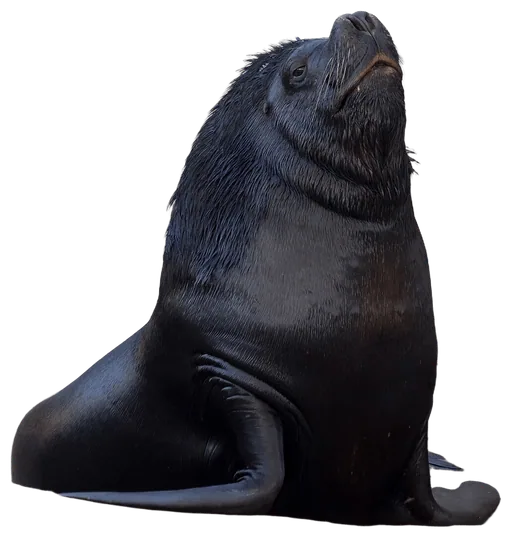
 L vs Sea LionLoses · 54% · Toss-up
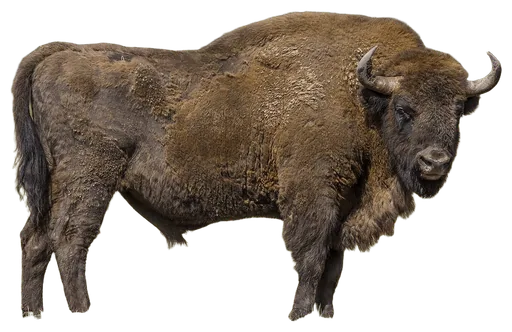
 L vs BisonLoses · 62% · Slight edge
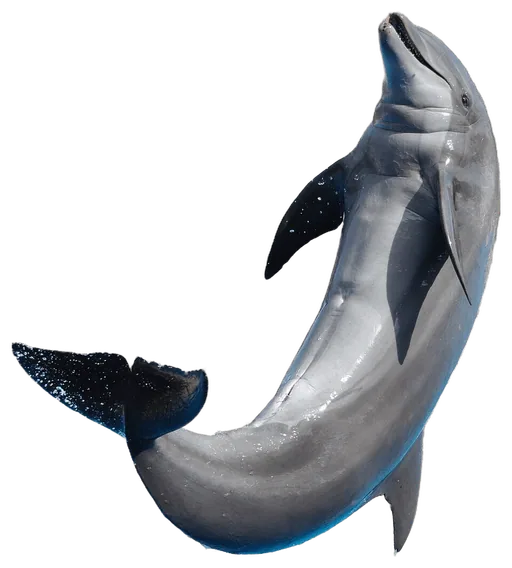
 L vs Bottlenose DolphinLoses · 58% · Slight edge
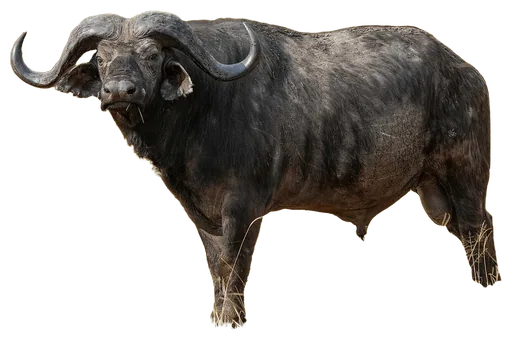
 L vs Cape BuffaloLoses · 61% · Slight edge
 L
Bull Shark battle analysis
Bull Shark combines two capabilities that rarely occur together: the weapons of a large requiem shark and the physiology to follow prey far beyond normal marine salinity. The animal's blunt head is not just visual branding. A broad skull accommodates a powerful jaw-adductor system, and biomechanical work shows that bite performance rises strongly through growth. Large individuals can generate several kilonewtons of theoretical posterior bite force. The teeth complement that force by doing different jobs across the jaws, securing prey and cutting tissue rather than merely crushing it.
That offense is formidable but must stay on an absolute scale. A representative female around 111 kg is dangerous to most similarly sized soft-bodied aquatic animals, yet she is still tiny beside a blue whale, giant crocodilian, or the largest shark anchors. The bull shark has no bony shell or thick megafaunal armor. Its survival package is mobility, bulk, sensory awareness and the threat of counterattack.
Its defining Special category comes from salinity tolerance. Most sharks cannot simply swim from the sea deep into a river and continue normal life. Bull sharks adjust salt secretion and conservation, renal ion transport and water handling as salinity changes. That allows juveniles and adults to exploit estuaries and freshwater corridors, sometimes far inland. For ABS this matters because it changes where the animal can fight, not because it somehow boosts bite force.
The result is a profile with strong Attack, Agility and Stamina, moderate Defense and Intelligence, and a distinctly high Special rating. It should sit above smaller fish predators in raw combat danger, below giant marine macropredators in absolute force and durability, and far below Bottlenose Dolphin in cognition while remaining unusually versatile as a predator.
Habitat & range
Bull sharks occur widely in tropical and subtropical coastal waters and use estuaries, bays, lagoons, river mouths, rivers and some freshwater lakes. Florida FWC describes them as common apex predators in estuarine, nearshore and offshore Florida waters and notes that they may travel hundreds of miles inland. Florida Museum notes their global warm-water coastal distribution.
Diet & hunting
The species is an opportunistic carnivore. Bony fishes dominate much of the diet, but adults also consume sharks, rays, turtles, marine mammals, seabirds and invertebrates. Ontogeny matters: juveniles use protected estuarine nurseries and are themselves vulnerable to predators, while larger adults occupy broader marine habitats and take larger prey.
Social life
Adults generally hunt alone. Temporary aggregations can occur around food, mating or favorable habitat. Reunion Island genetic work found multiple paternity in at least 56.25% of examined litters, with 2-5 sires in multiply sired litters, demonstrating a more complex reproductive mating system than simple monogamy.
Conservation
The current global IUCN assessment is Vulnerable. Coastal habitat use exposes bull sharks to fisheries, bycatch, habitat degradation and pollution. Some older institutional pages still display Near Threatened, so production migration should use the current IUCN assessment rather than stale summaries.
Quick answers
How strong is a Bull Shark?
On the Animal Battle Stats scale, the Bull Shark has an attack rating of 72 and a power index of 66.8 out of 100, which ranks it #37 of 344 animals and puts it in A tier (Elite). Its strongest stat is special (82).
How much does a Bull Shark weigh?
A typical adult Bull Shark weighs about 111 kg (245 lb). Rated specimen: healthy mature adult female, approximately 111.0 kg and 284.0 cm total length.
How fast is a Bull Shark?
The Bull Shark's top speed is about 19 km/h (12 mph). Its agility rating is 73 out of 100.
What does a Bull Shark eat?
The species is an opportunistic carnivore. Bony fishes dominate much of the diet, but adults also consume sharks, rays, turtles, marine mammals, seabirds and invertebrates. Ontogeny matters: juveniles use protected estuarine nurseries and are themselves vulnerable to predators, while larger adults occupy broader marine habitats and take larger prey.
Is the Bull Shark endangered?
The Bull Shark's conservation status is Vulnerable. The current global IUCN assessment is Vulnerable. Coastal habitat use exposes bull sharks to fisheries, bycatch, habitat degradation and pollution. Some older institutional pages still display Near Threatened, so production migration should use the current IUCN assessment rather than stale summaries.
What animals can beat a Bull Shark?
Among its closest rivals, the Narwhal (64%), the Sawfish (56%), the Oceanic Whitetip Shark (53%), the Walrus (65%), the Sea Lion (54%), the Bison (62%), the Bottlenose Dolphin (58%), the Cape Buffalo (61%) would be favored against the Bull Shark. It would be favored against none of them.
Researched 2026-09-27. Ratings are editorial judgments built from these sources; measurements describe a healthy adult female.
- Florida Museum, Bull SharkSize, speed, diet, reproduction, range
- Animal Diversity WebSex-specific size
- Natanson et al. 2014, Transactions AFSAge/growth/maturity
- Habegger et al. 2012, Zoology / PubMedBite biomechanics
- Goodman et al. 2022, Journal of Fish BiologyTooth morphology
- Pillans et al. 2008, Journal of Fish BiologyRectal gland / salinity physiology
- Imaseki et al. 2019, Journal of Experimental BiologyKidney freshwater acclimation
- Pirog et al. 2019, Journal of Fish BiologyReunion reproduction
- Florida FWCHabitat, diet, longevity
- Wikimedia Commons, 2025 Belize bull shark photoImage candidate
Photo: “Bullshark Bahamas2.jpg” by Albert Kok~enwiki, CC BY-SA 4.0, background removed and cropped. Original
Suggest a correction