

Budgerigar
Melopsittacus undulatus
 #288 of 341
  Desert Scout Least Concern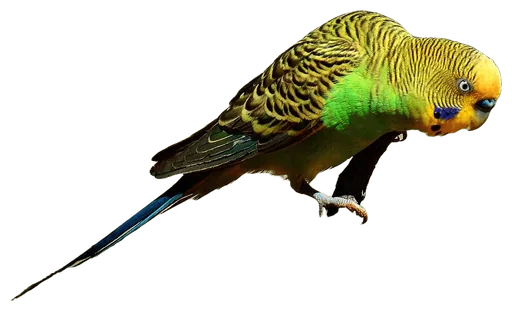
 Fight
FightPhoto: Laurie Boyle from Perth Western Australia, Australia · CC BY-SA 2.0
A 30-gram nomad of the Australian outback, the budgerigar survives on flight skill, flock vigilance and water-thrifty physiology rather than any weapon. It can thread gaps a quarter of its wingspan and switch flight speeds on the fly, but its tiny bill and body make it harmless to anything larger than an insect.
 Attack6
  Defense5
  Agility88
  Stamina70
  Intelligence70
  Special56
 Detailed ratings
Research-backed ratings on one 0–100 scale for all 341 animals (updated 2026-09-28). How ratings work
Special abilities
Ability 1Two-Gear FlightBudgerigars hold one of two fixed flight speeds, about 9.4 m/s in open space and about 5.4 m/s in clutter, and switch before they reach a narrowing passage. Combined with folding its wings to pass gaps a quarter of its wingspan, this lets it escape into cover where larger fliers cannot follow.
 Ability 2Warbling Mimicry
A lifelong vocal learner that copies flockmates, other sounds and human speech. In a matchup this is a communication and alarm system, not a damage source.
Unique traits
 TraitOutback Nomad
Flocks follow rain across the arid interior, swelling to tens of thousands after good seasons, and breed opportunistically whenever grass seed is abundant.
TraitUltraviolet PlumageIts feathers fluoresce under UV light and UV signals are used in mate choice, a channel most mammalian predators cannot see.
How it fights
Weapons
- The only weapon is a small hooked bill with a calculated bite of about 12 N, used to dehusk grass seeds and, in disputes, to nip flockmates or a human finger. The feet are zygodactyl climbing feet, not talons. Against any vertebrate larger than itself the budgerigar has no way to cause serious injury; its offense is limited to pecks and bites in squabbles over nest hollows and perches.
 Struggles vs
- Negligible mass (30 g) and no meaningful weapon.
- No protection; a single strike from a predator is decisive.
- Needs regular access to drinking water in the wild (ADW: about 5.5% of body weight per day).
- Flock-based defense disappears in a one-on-one matchup.
- Weight
- 30 g1.1 oz
- Height
- No reliable measurement
- Length
- 18 cm7.1 in
- Top speed
- 34 km/h21 mph
- Bite force
- No reliable measurement
- Lifespan
- 7.8 years
- Home biome
- Desert
- Lifestyle
- Social
Rated specimen: Healthy adult wild-type male, 30 g (0.03 kg), 18 cm long, matching the Animal Diversity Web average mass of 30 g and BirdLife Australia's average of 18 cm and 28 g.
Fun facts
- Wild flocks can number in the tens of thousands after a season of abundant rain.
- A budgerigar has flown through gaps only a quarter of its wingspan wide, with as little as 6 mm to spare on each side.
- Budgerigars fly at two fixed "gears", about 9.4 m/s and 5.4 m/s, and switch abruptly between them.
- Female budgerigars became more interested in males after watching them solve food puzzles.
- Yawning is contagious between budgerigars that can see each other.
- If their inner-ear hair cells are damaged, the cells regrow and the bird's hearing and song precision recover.
Closest rivals by power. Tap one for the full breakdown, or pick any opponent.
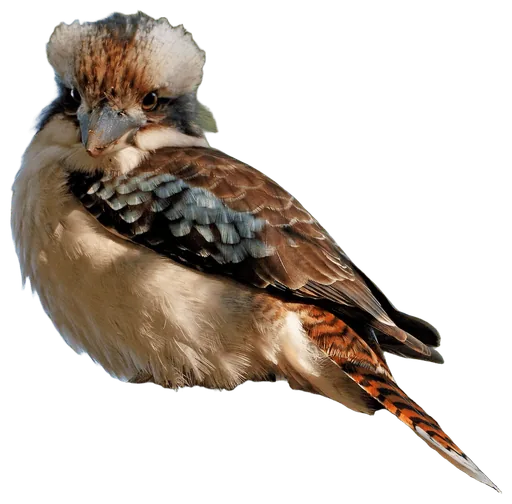
vs CockatielLoses · 50% · Toss-up 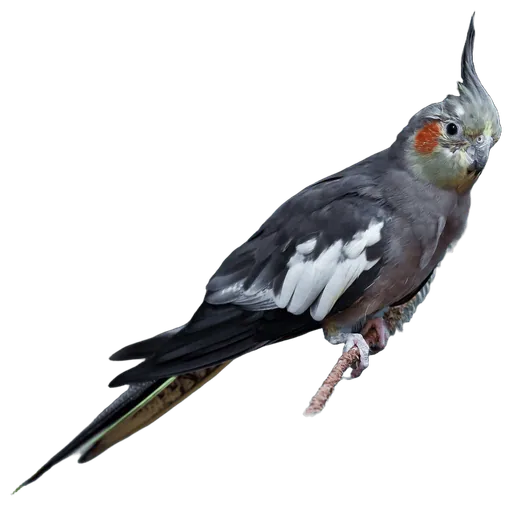 L vs KookaburraLoses · 51% · Toss-up
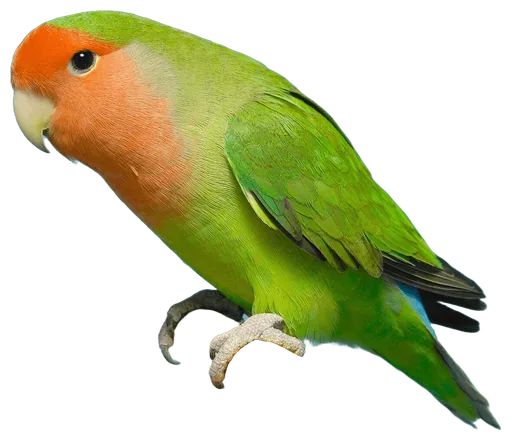
  L vs Rosy-faced LovebirdWins · 51% · Toss-up
  W vs Sun ConureLoses · 52% · Toss-up
  L vs ToucanWins · 52% · Toss-up
  W vs QuokkaWins · 50% · Toss-up
  W vs Giant CentipedeWins · 50% · Toss-up
  W vs HedgehogWins · 50% · Toss-up
 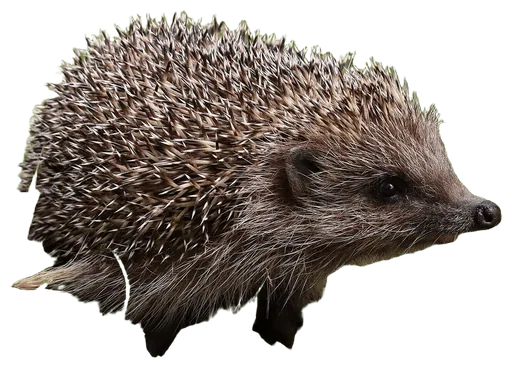 W
W  Pick any opponent
 Budgerigar battle analysis
The budgerigar is a small parrot built for a harsh, unpredictable country. Wild flocks follow rain across inland Australia, feeding on fallen grass seed in the cool of the morning, sheltering motionless in shade through the midday heat, and wheeling around roost trees at dusk. When rain brings a flush of seed, pairs breed at once in tree hollows, and flocks can swell to tens of thousands of birds.
Its strengths are all about getting away. Laboratory work has shown that it flies in two distinct gears, a fast energy-efficient cruise and a slower maneuvering speed, and that it changes gear before it reaches a tight spot. It can fold its wings to slip through openings far narrower than its wingspan, and flock-mates watch for danger and give sharp alarm calls. Its ultraviolet-fluorescent plumage and finely tuned hearing make it one of the most studied birds in sensory science.
In a fight, none of this adds up to much. At 30 grams, with a bill that produces roughly 12 newtons, the budgerigar cannot seriously injure any vertebrate larger than itself, and it has no protection beyond its feathers. Its best result in any matchup is a clean escape into the air or into cover, and against a raptor, snake or cat that gets close, it has no answer.
Habitat & range
Wild budgerigars live across the drier parts of mainland Australia, in open grassland, mulga and mallee scrub, open woodland and farmland, seldom far from water. They are absent from the far south-west, the far north of the Northern Territory, Tasmania and most of the east coast (Australian Museum). Drought can push flocks into wooded or coastal areas. Pet birds are kept worldwide; ADW records an introduced population established in southwest Florida.
Diet & hunting
Budgerigars feed almost entirely on the seeds of native grasses and herbs such as spinifex, tussock grasses and saltbush, mostly picked from the ground, with drinking and feeding concentrated in the morning (Australian Museum; ADW). They drink about 5.5% of their body weight each day. Predators of such small flock birds include raptors, but no species-specific predation study was read in this pass.
Social life
Strongly social flock birds. Flockmates preen and feed one another by regurgitating seed. Flocks range from a few birds to 100 or more and can reach tens of thousands after rain. There is little evidence of a dominance hierarchy (ADW).
Conservation
Least Concern on the IUCN Red List (BirdLife International assessment, as reported by Wikipedia and BirdLife Australia). Wild numbers fluctuate with rainfall, and farm water points have increased populations in some areas.
Quick answers
How strong is a Budgerigar?
On the Animal Battle Stats scale, the Budgerigar has an attack rating of 6 and a power index of 37.3 out of 100, which ranks it #288 of 341 animals and puts it in D tier (Underdog). Its strongest stat is agility (88).
How much does a Budgerigar weigh?
A typical adult Budgerigar weighs about 30 g (1.1 oz). Rated specimen: healthy adult wild-type male, 30 g (0.03 kg), 18 cm long, matching the Animal Diversity Web average mass of 30 g and BirdLife Australia's average of 18 cm and 28 g.
How fast is a Budgerigar?
The Budgerigar's top speed is about 34 km/h (21 mph). Its agility rating is 88 out of 100.
What does a Budgerigar eat?
Budgerigars feed almost entirely on the seeds of native grasses and herbs such as spinifex, tussock grasses and saltbush, mostly picked from the ground, with drinking and feeding concentrated in the morning (Australian Museum; ADW). They drink about 5.5% of their body weight each day. Predators of such small flock birds include raptors, but no species-specific predation study was read in this pass.
Is the Budgerigar endangered?
No. The Budgerigar is listed as Least Concern. Least Concern on the IUCN Red List (BirdLife International assessment, as reported by Wikipedia and BirdLife Australia). Wild numbers fluctuate with rainfall, and farm water points have increased populations in some areas.
What animals can beat a Budgerigar?
Among its closest rivals, the Cockatiel (50%), the Kookaburra (51%), the Sun Conure (52%) would be favored against the Budgerigar. It would be favored against the Rosy-faced Lovebird, the Toucan, the Quokka, the Giant Centipede, the Hedgehog.
Researched 2026-09-28. Ratings are editorial judgments built from these sources; measurements describe a healthy adult male.
- Animal Diversity Web, Melopsittacus undulatusmass, length, behaviour, diet, water intake, breeding
- Australian Museum, Budgerigarsize, range, flock size, diet, alarm call, breeding
- BirdLife Australia, Budgerigarsize, weight, status
- Wikipedia, Budgerigarsize, UV fluorescence, captive lifespan, mimicry, show birds
- AnAge, Budgerigarmaximum longevity
- Schiffner and Srinivasan 2016, Biology Lettersflight speed, maneuvering
- Henningsson 2021, Royal Society Open Sciencegap flight
- Harrison et al. 2025, Journal of Anatomybite force
- Eto, Withers and Cooper 2017, Proc. R. Soc. Bwater economy
- Dooling, Ryals and Manabe 1997, PNAShearing recovery
- Chen et al. 2019, Sciencecognition
- Gallup et al. 2015, Animal Cognitionsocial cognition
- Bundle, Hansen and Dial 2007, J. Exp. Biol.flight energetics
- Hashino et al. 1992, Hearing Researchhair-cell regrowth
- Gallup et al. 2017, Journal of Comparative Psychologysocial cognition
- Tobalske and Dial 1994, J. Exp. Biol.intermittent flight
Photo: “Budgerigar. - Flickr - Laurie R B.jpg” by Laurie Boyle from Perth Western Australia, Australia, CC BY-SA 2.0, background removed and cropped. Original
Suggest a correction