

Brown Hyena
Parahyaena brunnea
 #93 of 341
  Desert Bruiser Near Threatened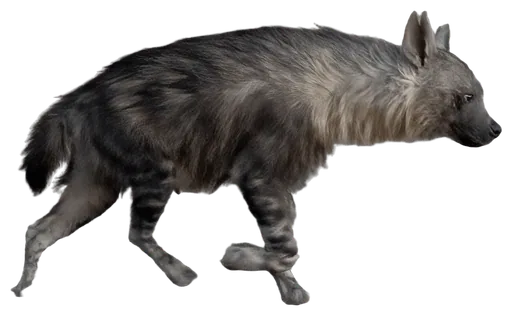
 Fight
FightPhoto: Kandukuru Nagarjun from Bangalore, India · CC BY 2.0
The brown hyena is a shaggy 43 kg desert scavenger of southern Africa that can smell carrion from 2 km away and walk more than 50 km in a night. Its heavy bone-cracking bite and bold temper let it drive leopards off their kills, but it rarely hunts successfully and cannot match lions or spotted hyena clans.
 Attack53
  Defense45
  Agility51
  Stamina80
  Intelligence66
  Special65
 Detailed ratings
Research-backed ratings on one 0–100 scale for all 341 animals (updated 2026-09-28). How ratings work
Special abilities
Ability 1Carcass RadarCarrion is located mainly by smell, and even old, dry carcasses can be detected from 2 km downwind. This lets it find food and rivals' kills across huge desert territories.
 Ability 2Leopard Charge
A lone brown hyena will rush a leopard with its jaws wide open and can drive an adult male leopard up a tree, then take its kill. Its heavy bite and thick-necked build back up the bluff.
Unique traits
 TraitStrandwolf of the Namib
On the Namib Desert coast it patrols beaches and seal colonies, living largely on Cape fur seal pups and other washed-up marine animals, and even uses abandoned diamond mining towns.
TraitTwo-Tone Scent PasteEach time it pastes a grass stalk it leaves a thin black smear and a thick white blob whose smell lasts over 30 days; marks are so dense that a hyena is rarely more than 500 m from one.
How it fights
Weapons
- The brown hyena's main weapon is a heavy bone-cracking bite from a large, robust skull. It is overwhelmingly a scavenger: in the southern Kalahari, vertebrates it killed made up only 4.2% of food items, and of 128 observed hunts only six (4.7%) succeeded, mostly on springhare, springbok lambs and bat-eared foxes. On the Namib coast it feeds mainly on Cape fur seal pups, nearly all found dead. Where it does use its bite on other animals, it is mainly in contests over food.
 Struggles vs
- About 43 kg; outclassed by lions and spotted hyena groups.
- A poor, rarely successful hunter; little experience subduing healthy prey.
- No armor; its bite is its only serious weapon.
- Heavy teeth wear down with age, reducing bite effectiveness in old animals.
- Weight
- 43 kg95 lb
- Height
- 79 cm31.1 in
- Length
- 1.15 m3.8 ft
- Top speed
- 40 km/h25 mph
- Bite force
- No reliable measurement
- Lifespan
- 10 years
- Home biome
- Desert
- Lifestyle
- Social, nocturnal
Rated specimen: Healthy mature adult male of about 43.0 kg, head-body about 115 cm, shoulder height about 79 cm.
Fun facts
- It can smell an old, dried-out carcass from 2 km downwind.
- One Kalahari brown hyena walked 54.4 km in a single night.
- Only about 1 in 20 of its hunts succeed, so it relies on scavenging.
- A single brown hyena can chase an adult male leopard up a tree.
- On the Namib coast it lives on seal pups and has been seen in abandoned diamond mining towns.
- Its white scent paste keeps its smell for more than a month.
Closest rivals by power. Tap one for the full breakdown, or pick any opponent.
vs Wild HorseLoses · 50% · Toss-up 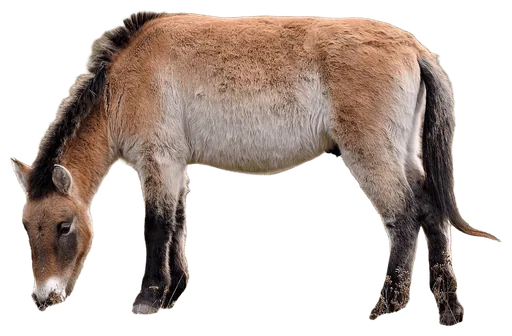 L vs Wild BoarWins · 50% · Toss-up
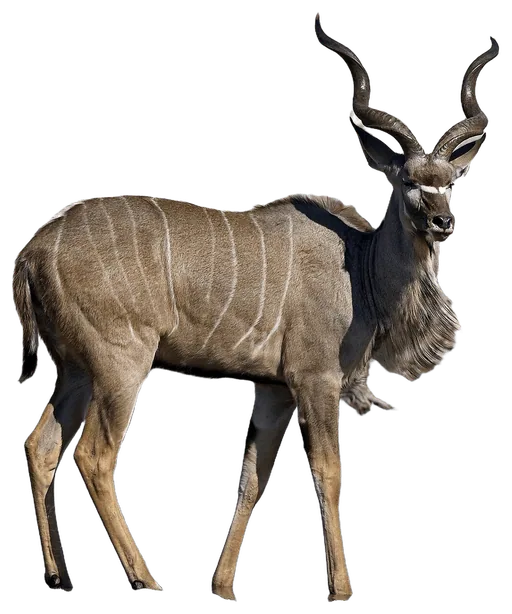
 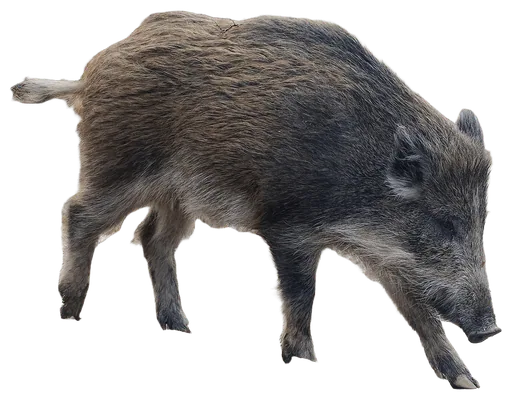 W vs KuduWins · 50% · Toss-up
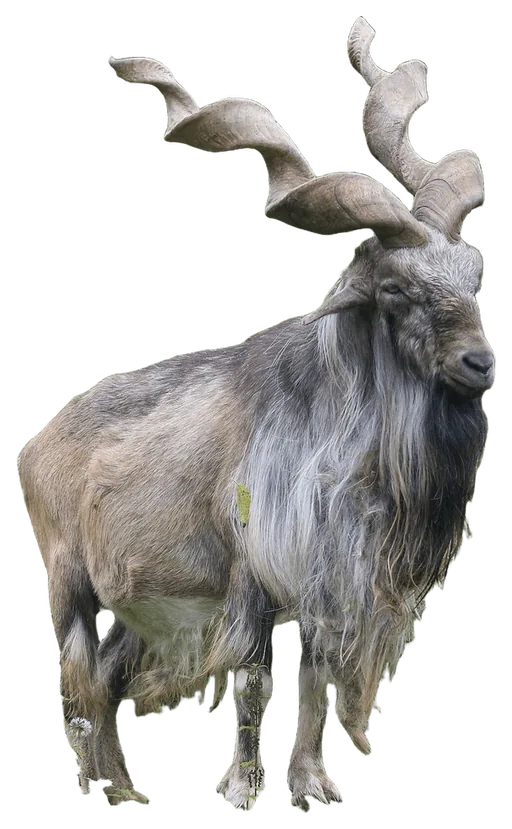
  W vs MarkhorWins · 50% · Toss-up
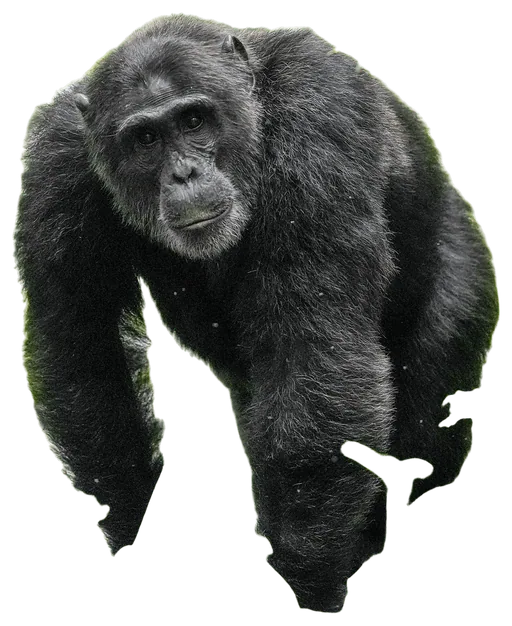
  W vs ChimpanzeeWins · 51% · Toss-up
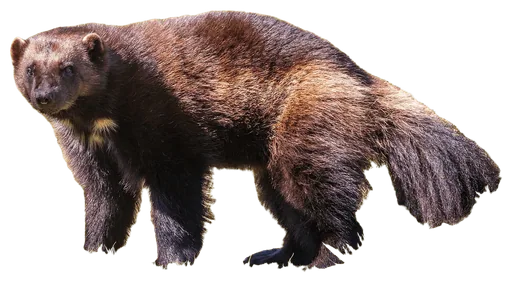
  W vs WolverineWins · 51% · Toss-up
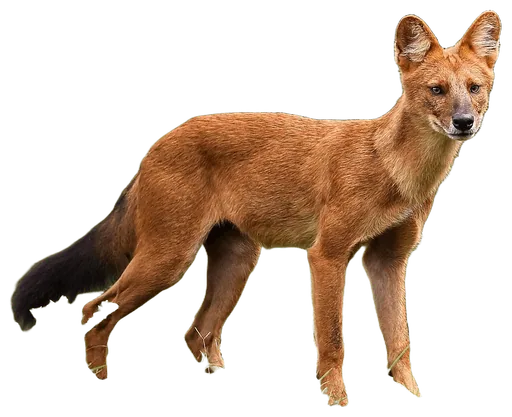
  W vs DholeWins · 51% · Toss-up
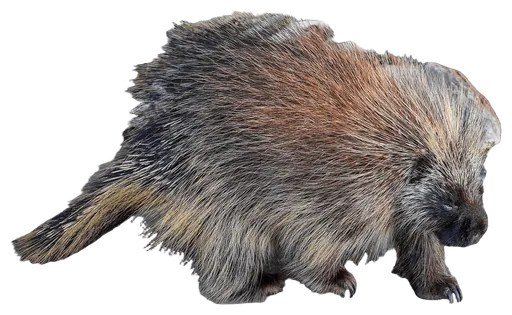
  W vs PorcupineWins · 51% · Toss-up
  W
W  Pick any opponent
 Brown Hyena battle analysis
The brown hyena looks like a large, long-haired dog with a sloping back: dark brown to black, with a cream mantle around the neck and shoulders and a coat that bristles up to 30 cm when it is excited. A mature male weighs around 43 kg. It is the hyena of the Kalahari and the Namib, where rain can be less than 100 mm a year and food is thinly spread.
Its answer to scarcity is distance and a nose. Brown hyenas spend most of the night on the move, averaging about 31 km, and can find even dried carcasses by scent from 2 km away. On the Namib coast they patrol beaches for dead seal pups and washed-up marine life. They hunt only occasionally and rarely succeed, taking springhares, lambs and bat-eared foxes, so most of what they eat comes from carcasses and from kills they steal.
Stealing is where its fighting ability shows. A lone brown hyena will charge a leopard with its jaws open and can force an adult male up a tree, and it routinely displaces cheetahs and jackals. Its skull is among the largest in the hyena family and its bite-force quotient is close to the spotted hyena's. On the absolute roster scale it sits slightly above the striped hyena, just below the gray wolf in Attack and well below the spotted hyena, with very high Stamina from its long desert walks.
Habitat & range
Southern Africa's arid west: Namibia, Botswana, western and southern Zimbabwe, southern Mozambique and South Africa. It lives in desert with under 100 mm of rain, especially along the coast, and in semi-desert, open scrub and open woodland savanna up to about 650 mm of rain. It is independent of drinking water but needs cover to lie up in by day, and it can survive close to farms and towns.
Diet & hunting
A scavenger of a wide range of vertebrate remains, supplemented by wild fruits such as tsama melons, insects, birds' eggs and the occasional small animal it kills. In farming areas of South Africa it scavenges cattle carcasses and medium and small wild animals. It caches food and steals kills from jackals, cheetahs and leopards.
Social life
Lives in clans that share and defend a territory but usually forage alone. Clans have separate male and female dominance hierarchies. Many males are nomads that roam between clan territories, and both nomadic and immigrant males may mate with clan females.
Conservation
Near Threatened on the IUCN Red List, with a global population estimated at 4,000–10,000. Main threats are persecution by livestock farmers, poisoning, road deaths and disease from domestic dogs; 43% of Namib Desert brown hyenas sampled had antibodies to canine distemper virus. Density estimates in fenced South African reserves varied almost tenfold depending on whether fences were assumed to be permeable, showing how uncertain population numbers are.
Quick answers
How strong is a Brown Hyena?
On the Animal Battle Stats scale, the Brown Hyena has an attack rating of 53 and a power index of 56.6 out of 100, which ranks it #93 of 341 animals and puts it in B tier (Strong). Its strongest stat is stamina (80).
How much does a Brown Hyena weigh?
A typical adult Brown Hyena weighs about 43 kg (95 lb). Rated specimen: healthy mature adult male of about 43.0 kg, head-body about 115 cm, shoulder height about 79 cm.
How fast is a Brown Hyena?
The Brown Hyena's top speed is about 40 km/h (25 mph). Its agility rating is 51 out of 100.
What does a Brown Hyena eat?
A scavenger of a wide range of vertebrate remains, supplemented by wild fruits such as tsama melons, insects, birds' eggs and the occasional small animal it kills. In farming areas of South Africa it scavenges cattle carcasses and medium and small wild animals. It caches food and steals kills from jackals, cheetahs and leopards.
Is the Brown Hyena endangered?
The Brown Hyena's conservation status is Near Threatened. Near Threatened on the IUCN Red List, with a global population estimated at 4,000–10,000. Main threats are persecution by livestock farmers, poisoning, road deaths and disease from domestic dogs; 43% of Namib Desert brown hyenas sampled had antibodies to canine distemper virus. Density estimates in fenced South African reserves varied almost tenfold depending on whether fences were assumed to be p
What animals can beat a Brown Hyena?
Among its closest rivals, the Wild Horse (50%) would be favored against the Brown Hyena. It would be favored against the Wild Boar, the Kudu, the Markhor, the Chimpanzee, the Wolverine, the Dhole, the Porcupine.
Researched 2026-09-28. Ratings are editorial judgments built from these sources; measurements describe a healthy adult male.
- IUCN/SSC Hyaena Specialist Group, Mills & Hofer (1998), Hyaenas: Status Survey and Conservation Action Planmass, length, height, diet, hunting success, nightly distance, smell, clans, pasting, reproduction
- Animal Diversity Web, Hyaena brunneamass, speed, lifespan, clan system, cooperative breeding
- Wikipedia, Brown hyenastatus, sex-specific mass, bone cracking, leopard interactions, Namib habitat
- Wikipedia, Bite force quotientrelative bite strength
- Stegmann et al. (2026), BMC Veterinary Researchskull size
- Pérez-Claros & Coca-Ortega (2020), PeerJdentition
- Vissia, Fattebert & van Langevelde (2022), Ecology and Evolutionleopard interactions
- Williams et al. (2021), Scientific Reportsdensity
- Wiesel, Zimmerman & Suedmeyer (2018), Journal of Zoo and Wildlife Medicinedisease threat
- Commons, Brown hyena in Ghanziimage candidate
Photo: “Brown hyena with shaggy coat (53258160171).jpg” by Kandukuru Nagarjun from Bangalore, India, CC BY 2.0, background removed and cropped. Original
Suggest a correction