
Box Jellyfish
Chironex fleckeriC tier · Capable43rd of 51 sea creatures
Size & speed

- Weight
- 2 kg4 lb
- Length
- 3 m9.8 ft
As heavy as 10 smartphones
Heavier than 28% of animals1.7× a person's height
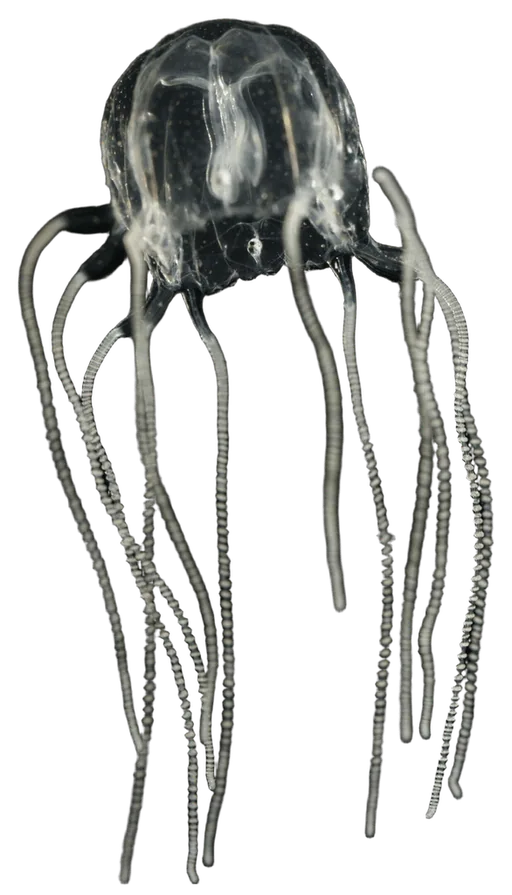
Bigger than 85% of animalsThe Australian box jellyfish is a physically fragile but biochemically extreme predator. A mature Chironex fleckeri uses dozens of nearly invisible tentacles packed with explosive nematocysts to inject fast-acting venom into fish, crustaceans and accidental human contacts. Its soft bell offers almost no armor, but active swimming, 24 eyes and a huge contact envelope make it far more capable than a passive drifting jelly.
Detailed ratings
Research-backed ratings on one 0–100 scale for all 344 animals (updated 2026-09-27). How ratings work


Card No. 237 of 344. Every animal on Animal Battle Stats has one: its power, tier and archetype on the front; its six battle stats, abilities and signature move on the back.
Special abilities
Up to roughly 60 tentacles create a large contact field packed with microscopic capsules that explosively inject venom on contact, allowing the jellyfish to damage prey without muscular grappling.
A diversified toxin family produces rapid cytolytic and cardiovascular effects; sufficiently large envenomation can collapse vertebrate cardiovascular function within minutes.
Unique traits
Four rhopalia carry 24 eyes, including complex lens-bearing eyes, supporting unusually directed visual behavior for a brainless cnidarian.
The nearly transparent bell makes the animal difficult to detect in shallow water while long tentacles extend its effective contact zone far beyond its small body mass.
How it fights
Weapons
- Contact with tentacles triggers microscopic stinging capsules. This is an unusual weapon because a fragile 2 kg animal can impose severe biochemical damage on vastly heavier vertebrates without needing mammal-scale muscular force. The venom's effects include intense pain, inflammation, dermonecrosis, cytotoxicity and potentially rapid cardiovascular collapse. Human severity is dose-dependent and contact-length dependent; one prospective Australian series documented cardiorespiratory arrest within minutes in a fatal pediatric case with 1.2 m of visible tentacle contact.
Struggles vs
- Functionally helpless out of water
- Extremely fragile body with no armor
- Strong currents can influence travel and positioning
- Opponents resistant to cnidarian stings or able to attack without tentacle contact reduce its main advantage
- Large tentacle spread can become a liability in complex structures
- Weight
- 2 kg4 lb
- Height
- 30 cm11.8 in
- Length
- 3 m9.8 ft
- Top speed
- No reliable measurement
- Bite force
- No reliable measurement
- Lifespan
- No reliable measurement
- Home biome
- Ocean
- Lifestyle
- Mostly solitary
Rated specimen: Healthy, sexually mature large jellyfish.
Fun facts
- A mature C. fleckeri can carry up to about 60 tentacles arranged in four corner bundles.
- It has 24 eyes despite lacking a centralized brain.
- Acoustic telemetry demonstrates that adults can move independently of tidal currents.
- Venom proteomics has identified more than 250 proteins in venom preparations, including multiple pore-forming toxin-family members.
- The polyp stage is tiny and benthic, while the adult jellyfish becomes one of the largest cubozoans.
- Venom composition and potency can differ between Australian regions and seasons.
Closest rivals by power. Tap one for the full breakdown, or pick any opponent.
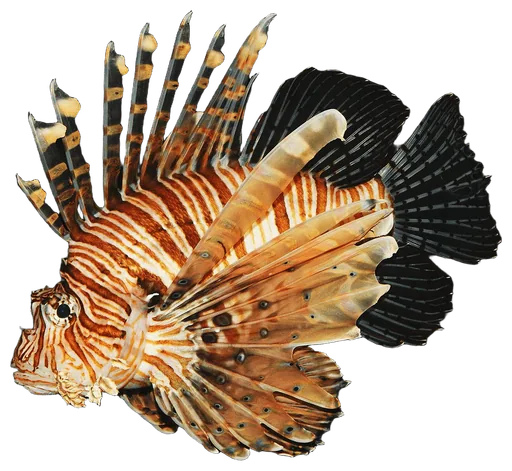
vs Blue-Ringed OctopusWins · 70% · Clear edge 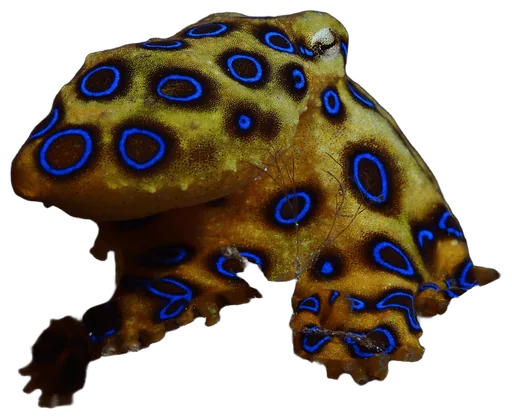 W vs LionfishWins · 57% · Toss-up
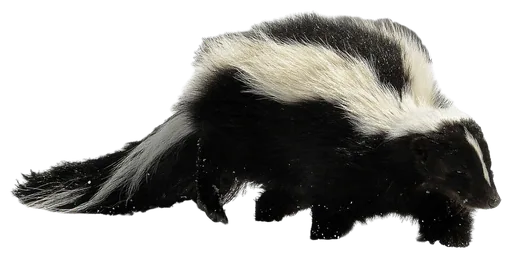
 W vs SkunkLoses · 55% · Toss-up
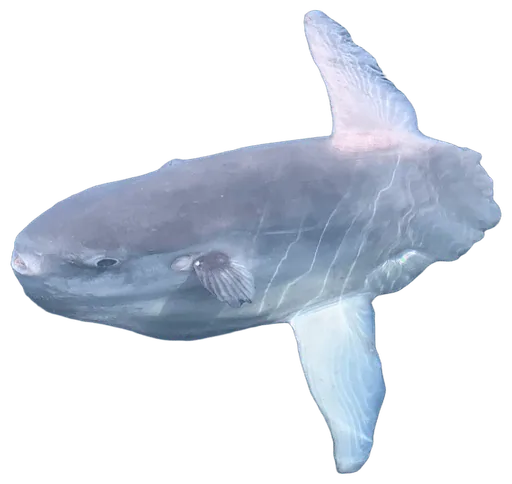
 L vs Ocean SunfishLoses · 75% · Clear edge
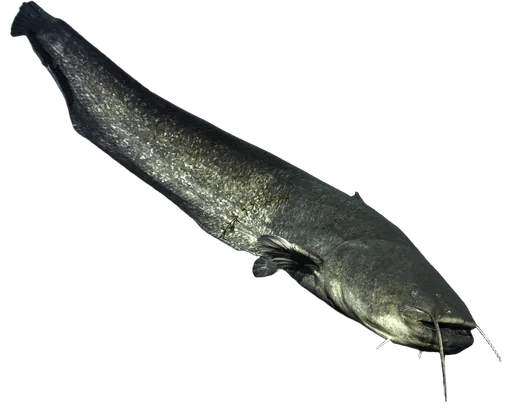
 L vs Wels CatfishLoses · 66% · Slight edge
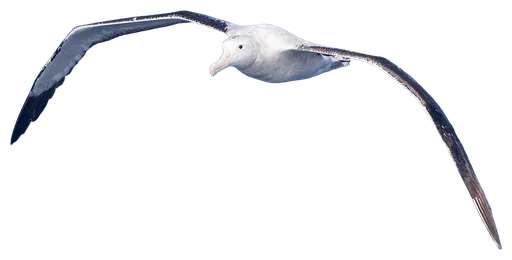
 L vs AlbatrossLoses · 60% · Slight edge
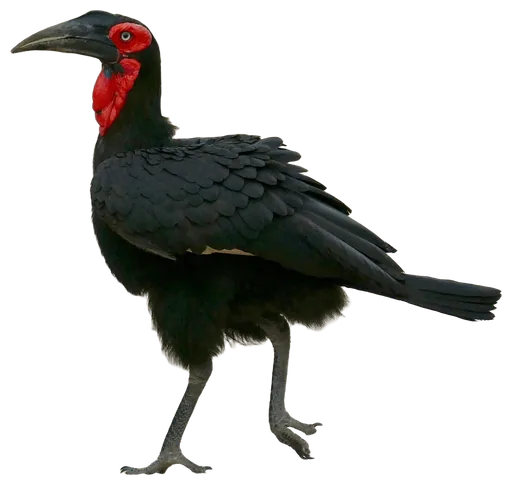
 L vs Southern Ground HornbillLoses · 55% · Toss-up
 L vs AnteaterLoses · 67% · Slight edge
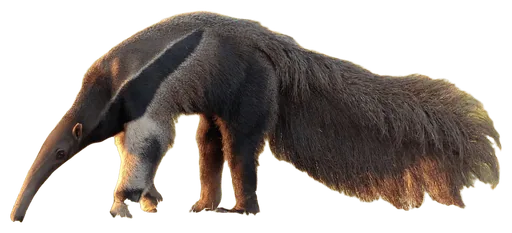 L
Box Jellyfish battle analysis
Box Jellyfish is one of the clearest examples of why ABS cannot turn body size into combat power. At roughly a few kilograms, its bell has almost no crushing strength, no teeth, no claws and no armor. A mammal-scale Raw Power score would be indefensible. Yet a careless opponent can still lose because the animal's real weapon exists at a microscopic scale. Long tentacles carry batteries of nematocysts that fire penetrating tubules and deliver a complex toxin mixture. The result can be immediate pain, tissue damage and, at sufficient dose in susceptible vertebrates, catastrophic cardiovascular effects.
That asymmetry defines the matchup. The jellyfish does not need to overpower an opponent. It needs contact. Its long tentacle curtain turns a relatively small bell into a much larger hazard zone, while transparency makes that zone difficult to read. Active swimming and visual sensory organs improve positioning enough that calling it a passive drifter is inaccurate. But those advantages disappear if the opponent can avoid or resist the sting and directly damage the bell.
This produces deliberately polarized ratings. Raw Power, Protection and Toughness belong near the roster floor. Weaponry, Abilities and Special belong near the ceiling. Attack lands much lower than Special because ABS Attack asks about practical damage delivery across matchups, not the theoretical severity of one toxin system. Intelligence also stays low despite the fascinating 24-eye system because visual control is not equivalent to flexible cognition. This separation prevents one extraordinary feature from inflating every category.
Habitat & range
Australian Museum places the species in tropical Australian coastal waters from Western Australia through the Northern Territory to Queensland. Field/eDNA work demonstrates both coastal and estuarine use and distinct polyp versus jellyfish habitat patterns. The species should not be casually assigned a global tropical-ocean range simply because other box jellyfish occur elsewhere.
Diet & hunting
Carnivorous predator of small fish and crustaceans. Juveniles initially consume smaller planktonic prey, then shift toward larger crustaceans/fish as tentacle and nematocyst systems develop. Large jellyfish can move between coastal and estuarine habitats and are not merely current-driven plankton.
Social life
No evidence supports stable social groups or cooperative hunting. Treat as solitary for ABS.
Conservation
No global IUCN category is used here as a canonical status because a current species-level assessment was not established in this run. Local abundance is seasonal and difficult to measure. Do not equate public-health control with conservation status.
Quick answers
How strong is a Box Jellyfish?
On the Animal Battle Stats scale, the Box Jellyfish has an attack rating of 56 and a power index of 44.8 out of 100, which ranks it #237 of 344 animals and puts it in C tier (Capable). Its strongest stat is special (98).
How much does a Box Jellyfish weigh?
A typical adult Box Jellyfish weighs about 2 kg (4 lb). Rated specimen: healthy, sexually mature large jellyfish.
How fast is a Box Jellyfish?
There is no reliable measured top speed for the Box Jellyfish, so we do not publish one. Its agility rating, which covers acceleration, reflexes and evasion, is 55 out of 100.
What does a Box Jellyfish eat?
Carnivorous predator of small fish and crustaceans. Juveniles initially consume smaller planktonic prey, then shift toward larger crustaceans/fish as tentacle and nematocyst systems develop. Large jellyfish can move between coastal and estuarine habitats and are not merely current-driven plankton.
What animals can beat a Box Jellyfish?
Among its closest rivals, the Skunk (55%), the Ocean Sunfish (75%), the Wels Catfish (66%), the Albatross (60%), the Southern Ground Hornbill (55%), the Anteater (67%) would be favored against the Box Jellyfish. It would be favored against the Blue-Ringed Octopus, the Lionfish.
Researched 2026-09-27. Ratings are editorial judgments built from these sources; measurements describe a healthy adult.
- Australian Museum, Box JellyfishTaxonomy, Australian range, bell/tentacle size
- Animal Diversity Web, Chironex fleckeriBell range, tentacle count/reach, mass, habitat
- Gordon & Seymour 2009, HydrobiologiaActive swimming, habitat/tide/day-night movement
- Brinkman et al. 2012, PLOS ONEVenom proteome and nematocyst mechanism
- Brinkman et al. 2014, JBCCfTX toxin diversity/mechanism
- Brinkman et al. 2015, BMC GenomicsExpanded venom composition
- Winter et al. 2010, Toxicology LettersGeographic/seasonal venom variation
- Currie & Jacups 2005, Medical Journal of AustraliaHuman sting severity/dose context
- Morrissey, Jerry & Kingsford 2024, Marine Ecology Progress SeriesPolyp/jellyfish ecology
- Gordon 2014 JCU thesisLife history/age and seasonality
Photo: “Tripedalia-cystophora-Bielecki.jpg” by Jan Bielecki, Public domain, background removed and cropped. Original
Suggest a correction