

Boomslang
Dispholidus typus
 #222 of 341
  Savanna Venomous Hunter Least Concern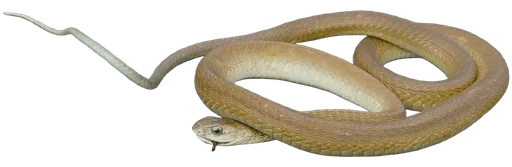
 Fight
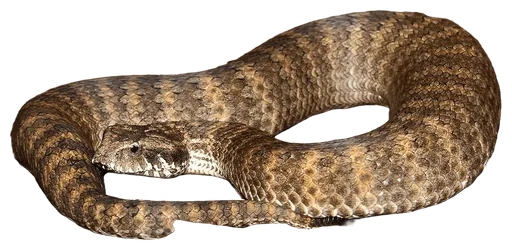
FightPhoto: Bernard DUPONT from FRANCE · CC BY-SA 2.0
The boomslang is a slender, sharp-eyed African tree snake whose small doses of rear-fang venom cause deadly bleeding hours after a bite. It is fast and precise in the branches but timid and fragile, weighing only about 300 g, so in a fight its venom is too slow to protect it.
 Attack40
  Defense12
  Agility80
  Stamina48
  Intelligence44
  Special88
 Detailed ratings
Research-backed ratings on one 0–100 scale for all 341 animals (updated 2026-09-28). How ratings work
Special abilities
Ability 1Silent Clot VenomMetalloproteinases in its venom activate prothrombin and factor X, causing widespread tiny clots and then uncontrolled bleeding. Symptoms can take many hours to appear, which misled the herpetologist Karl Schmidt into thinking his 1957 bite was harmless; he died about a day later.
 Ability 2170-Degree Rear-Fang Bite
It can open its jaws to about 170°, bringing three large grooved fangs on each side into contact, then holds on to work the venom in.
Unique traits
 TraitEmerald-Eyed Sharpshooter
Its eyes are exceptionally large, and it sways its head from side to side to judge distance, giving it some of the best vision of any snake.
TraitTwo-Tone Tree SnakeMost males are bright green and females brown, and it changes from a grey juvenile with a huge green eye into adult colors at around 1 m long.
How it fights
Weapons
- The primary weapon is a bite with three large grooved fangs on each side at the back of the upper jaw, delivering a small amount of an extremely potent clotting venom. The very wide 170° gape lets it bring these rear fangs into play. The secondary assets are sharp vision and speed in the branches, which it uses both to catch prey and to escape.
 Struggles vs
- Very light, fragile body.
- Rear fangs need a firm, held bite.
- Tiny venom doses and slow onset.
- Much weaker on open ground than in trees.
- Weight
- 300 g10.6 oz
- Height
- No reliable measurement
- Length
- 1.4 m4.6 ft
- Top speed
- No reliable measurement
- Bite force
- No reliable measurement
- Lifespan
- 8 years
- Home biome
- Savanna
- Lifestyle
- Mostly solitary
Rated specimen: Healthy adult, 0.3 kg and 140 cm total length, sex unspecified.
Fun facts
- Its name means "tree snake" in Afrikaans and Dutch.
- It can open its mouth to about 170°.
- Juveniles have a huge emerald-green eye compared with their head.
- Karl Schmidt kept a diary of his symptoms after being bitten, almost until he died the next day.
- Its venom was once so underrated that many experts thought rear-fanged snakes could not kill people.
- It sometimes spends cool spells curled up inside a weaver bird's nest.
Closest rivals by power. Tap one for the full breakdown, or pick any opponent.
vs Gaboon ViperLoses · 50% · Toss-up  L vs Capuchin MonkeyLoses · 50% · Toss-up
  L vs QuollWins · 50% · Toss-up
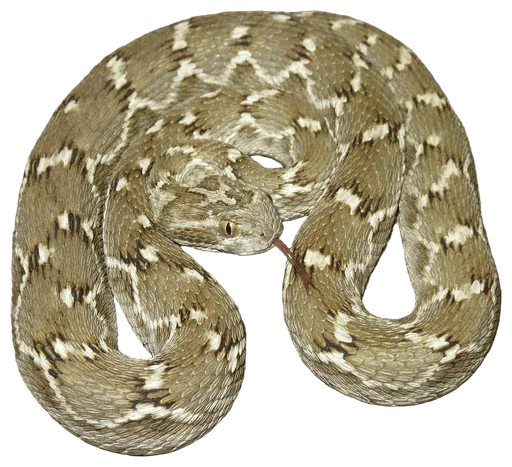
  W vs Saw-scaled ViperWins · 52% · Toss-up
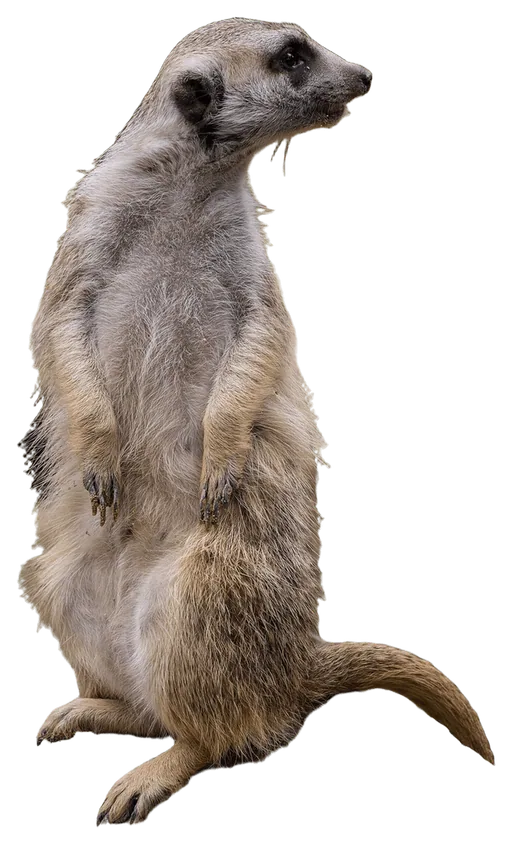
  W vs MeerkatWins · 50% · Toss-up
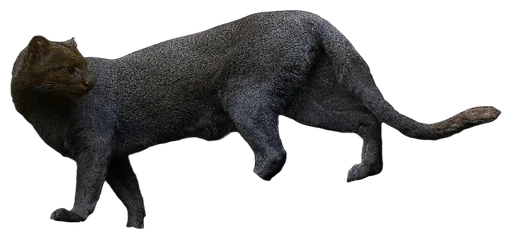
  W vs JaguarundiLoses · 50% · Toss-up
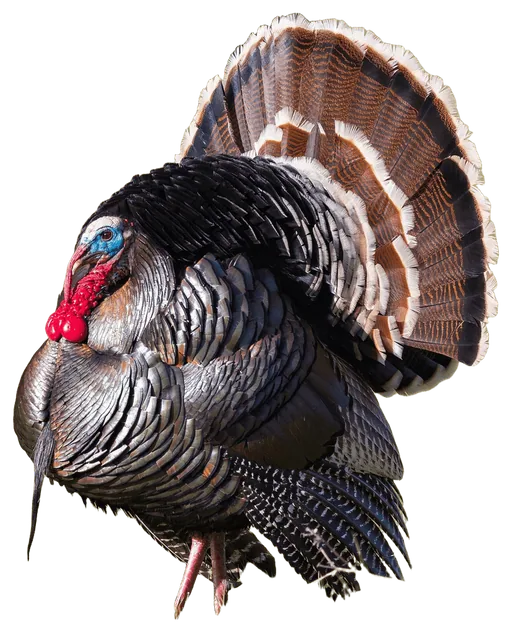
  L vs Wild TurkeyWins · 50% · Toss-up
  W vs Common Death AdderWins · 53% · Toss-up
  W
W  Pick any opponent
 Boomslang battle analysis
The boomslang looks like a harmless green tree snake, and for a long time experts treated it like one. Its fangs sit at the back of its mouth, and it produces only a few milligrams of venom. Then, in 1957, the herpetologist Karl Schmidt was bitten by a juvenile and died about a day later, after writing down his symptoms almost to the end. The venom, rich in enzymes that switch on the body's own clotting factors, causes widespread tiny clots and then uncontrolled bleeding, but only after hours of little warning.
In life the boomslang is a hunter of chameleons, tree lizards and nestling birds. It stalks slowly through branches using its exceptionally large eyes, swaying its head to judge distance, then bites and holds so its rear fangs can work. Its jaws open to about 170°. When threatened by something too large to eat, it usually slips away through the canopy; if cornered, it inflates its neck and takes an S-shaped strike pose.
For battle ratings, the boomslang's venom is dangerous but works on the wrong timescale for a fight: an opponent could keep fighting for hours before bleeding begins. Its body is tiny and fragile, and it is very reluctant to bite. Its genuine strengths are tree agility, vision and a venom system unlike that of any front-fanged snake.
Habitat & range
The boomslang lives across sub-Saharan Africa, from Senegal and The Gambia through West, Central and East Africa to southern Africa, with dense populations in Angola, Botswana, Eswatini, Malawi, Mozambique, Namibia, South Africa, Zambia and Zimbabwe. It uses karoo scrub, savanna, lowland forest and grassland, living mainly in shrubs and trees and avoiding very dry desert.
Diet & hunting
Chameleons and other tree lizards are its main prey, along with frogs, nestling birds and eggs, small mammals and other snakes, including boomslangs. It hunts by day, stalking through branches.
Social life
Solitary; conspecifics may be eaten.
Conservation
Listed as Least Concern on the IUCN Red List (as reported by Wikipedia). It is widespread across much of sub-Saharan Africa.
Quick answers
How strong is a Boomslang?
On the Animal Battle Stats scale, the Boomslang has an attack rating of 40 and a power index of 45.6 out of 100, which ranks it #222 of 341 animals and puts it in C tier (Capable). Its strongest stat is special (88).
How much does a Boomslang weigh?
A typical adult Boomslang weighs about 300 g (10.6 oz). Rated specimen: healthy adult, 0.3 kg and 140 cm total length, sex unspecified.
How fast is a Boomslang?
There is no reliable measured top speed for the Boomslang, so we do not publish one. Its agility rating, which covers acceleration, reflexes and evasion, is 80 out of 100.
What does a Boomslang eat?
Chameleons and other tree lizards are its main prey, along with frogs, nestling birds and eggs, small mammals and other snakes, including boomslangs. It hunts by day, stalking through branches.
Is the Boomslang endangered?
No. The Boomslang is listed as Least Concern. Listed as Least Concern on the IUCN Red List (as reported by Wikipedia). It is widespread across much of sub-Saharan Africa.
What animals can beat a Boomslang?
Among its closest rivals, the Gaboon Viper (50%), the Capuchin Monkey (50%), the Jaguarundi (50%) would be favored against the Boomslang. It would be favored against the Quoll, the Saw-scaled Viper, the Meerkat, the Wild Turkey, the Common Death Adder.
Researched 2026-09-28. Ratings are editorial judgments built from these sources; measurements describe a healthy adult.
- Wikipedia, Boomslanglength, mass, fangs, gape, eyesight, range, diet, reproduction, venom yield and LD50, human cases, IUCN status
- Animal Diversity Web, Dispholidus typushabitat, length, coloration, reproduction, lifespan, hunting
- African Snakebite Institute, Boomslangbehavior, coloration, venom, antivenom
- Reptile Database, Dispholidus typustaxonomy, distribution, diet, habitat
- Pla et al. 2017, BBA General Subjects, "What killed Karl Patterson Schmidt?"venom composition
- Debono et al. 2017, Toxins, "Coagulating Colubrids"procoagulant action, antivenom
- Vieira et al. 2023, Toxicon, boomslang case studyclinical effects, antivenom dose
- Boomslang envenomation in 2 dogs in KwaZulu-Natal (J S Afr Vet Assoc 2007)human and pet interaction
- AnAge, Dispholidus typuslongevity; rejected mass
Photo: “Boomslang (Dispholidus typus) female dying on the road ... (32094584497).jpg” by Bernard DUPONT from FRANCE, CC BY-SA 2.0, background removed and cropped. Original
Suggest a correction