
Boa Constrictor
Boa constrictorC tier · Capable23rd of 39 reptiles
Size & speed

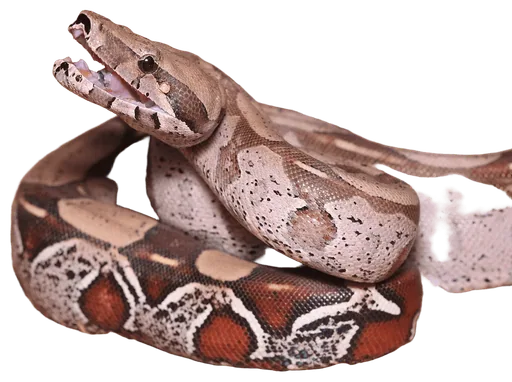
- Weight
- 12 kg26 lb
- Length
- 2.7 m8.9 ft
As heavy as 2.7 house cats
Heavier than 48% of animals1.5× a person's height
Bigger than 82% of animalsThe boa constrictor is a heavy-bodied South American ambush snake whose real weapon is not an exaggerated bite but a sophisticated grapple. After seizing prey with recurved teeth, it wraps muscular coils around the body and rapidly disrupts circulation. Experiments show that boas can even sense a prey heartbeat and adjust their squeezing effort, while modular rib ventilation lets them keep breathing when parts of the trunk are mechanically constrained. A mature female is powerful for a snake but remains far below giant constrictors and megafauna in absolute mass.
Detailed ratings
Research-backed ratings on one 0–100 scale for all 344 animals (updated 2026-09-27). How ratings work


Card No. 185 of 344. Every animal on Animal Battle Stats has one: its power, tier and archetype on the front; its six battle stats, abilities and signature move on the back.
Special abilities
The boa wraps prey and applies circumferential compression that experimentally causes rapid collapse of effective blood circulation, turning a successful grapple into systemic incapacitation rather than relying only on airway restriction.
Boa constrictors detect prey heartbeat cues and adjust the pressure and duration of constriction, allowing them to meter effort while maintaining control.
Unique traits
The snake can recruit different rib regions for lung ventilation when another body segment is mechanically hindered, supporting breathing during constriction and large-prey ingestion.
Despite its robust constrictor build, the species remains semi-arboreal, especially when younger, combining trunk strength with branch-gripping body control.
How it fights
Weapons
- Boa constriction is a sophisticated cardiovascular attack, not merely passive suffocation. Boback et al. (2015) experimentally measured rats during B. constrictor attacks. Within six seconds, peripheral arterial pressure fell to half baseline while central venous pressure rose sixfold. By the end of constriction, systemic perfusion pressure had fallen 5.7-fold and 91% of rats showed cardiac electrical dysfunction. The evidence supports rapid circulatory arrest as the core killing mechanism.
Struggles vs
- No armor or venom
- Head remains a critical target
- Requires close contact and positional control
- Limited ability to damage opponents too large to constrict effectively
- Poor long-distance pursuit capability
- Weight
- 12 kg26 lb
- Height
- No reliable measurement
- Length
- 2.7 m8.9 ft
- Top speed
- No reliable measurement
- Bite force
- No reliable measurement
- Lifespan
- 25 years
- Home biome
- Jungle
- Lifestyle
- Social
Rated specimen: Representative healthy mature adult female.
Fun facts
- Experimental boas can detect a prey animal's heartbeat through their coils and relax soon after the heartbeat stops.
- Constriction can alter prey blood pressure within seconds, long before simple suffocation would explain incapacitation.
- Boa constrictors can shift which rib regions ventilate the lung when another region is mechanically blocked.
- Females are larger and heavier-bodied than males, while males retain proportionally longer tails and larger cloacal spurs.
- They give birth to live young rather than laying an exposed clutch of eggs.
- Young boas spend proportionally more time in trees, becoming more terrestrial as they gain mass.
Closest rivals by power. Tap one for the full breakdown, or pick any opponent.
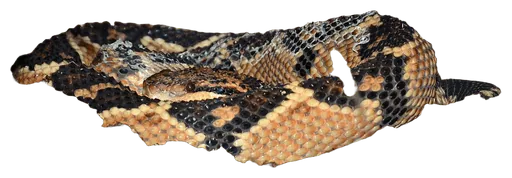
vs Russell's ViperWins · 63% · Slight edge 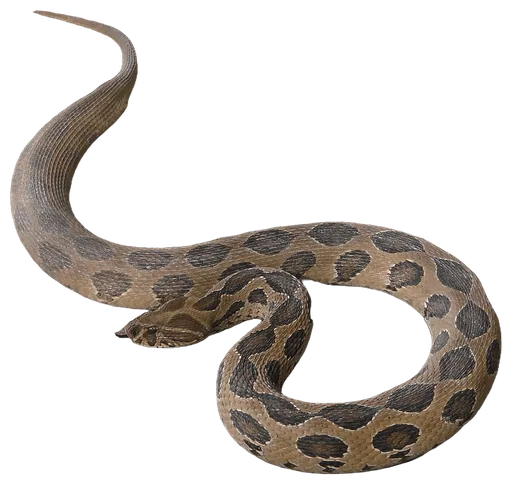 W vs BushmasterWins · 57% · Toss-up
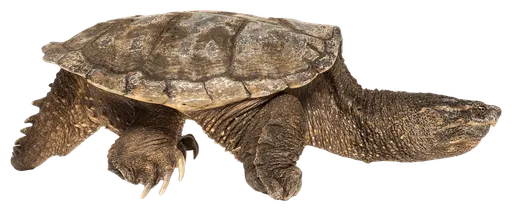
 W vs Snapping TurtleWins · 52% · Toss-up
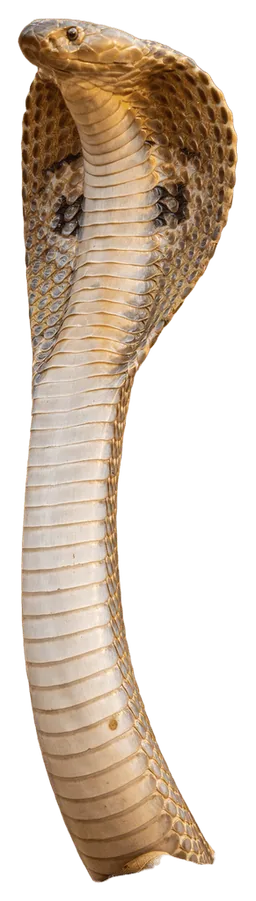
 W vs Indian CobraWins · 58% · Slight edge
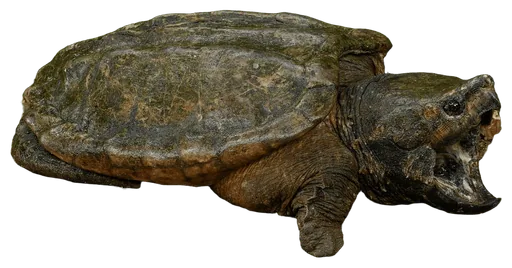
 W vs Alligator Snapping TurtleLoses · 60% · Slight edge
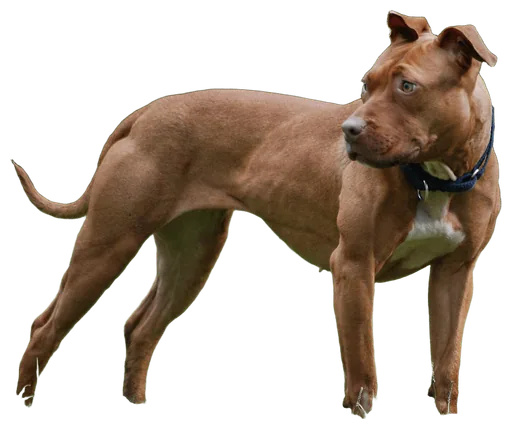
 L vs American Pit Bull TerrierLoses · 54% · Toss-up
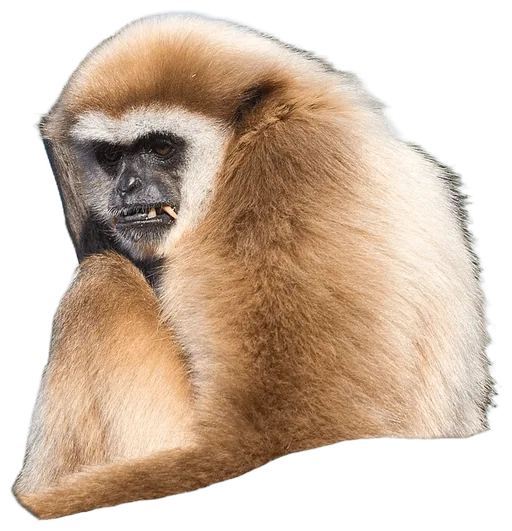
 L vs GibbonWins · 53% · Toss-up
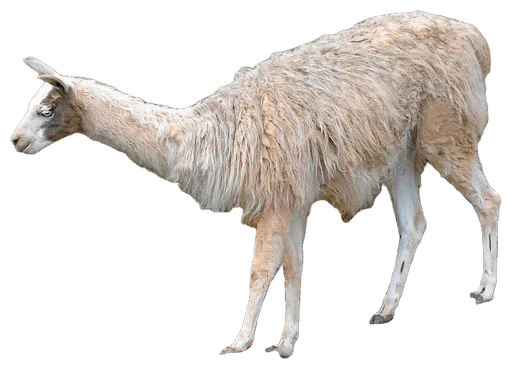
 W vs LlamaLoses · 64% · Slight edge
 L
Boa Constrictor battle analysis
A boa constrictor wins by controlling contact. Its first strike is important less because of raw bite pressure than because backward-curving teeth keep prey from simply pulling free. Once the head has purchase, the rest of the animal becomes the weapon. Loops of trunk encircle the thorax and tighten. Modern physiological experiments transformed the interpretation of this behavior: the target's circulation deteriorates within seconds, with venous pressure rising and arterial pressure collapsing. This is a mechanically efficient way for a comparatively modest-mass predator to incapacitate prey without venom.
The system is also more responsive than a fixed squeeze reflex. Laboratory work using simulated heartbeats showed that boas alter both pressure and constriction duration according to cardiac cues. That matters for ABS because it supports a real tactics component without anthropomorphizing the snake. The boa is not planning like a primate, but it is continuously sampling information from the prey and changing its effort.
Its body also solves a mechanical problem created by its own hunting style. Coiling around prey and swallowing large meals can prevent normal rib motion. XROMM research demonstrated that boas can ventilate different lung regions by recruiting different rib segments. That does not make the snake an endurance athlete, but it explains how it can maintain a demanding grapple while portions of the body wall are occupied.
Absolute calibration is essential. A representative female around 12 kg is dramatically smaller than the 50 kg canonical green anaconda already researched. Therefore, the boa should not inherit the anaconda's Raw Power or Attack merely because both use constriction. Its advantage is an efficient, well-controlled killing mechanism within an appropriately sized prey envelope. Against large horned, clawed or armored animals that cannot be fully encircled, that mechanism becomes far less decisive.
Habitat & range
Boa constrictors occupy an unusually broad habitat spectrum. Smithsonian lists deserts, wet tropical forests, open savannas and cultivated fields from sea level to moderate elevation. Toronto Zoo similarly describes tropical rainforest through semi-desert. They use hollow logs, burrows, trees and dense cover.
The species occurs broadly in South America, while older sources often describe a northern Mexico-to-Argentina range that includes populations now assigned to Boa imperator. For ABS taxonomy, the canonical B. constrictor should be understood as the South American species rather than the entire historical boa complex.
Diet & hunting
Carnivorous. Credible prey categories include rodents, opossums, bats, birds, lizards and other small to medium vertebrates. Prey size increases with snake size. The boa does not need venom because the bite primarily establishes the hold for constriction.
Social life
Largely solitary outside reproduction. Recent Brazilian field observations document multi-male mating aggregations around a female and support polyandry.
Conservation
Status reporting is taxonomically messy. Animal Diversity Web lists B. constrictor as Not Evaluated in its older IUCN treatment and notes CITES Appendix II for most populations, with some historically recognized forms receiving stronger protection. Commons currently labels the species Least Concern, but production should verify the exact current IUCN assessment and taxonomic scope before presenting a definitive Red List label.
Quick answers
How strong is a Boa Constrictor?
On the Animal Battle Stats scale, the Boa Constrictor has an attack rating of 58 and a power index of 50.1 out of 100, which ranks it #185 of 344 animals and puts it in C tier (Capable). Its strongest stat is special (67).
How much does a Boa Constrictor weigh?
A typical adult Boa Constrictor weighs about 12 kg (26 lb). Rated specimen: Representative healthy mature adult female.
How fast is a Boa Constrictor?
There is no reliable measured top speed for the Boa Constrictor, so we do not publish one. Its agility rating, which covers acceleration, reflexes and evasion, is 53 out of 100.
What does a Boa Constrictor eat?
Carnivorous. Credible prey categories include rodents, opossums, bats, birds, lizards and other small to medium vertebrates. Prey size increases with snake size. The boa does not need venom because the bite primarily establishes the hold for constriction.
Is the Boa Constrictor endangered?
The Boa Constrictor's conservation status is Not Evaluated. Status reporting is taxonomically messy. Animal Diversity Web lists B. constrictor as Not Evaluated in its older IUCN treatment and notes CITES Appendix II for most populations, with some historically recognized forms receiving stronger protection. Commons currently labels the species Least Concern, but production should verify the exact current IUCN assessment and taxonomic scope before presentin
What animals can beat a Boa Constrictor?
Among its closest rivals, the Alligator Snapping Turtle (60%), the American Pit Bull Terrier (54%), the Llama (64%) would be favored against the Boa Constrictor. It would be favored against the Russell's Viper, the Bushmaster, the Snapping Turtle, the Indian Cobra, the Gibbon.
Researched 2026-09-27. Ratings are editorial judgments built from these sources; measurements describe a healthy adult female.
- Smithsonian National Zoo, Boa constrictorSize, habitat, lifespan, diet, behavior, senses, reproduction
- Toronto Zoo, Boa constrictorTypical length, dimorphism, teeth, habitat
- Boback et al. 2015, JEBConstriction mechanism
- PubMed PMID 26202779Same constriction experiment
- Boback et al. 2012Heartbeat sensing
- Capano et al. 2022, JEBModular ventilation, measured adult masses
- Almeida-Santos et al. 2025Dimorphism, reproduction/social behavior
- Florida Museum Snake IDDefensive behavior, introduced ecology
- Bowling Green State University HerpetariumSize/lifespan/habitat/captive biology
- Wikimedia Commons image pageImage candidate provenance
Photo: “Boa constrictor Gallion Guyane.jpg” by Arnaud Aury, CC BY 4.0, background removed and cropped. Original
Suggest a correction