
Blue Whale
Balaenoptera musculusS tier · Apex4th of 51 sea creatures
Size & speed

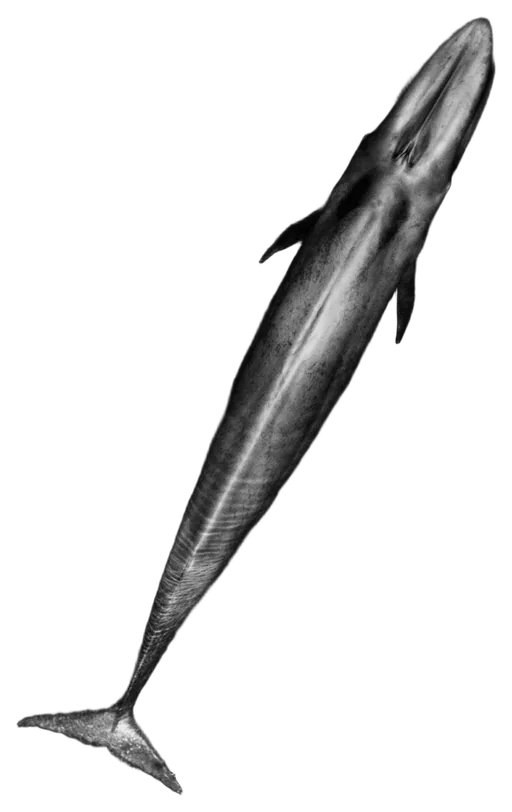
- Weight
- 120 t132.3 US tons
- Length
- 26 m85.3 ft
- Top speed
- 27 km/h17 mph
As heavy as 80 cars
The heaviest animal on the site15× a person's height
The biggest animal on the siteFaster than most people can sprint
Faster than 30% of animalsThe blue whale is the living size ceiling: a roughly 120-ton adult female built around immense body mass, powerful flukes and the most extreme lunge-feeding apparatus on Earth. It has no teeth or armor, so its battle profile is not that of a giant predator. Instead, it survives through scale, tissue depth, endurance and oceanic mobility. Its greatest offensive threat is simple physics: any serious collision or tail/body contact from an animal this massive is catastrophic to smaller opponents.
Detailed ratings
Research-backed ratings on one 0–100 scale for all 344 animals (updated 2026-09-27). How ratings work


Card No. 7 of 344. Every animal on Animal Battle Stats has one: its power, tier and archetype on the front; its six battle stats, abilities and signature move on the back.
Special abilities
Blue whales produce powerful low-frequency calls suited to communication through the marine environment. This supports long-range awareness and coordination but is not treated as a damaging “sonic attack.”
The expandable ventral-groove feeding apparatus allows an enormous mouthful of prey-laden water, with modeled engulfment exceeding 150,000 L in a 28 m animal. In ABS this represents exceptional whole-body acceleration, gape and hydrodynamic specialization, not a fabricated bite.
Unique traits
The blue whale is the largest living animal and therefore establishes the practical living-animal upper anchor for ABS body-size scaling.
Multi-sensor tags have recorded complete 360° rolling lunge maneuvers, demonstrating surprisingly sophisticated three-dimensional control for an animal roughly 25–30 m long.
How it fights
Weapons
- A blue whale is not a predatory fighter, but its sheer moving mass is a weapon. The principal combat-relevant mechanisms are:
- The baleen-filtering mouth is a feeding system, not a tooth weapon. ABS should not turn engulfment volume into fictional “bite force.”
Struggles vs
- No teeth, tusks, claws, horns, venom or armor
- Very low fine-scale agility relative to smaller marine predators
- Vulnerable appendages and soft tissue can be targeted by coordinated attackers
- Enormous body size requires extreme food intake and makes entanglement/vessel collision consequential
- Offensive repertoire is simple and largely mass-based
- Weight
- 120 t132.3 US tons
- Height
- No reliable measurement
- Length
- 26 m85.3 ft
- Top speed
- 27 km/h17 mph
- Bite force
- No reliable measurement
- Lifespan
- 85 years
- Home biome
- Ocean
- Lifestyle
- Mostly solitary
Rated specimen: Healthy mature adult female of the large northern form (B. m. musculus), approximately 26.0 m long and 120,000 kg.
Fun facts
- Blue whales are the largest animals known to have lived, exceeding all living animals and the best-established masses of most dinosaurs.
- A common adult length is roughly 24–27 m, while the largest Antarctic females can exceed 30 m.
- A 28 m blue whale may engulf more than 150,000 liters of water in one lunge.
- Tag data from hundreds of whales show foraging dives averaging around 10 minutes and roughly 200 m depth, with observed maxima of 315 m in that dataset.
- Their feeding lunges can involve complete 360° body rolls.
- Females grow faster and ultimately reach greater lengths than males.
Closest rivals by power. Tap one for the full breakdown, or pick any opponent.
vs Humpback WhaleWins · 58% · Slight edge  W vs Polar BearWins · 80% · Clear edge
 W vs Mako SharkWins · 83% · Clear edge
 W vs HippopotamusWins · 75% · Clear edge
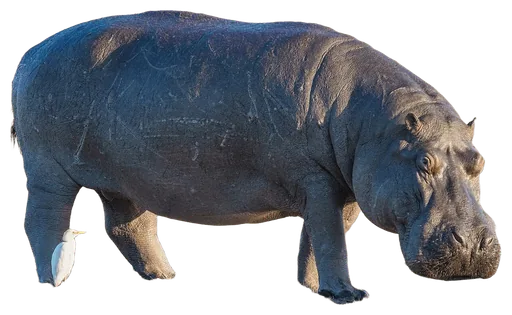 W vs Hammerhead SharkWins · 84% · Clear edge
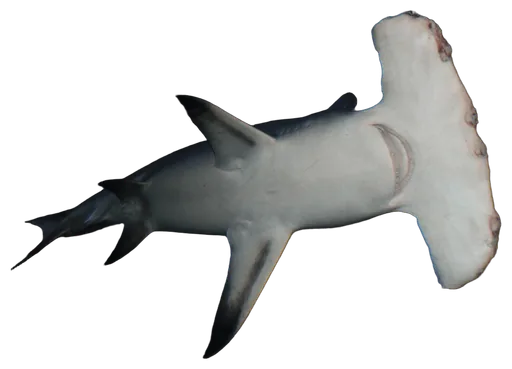 W vs Great White SharkWins · 71% · Clear edge
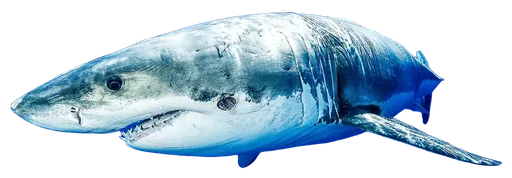 W vs False Killer WhaleWins · 77% · Clear edge
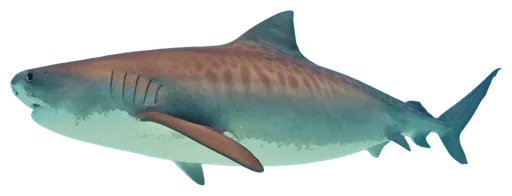
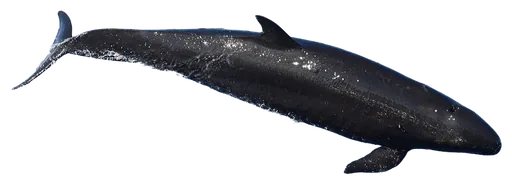 W vs Tiger SharkWins · 82% · Clear edge
 W
Blue Whale battle analysis
Blue whales demonstrate why ABS must keep body size, weaponry and special biology separate. The largest living animal is not automatically the best attacker. A mature female may weigh around 120 metric tons, giving it more raw moving mass than any living opponent, but its mouth is a baleen filtration system built for krill rather than a toothed killing apparatus. Its Attack therefore comes from momentum, body contact and the muscular tail, not a fictional giant bite.
Defensively, the scale is transformative. A medium predator that can kill a deer or seal simply does not have an easy path to rapid incapacitation of an adult blue whale. The whale's blubber and tissue depth are not armor, yet they create a huge buffer around vital structures. Coordinated killer whales can overcome some of this advantage through repeated attacks and targeting, which is why Defense should remain below a perfect ceiling.
The blue whale is also more maneuverable than its dimensions suggest. Biologging has revealed full rolling lunges and deliberate orientation changes while tracking krill. Still, a 26 m body cannot match a dolphin's turning radius or acceleration, so Agility stays moderate. This is a key anti-inflation point: impressive movement for a 120 t whale is not the same as elite absolute maneuverability.
Its ecological specializations are extraordinary. The expandable throat pouch allows engulfment volumes measured in tens of thousands of liters, and low-frequency calls support communication over vast oceanic distances. These mechanisms deserve a strong Special rating because they genuinely alter how the animal functions in water, but neither should be converted into imaginary combat powers.
In a direct aquatic matchup, the blue whale overwhelms most animals through size and survivability. Against specialized giant macropredators or coordinated killer whales, however, lack of dedicated weapons and limited maneuverability matter. That balance makes it a world-class defensive giant rather than an automatic 100 in every category.
Habitat & range
Open marine waters worldwide, from high-latitude feeding regions to lower-latitude breeding/migration areas. Distribution and migratory behavior differ among populations, and some individuals show partial migration or residency rather than a simple universal pole-to-equator schedule.
Blue whales occur in all major oceans. Recognized forms include northern blue whales in the North Atlantic and North Pacific, Antarctic blue whales in the Southern Ocean, pygmy blue whales in parts of the Indian and South Pacific Oceans, and additional regional populations with ongoing taxonomic study.
Diet & hunting
Almost entirely krill and other dense euphausiid aggregations. Their enormous body size is supported by bulk feeding on exceptionally dense prey patches rather than by hunting large individual prey.
Social life
Often solitary or in pairs, but loose aggregations can form where prey is concentrated. Long-range acoustic signaling permits communication across much larger spatial scales than visual contact alone. Courtship and competitive racing are still poorly observed compared with the social behavior of many toothed whales.
Conservation
NOAA lists the blue whale as Endangered under the U.S. Endangered Species Act and depleted under the Marine Mammal Protection Act. International commercial whaling protection dates to 1966. Modern threats include vessel strikes, entanglement, ocean noise and changes in prey distribution/productivity.
Quick answers
How strong is a Blue Whale?
On the Animal Battle Stats scale, the Blue Whale has an attack rating of 78 and a power index of 76.2 out of 100, which ranks it #7 of 344 animals and puts it in S tier (Apex). Its strongest stat is defense (91).
How much does a Blue Whale weigh?
A typical adult Blue Whale weighs about 120 t (132.3 US tons). Rated specimen: Healthy mature adult female of the large northern form (B. m. musculus), approximately 26.0 m long and 120,000 kg.
How fast is a Blue Whale?
The Blue Whale's top speed is about 27 km/h (17 mph). Its agility rating is 44 out of 100.
What does a Blue Whale eat?
Almost entirely krill and other dense euphausiid aggregations. Their enormous body size is supported by bulk feeding on exceptionally dense prey patches rather than by hunting large individual prey.
Is the Blue Whale endangered?
The Blue Whale's conservation status is Endangered. NOAA lists the blue whale as Endangered under the U.S. Endangered Species Act and depleted under the Marine Mammal Protection Act. International commercial whaling protection dates to 1966. Modern threats include vessel strikes, entanglement, ocean noise and changes in prey distribution/productivity.
What animals can beat a Blue Whale?
The Blue Whale is favored against all of its closest rivals, including the Humpback Whale, the Polar Bear, the Mako Shark, the Hippopotamus, the Hammerhead Shark, the Great White Shark, the False Killer Whale, the Tiger Shark.
Researched 2026-09-27. Ratings are editorial judgments built from these sources; measurements describe a healthy adult female.
- NOAA Fisheries, Blue WhaleESA Endangered status; MMPA depleted/protected status; vessel strikes, entanglement/noise management; 1966 international whaling protection
- NOAA PMEL Acoustics, Blue Whale Biology~26 m average length, up to 136 t historical agency summary, krill diet, gestation, acoustic context
- The Marine Mammal Center, Blue WhaleCommon 80–90 ft length, 200k–300k lb broad mass context, 80–90 y lifespan, baleen/throat grooves, reproduction/diet
- Branch & Monnahan 2021, Marine Mammal Science / NOAA repositoryFemale-biased terminal body size; 21,542 fetal and 311,901 whaling records; sex/size patterns
- Mammal species account, Balaenoptera musculusSubspecies size differences; Antarctic 31.7–32.6 m / 113–150 t; northern ~28 m / 113 t; pygmy ~23 m / 69 t; warning about historical measurement methods
- Goldbogen et al. 2011, Journal of Experimental Biology265 tagged whales, 200 foraging dives, 654 lunges; dive depth/duration; 3.7±0.4 m/s maximum lunge speed; 2.1–5.0 m/s range
- Goldbogen et al. / APS 2019, Lunge Feeding in Rorqual WhalesBlue-whale lunge speed 3–4.7 m/s; >150,000 L modeled engulfment for 28 m blue whale; scale effects
- Segre et al. 2020, eLife~7.5 m/s racing blue-whale speed as best available maximum estimate; higher breach speeds uncertain
- Goldbogen et al. 2012, Functional Ecology3.7±0.4 m/s blue-whale maximum lunge speed and interspecific scaling
- Friedlaender/Goldbogen et al., 360° rolling blue whalesMulti-sensor documentation of 360° rolling lunge and search maneuvers
- Animal Diversity Web80–90 y lifespan, 11–12 month gestation, calf size, migration/social background
- Wikimedia Commons, Bluewhale877Exact species, adult status, 1792×1128 dimensions, NOAA provenance and public-domain status
Photo: “Blue Whale 001 body bw.jpg” by NOAA Fisheries ( TBjornstad 11:17, 18 April 2007 (UTC)), Public domain, background removed and cropped. Original
Suggest a correction