
Black Widow
Latrodectus hesperusF tier · Snack21st of 30 bugs & spiders
Size & speed
- Length
- 1.3 cm0.5 in
Smaller than a coin
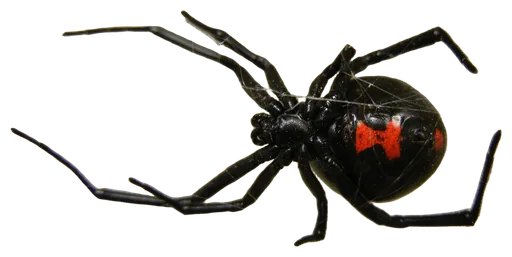
Bigger than 1% of animalsThe western black widow (Latrodectus hesperus) is a tiny web-building predator whose battle relevance comes almost entirely from specialization rather than size. A mature female is only about 13 mm in body length, yet her venom contains alpha-latrotoxin and a diverse toxin arsenal capable of severe neurophysiological effects. Her irregular gumfoot web detects and restrains small prey, giving her a powerful home-field advantage against arthropods. In open direct combat, however, she is extraordinarily fragile, short-ranged and mechanically weak, so ABS keeps Attack and Defense low while rating Special among the roster's strongest specialist mechanisms.
Detailed ratings
Research-backed ratings on one 0–100 scale for all 344 animals (updated 2026-09-27). How ratings work


Card No. 323 of 344. Every animal on Animal Battle Stats has one: its power, tier and archetype on the front; its six battle stats, abilities and signature move on the back.
Special abilities
A successful bite delivers a complex venom arsenal including alpha-latrotoxin and other neuroactive components that disrupt neurotransmission. Extremely consequential against susceptible small targets, but limited by delivered dose and fang access against large animals.
The irregular cobweb uses prey-capture lines and a three-dimensional silk framework to detect, impede and restrain arthropod prey before close contact.
Unique traits
Mature females typically carry the red or orange ventral hourglass associated with Latrodectus, a distinctive warning/identification feature rather than an offensive power.
The female operates through a silk-borne vibration network, turning an established web into a local sensory and prey-control system.
How it fights
Weapons
- The primary weapon is a venomous bite delivered by the chelicerae. The secondary combat system is silk: a resident female can detect vibrations, restrain small arthropods and attack entangled prey while minimizing direct contact.
Struggles vs
- Extremely low absolute mass and mechanical force
- Fragile body relative to vertebrates
- Tiny weapon reach
- Offense is much stronger in an established web than on open terrain
- Venom potency does not guarantee adequate delivered dose against huge opponents
- Weight
- No reliable measurement
- Height
- No reliable measurement
- Length
- 1.3 cm0.5 in
- Top speed
- No reliable measurement
- Bite force
- No reliable measurement
- Lifespan
- 2 years
- Home biome
- Forest
- Lifestyle
- Social
Rated specimen: The canonical combat specimen is a mature adult female.
Fun facts
- The familiar black widow silhouette is the adult female; males are much smaller and differently patterned.
- The red hourglass is on the underside of the abdomen, not necessarily visible from above.
- L. hesperus venom glands express a surprisingly diverse family of latrotoxins rather than a single simple toxin.
- Black-widow webs are deliberately irregular rather than orb-shaped.
- Experimental females changed silk investment with feeding condition, and thicker threads in fed spiders increased measured web strength substantially.
- Male western black widows may cut and bundle female web silk during courtship, which experiments link to reduced female aggression.
Closest rivals by power. Tap one for the full breakdown, or pick any opponent.
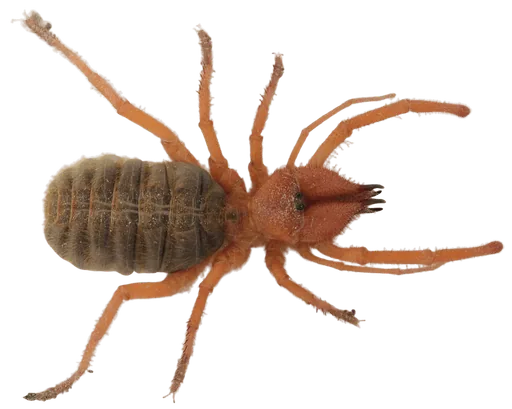
vs Africanized Honey BeeWins · 65% · Slight edge 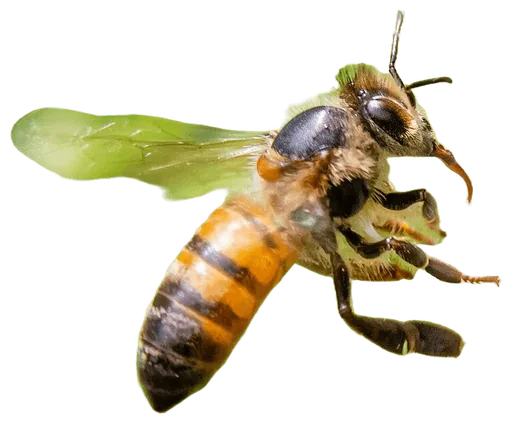 W vs Camel SpiderLoses · 72% · Clear edge
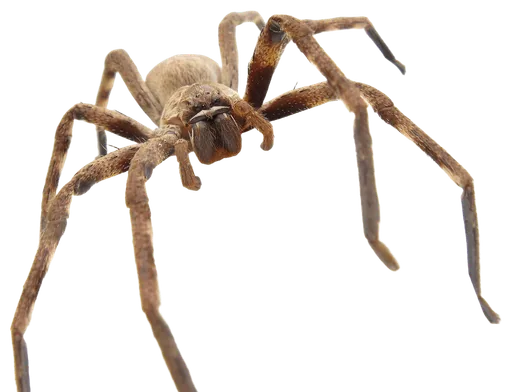
 L vs Huntsman SpiderLoses · 78% · Clear edge
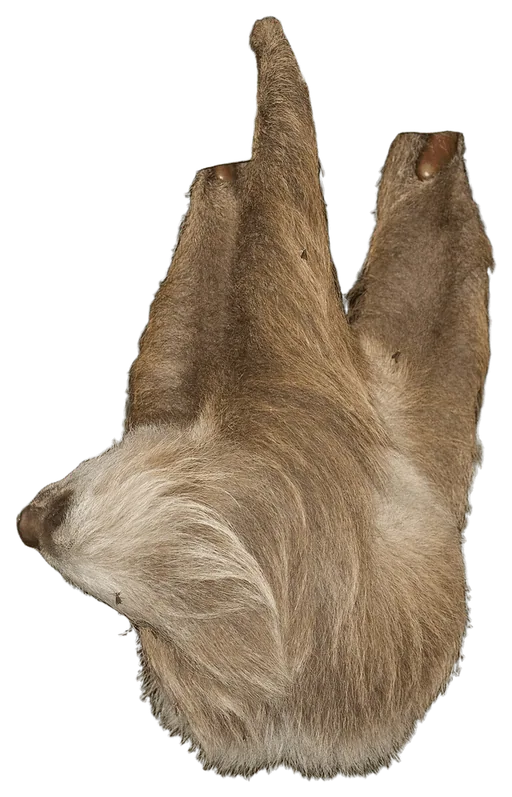
 L vs SlothLoses · 87% · Decisive
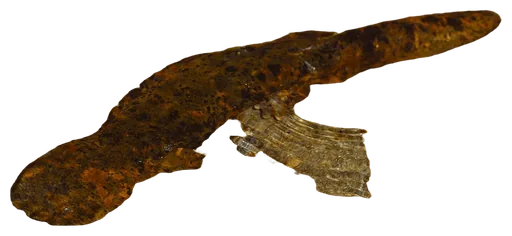
 L vs HellbenderLoses · 83% · Clear edge
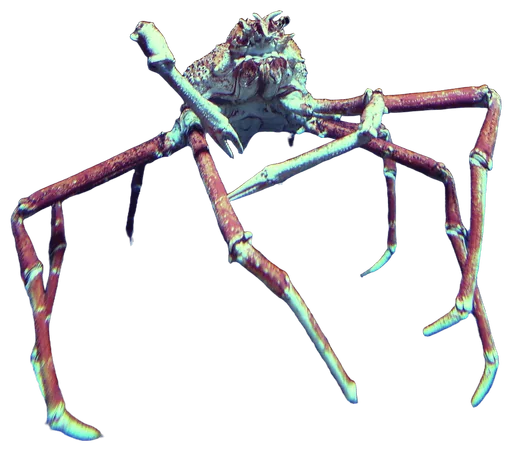
 L vs Japanese Spider CrabLoses · 90% · Decisive
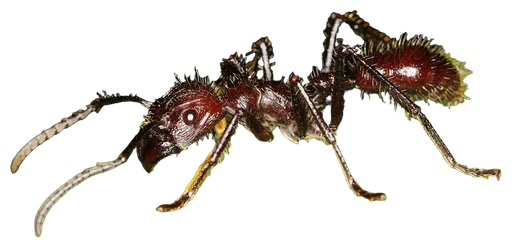
 L vs Bullet AntLoses · 57% · Toss-up
 L vs HornetLoses · 52% · Toss-up
 L
Black Widow battle analysis
The black widow is one of the clearest tests of ABS's absolute-scale philosophy. Proportional danger is not absolute physical power. A female western black widow can subdue prey many times more consequential than her tiny mechanical strength would suggest because venom changes the matchup after a successful bite. That does not make her mechanically comparable with a wolf, bear or rhinoceros.
Her biology is built around a prepared environment. The cobweb is an extended phenotype: supporting lines establish structure, gum-footed threads intercept prey, and vibrations carry information back to the spider. Research shows that web architecture varies among individuals and that nutritional condition changes how silk is allocated. In an established web, the widow can detect contact, approach along familiar silk, add restraint and bite a target while reducing unnecessary struggle.
The venom is equally specialized. Genomic, transcriptomic and proteomic studies of L. hesperus show that its venom is not merely “one toxin.” Alpha-latrotoxin is part of a diversified latrotoxin family, alongside numerous other venom proteins. The resulting neurosecretory disruption explains why a tiny bite can produce severe systemic symptoms in a large vertebrate. Yet dose remains critical. A medically important human bite is not evidence that the spider can instantly incapacitate every large ABS opponent.
This profile therefore deliberately creates a dramatic split: near-floor Size, Raw Power, Protection and Defense, but extreme Special. That is exactly what a global absolute scale should permit. The widow is not a miniature tank. It is a fragile specialist whose two unusual systems, neurotoxic venom and silk-based prey control, can completely transform matchups within the size range where they can actually be delivered.
Habitat & range
Latrodectus hesperus occurs across western North America and is especially associated with warm, dry environments. It also thrives around people. University extension sources report females in rodent burrows, rock piles, wood piles, crawl spaces, outbuildings, irrigation boxes and other dark, protected sites near the ground.
Diet & hunting
The species consumes insects, spiders and other arthropods captured in its irregular web. It is an important small-predator component of terrestrial arthropod communities. The web is both hunting structure and shelter.
Social life
Adults are primarily solitary outside mating. Courtship occurs on the female's web. Male web reduction and silk-bundling can reduce female aggression and improve mating outcomes.
Conservation
No major global conservation concern was identified for this widespread synanthropic species. A formal IUCN global category was not found in the sources used here, so the report does not invent one.
Quick answers
How strong is a Black Widow?
On the Animal Battle Stats scale, the Black Widow has an attack rating of 24 and a power index of 30.8 out of 100, which ranks it #323 of 344 animals and puts it in F tier (Snack). Its strongest stat is special (92).
How much does a Black Widow weigh?
A typical adult Black Widow weighs about 1 g (0 oz). Rated specimen: The canonical combat specimen is a mature adult female.
How fast is a Black Widow?
There is no reliable measured top speed for the Black Widow, so we do not publish one. Its agility rating, which covers acceleration, reflexes and evasion, is 48 out of 100.
What does a Black Widow eat?
The species consumes insects, spiders and other arthropods captured in its irregular web. It is an important small-predator component of terrestrial arthropod communities. The web is both hunting structure and shelter.
What animals can beat a Black Widow?
Among its closest rivals, the Camel Spider (72%), the Huntsman Spider (78%), the Sloth (87%), the Hellbender (83%), the Japanese Spider Crab (90%), the Bullet Ant (57%), the Hornet (52%) would be favored against the Black Widow. It would be favored against the Africanized Honey Bee.
Researched 2026-09-27. Ratings are editorial judgments built from these sources; measurements describe a healthy adult female.
- Colorado State University Extension, Western Widow SpiderIdentification, female size, behavior, habitat, bite significance
- UC Statewide IPM, Black Widow SpiderAdult female size and morphology
- Utah State University Extension, Black Widow SpiderSex dimorphism, diet, nesting, medical significance
- Bhere et al. 2014, FEBS LettersAlpha-latrotoxin genetics
- Haney et al. 2014, BMC Genomics / PubMedVenom proteomics and toxin diversity
- Graudins et al. 2001, Annals of Emergency Medicine / PubMedWidow venom neurotoxicity
- Blackledge & Zevenbergen 2007, Animal BehaviourWeb architecture and silk allocation
- Thompson et al. 2020, EthologyWeb architecture variation
- Scott et al. 2012, Canadian EntomologistCourtship and female aggression
- Animal Diversity Web, Latrodectus hesperusGeneral natural history cross-check
- Wikimedia Commons, Marshal Hedin photoImage provenance
Photo: “Adult Female Black Widow.jpg” by Shenrich91, CC BY-SA 3.0, background removed and cropped. Original
Suggest a correction