
Black Panther
Panthera pardusB tier · Strong44th of 163 mammals
Size & speed

- Weight
- 60 kg132 lb
- Length
- 1.5 m4.9 ft
About as heavy as a person
Heavier than 67% of animalsAbout as long as a person is tall
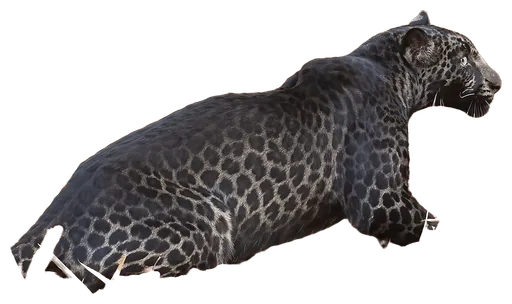
Bigger than 61% of animalsThe Black Panther is a melanistic leopard, not a separate species. A prime adult male is a roughly 60 kg solitary ambush predator armed with powerful forelimbs, retractile claws and a killing bite. Its greatest ABS advantages are agility, climbing, stealth and tactical flexibility. Melanism can improve concealment in dark, moist forests, but the coat is not universal camouflage and provides no armor. On an absolute roster scale, the black panther is dangerous because it is an efficient predator, not because its modest body mass somehow equals a lion, bear or megaherbivore in raw power.
Detailed ratings
Research-backed ratings on one 0–100 scale for all 344 animals (updated 2026-09-27). How ratings work


Card No. 73 of 344. Every animal on Animal Battle Stats has one: its power, tier and archetype on the front; its six battle stats, abilities and signature move on the back.
Special abilities
Recessive ASIP-associated melanism darkens the coat while rosettes remain present. In moist forest and low light this can improve concealment and shorten the effective ambush distance. It is explicitly habitat-dependent.
Powerful climbing, grasping claws and flexible arboreal locomotion let the leopard move vertically, escape ground-bound threats and secure food in trees. In ABS this represents real terrain control, not an invented strength multiplier.
Unique traits
The animal is not uniformly patternless; leopard rosettes remain beneath the melanistic coat and can become visible under suitable lighting.
Leopards combine broad prey choice, habitat flexibility and independent hunting, allowing one individual to function without a pack or pride.
How it fights
Weapons
- The primary killing system is a canine bite integrated with forelimb grappling. Leopards stalk close, accelerate over short distance, pounce, hook with retractile claws and use body position to control prey before applying a bite. The secondary weapon system is repeated clawing and powerful forelimb strikes during a scramble or intraspecific fight.
Struggles vs
- Only about 60 kg in the canonical profile, creating a major absolute power deficit against large carnivores and megafauna
- No armor or unusual trauma resistance
- Killing system requires close contact
- Ambush advantage declines sharply if detected early
- Dark coat is context-dependent camouflage, not universally superior coloration
- Weight
- 60 kg132 lb
- Height
- 65 cm25.6 in
- Length
- 1.5 m4.9 ft
- Top speed
- No reliable measurement
- Bite force
- No reliable measurement
- Lifespan
- 12 years
- Home biome
- Jungle
- Lifestyle
- Social
Rated specimen: A healthy mature adult male is the canonical combat specimen because leopards are sexually dimorphic and males are materially larger.
Fun facts
- A black panther in this ABS entry is a leopard, not a separate species.
- The dark coat does not erase the rosettes; they can still be visible in suitable light.
- A global dataset estimated melanism at about 10.75% across sampled leopards, but the frequency is highly uneven geographically.
- Camera-trap work found melanism nearly fixed in sampled leopard populations south of the Isthmus of Kra in the Malay Peninsula.
- Leopards are among the most geographically widespread living big cats.
- Their preferred prey can be lighter than the leopard itself, despite famous exceptional kills of larger animals.
Closest rivals by power. Tap one for the full breakdown, or pick any opponent.
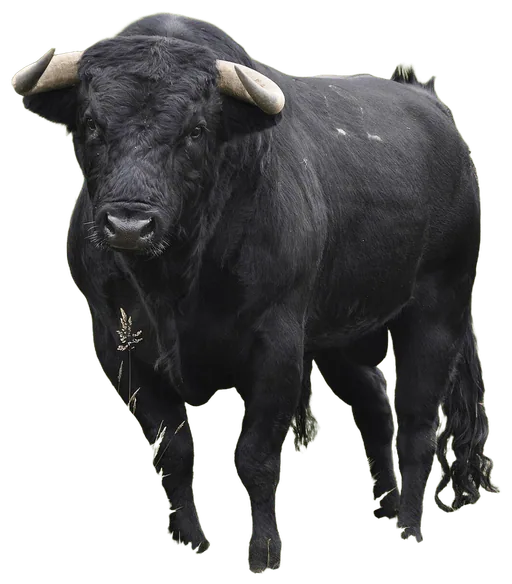
vs Spectacled BearLoses · 54% · Toss-up 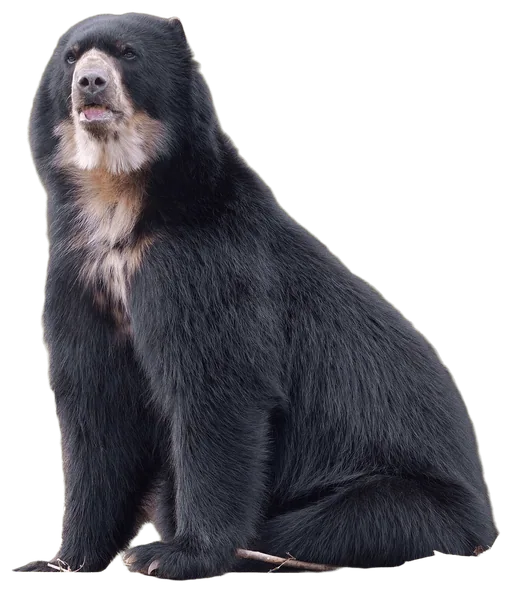 L vs Fighting BullLoses · 62% · Slight edge
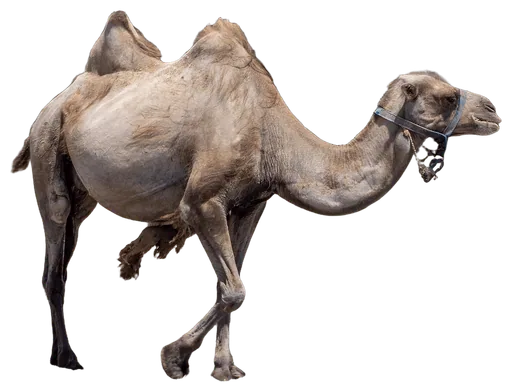
 L vs Bactrian CamelLoses · 63% · Slight edge
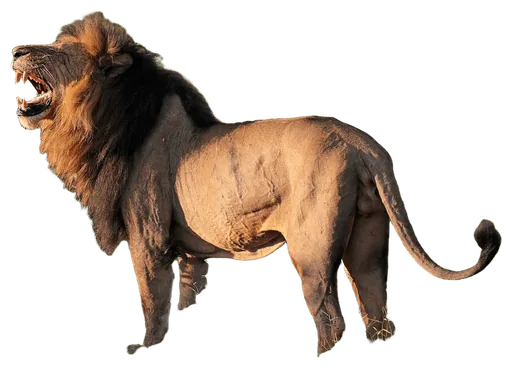
 L vs African LionLoses · 57% · Toss-up
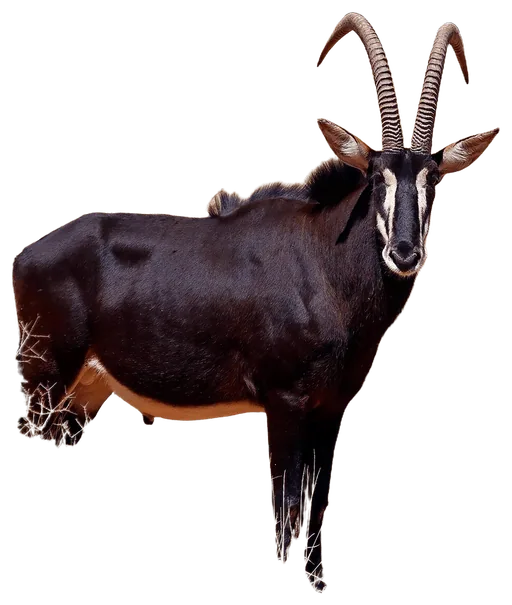
 L vs Sable AntelopeLoses · 57% · Toss-up
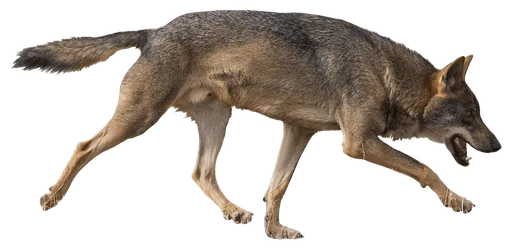
 L vs Gray WolfDraw · 50-50 · Dead even
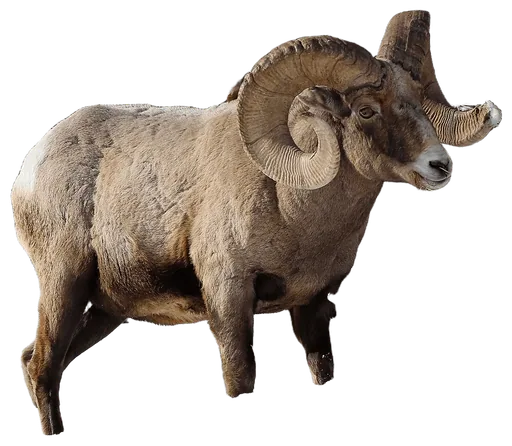
 D vs Bighorn SheepLoses · 52% · Toss-up
 L vs TakinLoses · 58% · Slight edge
 L
Black Panther battle analysis
The useful way to model a black panther is to separate two ideas that popular culture often blends together: leopard biology and melanistic coloration. Mechanically, the animal is a leopard. It has the same core feline weapon package as a normally colored Panthera pardus: a strong jaw and canines, retractile claws, muscular forequarters, a flexible spine and limbs capable of both explosive terrestrial movement and precise climbing. The black coat changes concealment, not anatomy.
That distinction matters for powerscaling. A 60 kg adult male is extraordinarily capable at controlling prey near its own mass, but it is not physically equivalent to a 190 kg male lion, a 900 kg bison or a multi-tonne elephant. The leopard's strategy is to avoid fair tests of raw force. It uses cover, darkness, terrain and timing to reach striking distance before the opponent can exploit a size advantage. Once contact begins, claws anchor the body, forelimbs control position and the jaws seek a vulnerable hold.
Melanism strengthens that strategy only in the right environment. The best global study to date found black leopards disproportionately associated with moist forests, especially in Asia, and suggested camouflage and/or thermoregulation as likely selective mechanisms. This supports a meaningful Special score, but not a fantasy-level stealth rating. A black animal standing in bright open grassland can be conspicuous. ABS should therefore treat Shadow Rosettes as a conditional environmental advantage.
The leopard's other defining advantage is three-dimensional terrain use. Trees are not just resting places. They are routes of escape, observation platforms and cache sites. Arboreal competence makes a ground-only opponent work harder to force contact and lets the leopard disengage from some unfavorable encounters. This is why Agility and Maneuverability can legitimately be among its highest scores even though its factual maximum sprint remains unresolved.
Its limitations are equally important. The body is unarmored, the animal must close to bite or claw, and a single heavy counter from a much larger opponent can be decisive. It is not an endurance chaser and does not gain coalition support in an individual ABS battle. The resulting profile is a high-control ambush predator with moderate absolute Attack and Defense, excellent Agility, good tactical Intelligence and a real but context-dependent Special mechanism.
Habitat & range
Leopards occupy an exceptionally broad range across sub-Saharan Africa and southern/western/eastern Asia, including forest, woodland, savanna, scrub, rocky country and some arid landscapes. Melanistic individuals are not evenly distributed. Peer-reviewed mapping found the phenotype concentrated especially in moist forests of South and Southeast Asia and rare or absent across many open/dry regions.
Diet & hunting
Leopards are opportunistic carnivores. A large prey-preference analysis found preferred prey concentrated at 10–40 kg, with roughly 25 kg as the modeled most-preferred prey mass. They also take smaller mammals, birds, reptiles and carrion. Their ecological niche changes with prey communities and competition from larger carnivores.
Social life
Primarily solitary. Adults maintain home ranges with sex-dependent overlap patterns. Males generally range over larger areas than females. Communication uses scent marking, scrapes and vocalizations, reducing the need for constant direct encounters.
Conservation
The IUCN Cat Specialist Group lists the leopard as Vulnerable, citing habitat loss, prey depletion, persecution, illegal wildlife trade and poorly managed hunting among major pressures. “Black panther” has no separate conservation category because melanism is a phenotype within leopard populations.
Quick answers
How strong is a Black Panther?
On the Animal Battle Stats scale, the Black Panther has an attack rating of 59 and a power index of 60 out of 100, which ranks it #73 of 344 animals and puts it in B tier (Strong). Its strongest stat is agility (83).
How much does a Black Panther weigh?
A typical adult Black Panther weighs about 60 kg (132 lb). Rated specimen: A healthy mature adult male is the canonical combat specimen because leopards are sexually dimorphic and males are materially larger.
How fast is a Black Panther?
There is no reliable measured top speed for the Black Panther, so we do not publish one. Its agility rating, which covers acceleration, reflexes and evasion, is 83 out of 100.
What does a Black Panther eat?
Leopards are opportunistic carnivores. A large prey-preference analysis found preferred prey concentrated at 10–40 kg, with roughly 25 kg as the modeled most-preferred prey mass. They also take smaller mammals, birds, reptiles and carrion. Their ecological niche changes with prey communities and competition from larger carnivores.
Is the Black Panther endangered?
The Black Panther's conservation status is Vulnerable. The IUCN Cat Specialist Group lists the leopard as Vulnerable, citing habitat loss, prey depletion, persecution, illegal wildlife trade and poorly managed hunting among major pressures. “Black panther” has no separate conservation category because melanism is a phenotype within leopard populations.
What animals can beat a Black Panther?
Among its closest rivals, the Spectacled Bear (54%), the Fighting Bull (62%), the Bactrian Camel (63%), the African Lion (57%), the Sable Antelope (57%), the Bighorn Sheep (52%), the Takin (58%) would be favored against the Black Panther. It would be favored against none of them. It is dead even with the Gray Wolf: a draw.
Researched 2026-09-27. Ratings are editorial judgments built from these sources; measurements describe a healthy adult male.
- IUCN SSC Cat Specialist Group, LeopardTaxonomy, mass, body/tail length, longevity, range, conservation
- Animal Diversity Web, Panthera pardusSex dimorphism, mass/length, lifespan, behavior, diet, reproduction
- da Silva et al. 2017, PLOS ONE / PMCMelanism frequency and habitat association
- Schneider et al. 2012, PLOS ONE / PMCGenetic mechanism
- Kawanishi et al. 2010, Journal of ZoologyMalay Peninsula melanism
- Hartstone-Rose et al. 2012, Anatomical RecordBite-force mechanics
- Hayward et al. 2006, Journal of ZoologyPrey preference
- Odden & Wegge 2005, Wildlife BiologyMovement/endurance
- Snider et al. 2021, Journal of MammalogyHome-range flexibility
- Biology Open 2024 hindlimb studyLocomotor morphology
- Wikimedia Commons, Black Panther - IndiaImage candidate
Photo: “Melanistic leopard at Tadoba.jpg” by Atul.rewild, CC BY-SA 4.0, background removed and cropped. Original
Suggest a correction