
Bison
Bison bisonA tier · Elite20th of 163 mammals
Size & speed

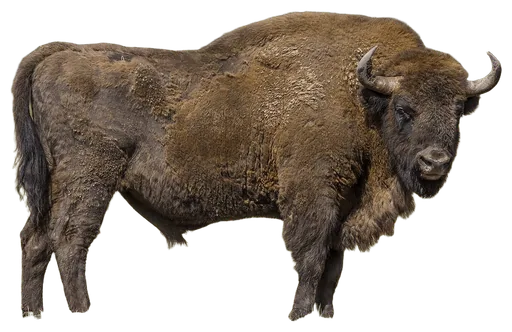
- Weight
- 900 kg1,984 lb
- Length
- 3.4 m11.2 ft
- Top speed
- 55 km/h34 mph
As heavy as 13 people
Heavier than 93% of animals1.9× a person's height
Bigger than 88% of animalsFaster than Usain Bolt (44.7 km/h)
Faster than 64% of animalsThe American bison is North America's largest land mammal, a near-tonne bull built around enormous forequarter power, permanent horns and explosive speed. Its greatest battle advantages are a devastating frontal charge, high durability and agility that is extraordinary for its mass. Bison are not armored tanks, however: their defenses come from bulk, thick integument and toughness rather than a shell, and their combat style is direct. Prime bulls add a biology of intense rut competition to an animal already built for harsh winters, long daily foraging and rapid predator-facing pivots.
Detailed ratings
Research-backed ratings on one 0–100 scale for all 344 animals (updated 2026-09-27). How ratings work


Card No. 38 of 344. Every animal on Animal Battle Stats has one: its power, tier and archetype on the front; its six battle stats, abilities and signature move on the back.
Special abilities
A near-tonne bull can accelerate to surprisingly high speed and deliver a horned, head-first charge backed by immense forequarter mass. Matchup value is highest against opponents forced to contest frontal space.
The shoulder hump and powerful neck musculature let bison sweep snow aside to reach forage, while thick skin, underfur, guard hairs and fat support severe-winter performance. This is an environmental endurance advantage, not armor.
Unique traits
Despite its size, a bison can pivot quickly, jump substantial obstacles and swim strongly, making the common “slow tank” mental model inaccurate.
Prime bulls are built for direct male-male competition, combining dominance displays, bellowing, tending behavior and willingness to physically contest rivals.
How it fights
Weapons
- A bull's primary system is a mass-backed head-and-horn charge. At roughly 900 kg, even without inventing a collision-force number, its momentum is enormous relative to medium animals. Short pointed horns add penetrating and hooking potential at close range, while the massive head and shoulder complex supports pushing, tossing and ramming. During the rut, bulls compete directly for access to cows, so the canonical male is biologically built for dangerous intraspecific contests.
Struggles vs
- No true armor or shell.
- Hindquarters and legs are less massively protected than the forequarters.
- Horns are short compared with long-horned bovids and do not create a large standoff distance.
- Large turning radius and inertia still constrain fine maneuvering despite excellent agility for its size.
- Herbivore combat repertoire is direct and comparatively predictable.
- Weight
- 900 kg1,984 lb
- Height
- 1.8 m5.9 ft
- Length
- 3.4 m11.2 ft
- Top speed
- 55 km/h34 mph
- Bite force
- No reliable measurement
- Lifespan
- 15 years
- Home biome
- Savanna
- Lifestyle
- Social
Rated specimen: Representative healthy mature adult bull in prime breeding condition, approximately 6–10 years old.
Fun facts
- American bison are the largest living terrestrial mammals in North America.
- A roughly 900 kg bull can run around 55 km/h according to Yellowstone.
- Bison can pivot quickly enough that simply getting behind one is not a safe predator strategy.
- They can jump obstacles around 1.5 m high and are strong swimmers.
- The shoulder hump is not a fat camel-like hump; it reflects elongated vertebral processes and massive supporting musculature.
- Bison sweep their heads side-to-side to clear snow and expose winter forage.
Closest rivals by power. Tap one for the full breakdown, or pick any opponent.
vs Cape BuffaloWins · 51% · Toss-up 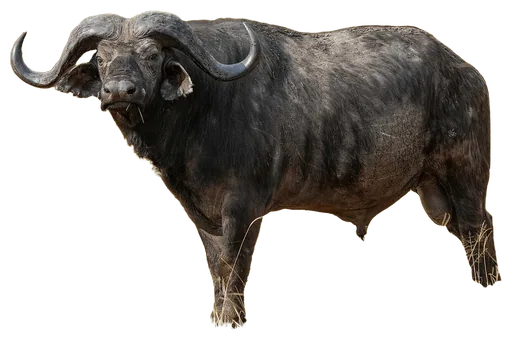 W vs Water BuffaloWins · 51% · Toss-up
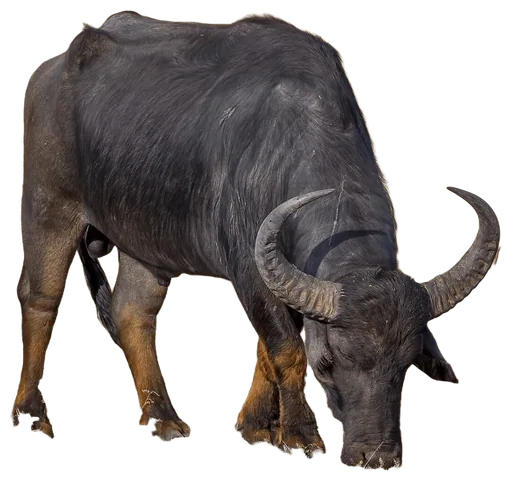 W vs GaurLoses · 51% · Toss-up
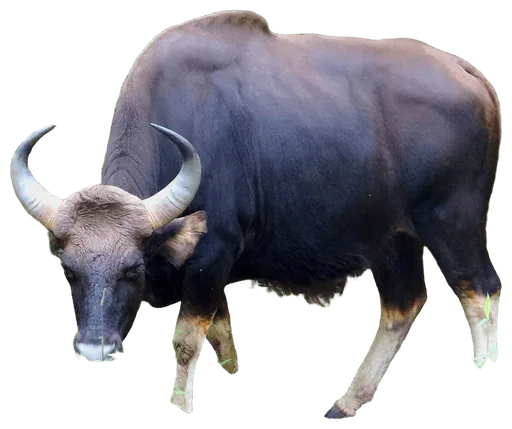 L vs GiraffeDraw · 50-50 · Dead even
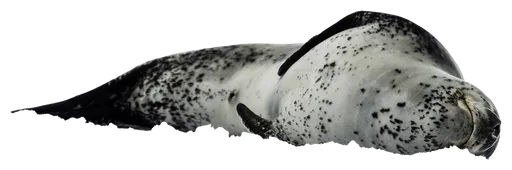
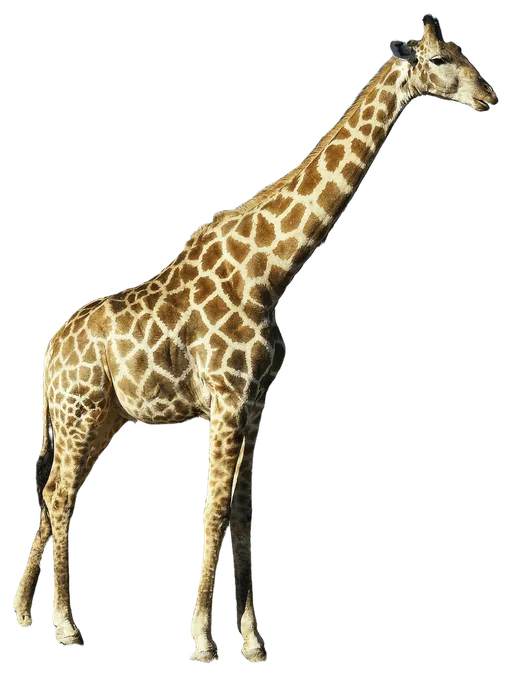 D vs Leopard SealWins · 53% · Toss-up
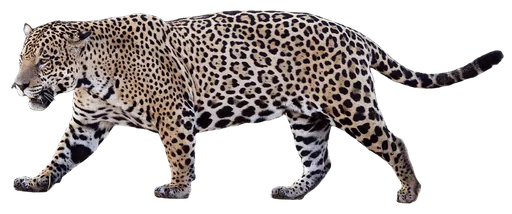
 W vs JaguarWins · 64% · Slight edge
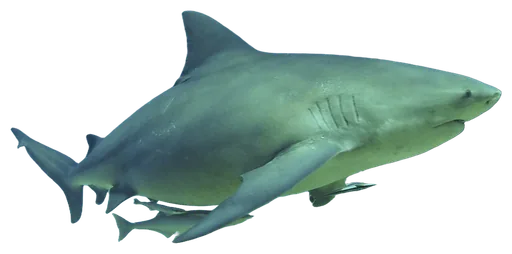
 W vs Bull SharkWins · 62% · Slight edge
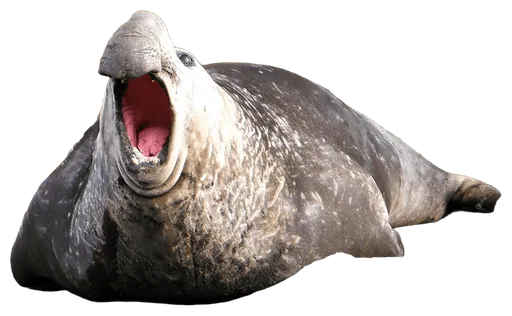
 W vs Elephant SealLoses · 60% · Slight edge
 L
Bison battle analysis
A mature American bison bull is a misleading combination of dimensions. Its outline looks heavy and front-loaded because it is heavy and front-loaded, with an immense head, a high shoulder hump and a body approaching a metric tonne. Yet Yellowstone reports speeds around 55 km/h and specifically notes rapid pivoting. This changes the battle interpretation: the bison is not merely a stationary wall of flesh. It can actively close distance, turn to keep horns and head toward a threat, jump, and swim.
The forequarters are the key mechanical center. Large shoulder and neck muscles allow the animal to swing its head through snow, and the same architecture supports close physical contests. Both sexes have permanent horns, but the mature bull is the canonical combat animal because males are far larger and direct male-male rivalry is a major component of breeding biology. The horns are short compared with those of some bovids, so the bison does not win through exceptional reach. It wins through the combination of a pointed contact weapon and huge mass behind it.
Its defense is similarly easy to exaggerate. Thick skin, dense winter hair, fat, robust bones and sheer body volume make a healthy bull difficult for predators to bring down. Authoritative natural-history sources accordingly note that adult bison are relatively safe from predators compared with calves and compromised animals. But hair and hide are not armor plating. A large predator that can avoid the head and repeatedly damage legs, flanks or hindquarters still has a route to victory.
The ABS profile should therefore place bison firmly among strong terrestrial megafauna without letting fame or size push every score toward the ceiling. Its Attack and Defense are high because of real absolute mass and weapon delivery. Agility is strong because its acceleration, turning and obstacle ability are genuinely exceptional for an animal this large, but it remains below smaller precision movers. Intelligence is moderate. Special is also moderate because cold-weather and snow-foraging specializations are biologically impressive but do not bypass normal combat rules in the way venom, electricity or echolocation can.
Habitat & range
Historically associated especially with North American grasslands and prairies, but the species also used open savannas and habitats from boreal regions to semi-desert where grazing was available. Modern conservation populations are fragmented and occupy only a small fraction of the historical range.
Historically ranged broadly across North America, from Alaska and Canada south toward northern Mexico and across much of the continental interior. Modern conservation herds occur in scattered protected, tribal and managed landscapes in the United States and Canada.
Diet & hunting
Primarily grasses and sedges, with other vegetation such as sagebrush, forbs and browse used depending on availability. ADW characterizes bison as year-round grazers and reports dry vegetation intake averaging about 1.6% of body mass per day.
Social life
Cow-calf groups form the core herds, while adult bulls can be solitary or occur in small bull groups outside the breeding season. During the rut, bulls join breeding aggregations, display, compete and temporarily tend individual cows.
Conservation
The American Society of Mammalogists reports the IUCN status as Near Threatened, emphasizing dependence on conservation programs and the fact that most continental bison are managed in private commercial settings rather than functioning as free-ranging wildlife. Conservation status should not be confused with raw headcount of domestic/commercial herds.
Quick answers
How strong is a Bison?
On the Animal Battle Stats scale, the Bison has an attack rating of 72 and a power index of 66.8 out of 100, which ranks it #38 of 344 animals and puts it in A tier (Elite). Its strongest stat is stamina (74).
How much does a Bison weigh?
A typical adult Bison weighs about 900 kg (1,984 lb). Rated specimen: Representative healthy mature adult bull in prime breeding condition, approximately 6–10 years old.
How fast is a Bison?
The Bison's top speed is about 55 km/h (34 mph). Its agility rating is 64 out of 100.
What does a Bison eat?
Primarily grasses and sedges, with other vegetation such as sagebrush, forbs and browse used depending on availability. ADW characterizes bison as year-round grazers and reports dry vegetation intake averaging about 1.6% of body mass per day.
Is the Bison endangered?
The Bison's conservation status is Near Threatened. The American Society of Mammalogists reports the IUCN status as Near Threatened, emphasizing dependence on conservation programs and the fact that most continental bison are managed in private commercial settings rather than functioning as free-ranging wildlife. Conservation status should not be confused with raw headcount of domestic/commercial herds.
What animals can beat a Bison?
Among its closest rivals, the Gaur (51%), the Elephant Seal (60%) would be favored against the Bison. It would be favored against the Cape Buffalo, the Water Buffalo, the Leopard Seal, the Jaguar, the Bull Shark. It is dead even with the Giraffe: a draw.
Researched 2026-09-27. Ratings are editorial judgments built from these sources; measurements describe a healthy adult male.
- Yellowstone National Park, NPS, “Bison Ecology”Male/female mass, speed, agility, jumping, swimming, senses, winter insulation, diet, rut, lifespan
- NPS, “About Bison”Adult dimensions, speed alternative, subspecies distinction
- NPS, “Basic Facts”Reproduction, lifespan, maturity, subspecies
- Smithsonian National ZooAdult bull dimensions, horns, coat, habitat/range, lifespan, predator context
- Animal Diversity WebSex-specific dimensions, diet, predation, ecosystem role
- Texas Tech, Mammals of TexasBull dimensions/mass and morphology
- American Society of MammalogistsConservation framing
- Zoo IdahoFull horn length, dimensions, diet
- University of Idaho / GSA abstractModern bison horn-core comparison
- Wikimedia Commons / USDA ARS imagePrimary image identity, sex, dimensions, provenance
Photo: “European bison (Bison bonasus) male Białowieza.jpg” by Charles J. Sharp, CC BY-SA 4.0, background removed and cropped. Original
Suggest a correction