
Beluga Whale
Delphinapterus leucasA tier · Elite8th of 51 sea creatures
Size & speed

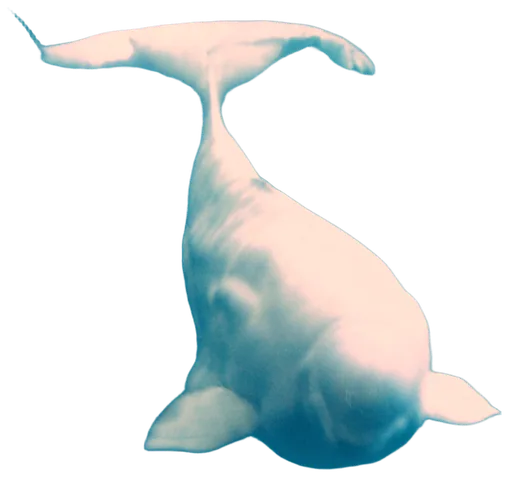
- Weight
- 1.5 t1.7 US tons
- Length
- 4.3 m14.1 ft
As heavy as 1 cars
Heavier than 96% of animals2.5× a person's height
Bigger than 92% of animalsThe beluga is a 1.5-tonne Arctic toothed whale built less for raw predatory violence than for survival and sensory control in an icy three-dimensional world. Thick blubber, deep-diving endurance, a flexible neck, reverse swimming and exceptional biosonar make it difficult to surprise or outmaneuver underwater. Its simple conical teeth keep Attack below similarly sized specialist predators, but elite hearing, echolocation and cold-water specializations give it unusually high Stamina, Intelligence and Special ratings.
Detailed ratings
Research-backed ratings on one 0–100 scale for all 344 animals (updated 2026-09-27). How ratings work


Card No. 23 of 344. Every animal on Animal Battle Stats has one: its power, tier and archetype on the front; its six battle stats, abilities and signature move on the back.
Special abilities
The flexible melon focuses broadband echolocation clicks while highly sensitive hearing receives returning echoes, allowing prey/opponent localization and navigation in darkness, turbid water and under ice.
An unfused, mobile neck, broad control surfaces, reverse-swimming ability and finless dorsal profile let the beluga reposition in confined icy water where less flexible cetaceans are disadvantaged.
Unique traits
Belugas possess an exceptionally diverse vocal repertoire and sophisticated acoustic communication, supporting coordination and social learning.
A very thick insulating layer, reported up to about 40% of body mass, provides cold tolerance, energy reserve and meaningful soft-tissue bulk without being falsely treated as rigid armor.
How it fights
Weapons
- Primary weapon: a large, muscular cetacean body capable of forceful contact, shoving and ramming at close range. At 1.5 tonnes, body momentum matters more in absolute combat terms than the beluga's modest conical dentition.
- Secondary weapon: 32–40 conical teeth can grasp and wound at close range. They are not the specialized shearing teeth of an orca or shark and should not be assigned unsupported crushing-force exaggeration.
Struggles vs
- No rigid armor or specialized long weapon.
- Dentition is less destructive than that of large macropredatory marine opponents.
- Maximum sprint speed is uncertain and the body is not optimized for extreme pursuit speed.
- Dependence on surfacing for air creates predictable respiratory constraints.
- Underwater noise can interfere with an exceptionally important sensory channel.
- Weight
- 1.5 t1.7 US tons
- Height
- No reliable measurement
- Length
- 4.3 m14.1 ft
- Top speed
- No reliable measurement
- Bite force
- No reliable measurement
- Lifespan
- 70 years
- Home biome
- Arctic
- Lifestyle
- Social
Rated specimen: Healthy mature adult male, 1,500.0 kg and 430.0 cm total length.
Fun facts
- “Beluga” comes from a word associated with whiteness; adults become characteristically white while calves are dark gray.
- The nickname “canary of the sea” comes from the species' unusually varied vocalizations.
- Belugas can turn their heads side to side because their neck vertebrae are not fused like those of most cetaceans.
- They can swim backward, a rare and useful ability for navigating confined ice habitat.
- Peer-reviewed tags have recorded dives to 872 m, while NOAA summarizes capability to around 1,000 m.
- Wild belugas have demonstrated sensitive hearing across a very broad ultrasonic range, with some individuals responding to 150 kHz.
Closest rivals by power. Tap one for the full breakdown, or pick any opponent.
vs Bottlenose DolphinWins · 63% · Slight edge  W vs Kodiak BearWins · 58% · Slight edge
 W vs Black RhinocerosWins · 52% · Toss-up
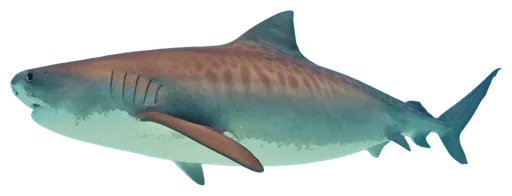
 W vs Tiger SharkWins · 52% · Toss-up
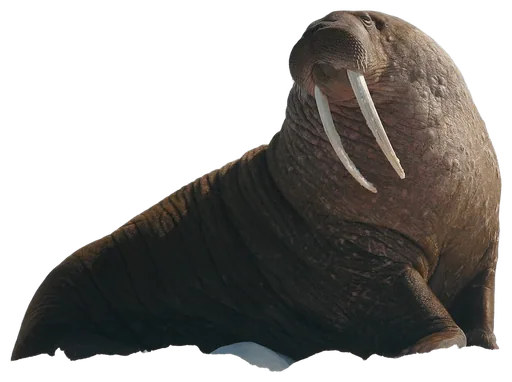
 W vs WalrusWins · 55% · Toss-up
 W vs Black CaimanWins · 61% · Slight edge
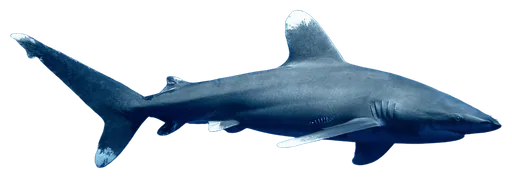
 W vs Oceanic Whitetip SharkWins · 67% · Slight edge
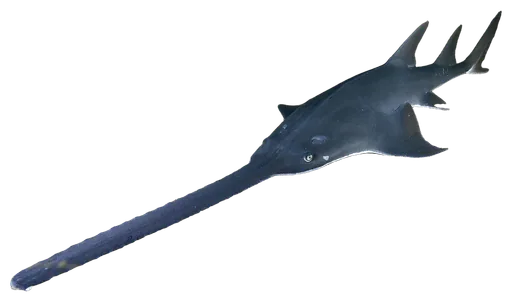
 W vs SawfishWins · 64% · Slight edge
 W
Beluga Whale battle analysis
A mature male beluga is a substantial marine mammal, yet its most remarkable advantages are not the obvious ones. Its rounded body carries an enormous insulating investment in blubber, allowing life in water near the freezing point and providing both energy reserve and soft-tissue bulk. The missing dorsal fin is another Arctic solution: instead of a tall fin vulnerable beneath ice, the back carries a tough ridge. Its cervical vertebrae remain unfused, producing a degree of head mobility rare among whales, and the animal can even reverse through the water.
The sensory package is more consequential still. Belugas actively interrogate their environment with echolocation clicks transmitted through the melon and received through an exceptionally sensitive auditory system. In darkness, turbid estuaries or beneath ice, this is a major information advantage. Research on wild animals shows broad high-frequency sensitivity, while experimental work indicates sophisticated control over sonar pulse production.
That sophistication extends into social life. Belugas form dynamic groups that can contain close relatives, distant relatives and unrelated animals. Long-lived individuals have many opportunities for social learning, communication and the persistence of population-specific behavior. This justifies high intelligence without converting “social” into an automatic maximum score.
In a direct fight, however, the beluga is not an orca. Its teeth are relatively simple conical graspers, its normal prey is fish and invertebrates, and it lacks a specialized slicing jaw, tusk or rigid armor. A 1.5-tonne body still makes forceful contact dangerous, and thick blubber raises survivability, but a similarly sized predator with superior penetrating weapons has the matchup advantage. The beluga is best understood as an endurance, sensory and maneuvering specialist whose unusual Arctic toolkit matters most when the environment allows it to use depth, ice and acoustics.
Habitat & range
Arctic and sub-Arctic seas, coastal waters, estuaries, river mouths, pack-ice margins and seasonally deeper offshore habitat. Belugas tolerate near-freezing marine water and also enter comparatively warm, low-salinity estuaries.
Circumpolar Northern Hemisphere populations occur around Alaska, Canada, Greenland and Russia, with population-specific migration patterns and strong seasonal site fidelity in many areas.
Diet & hunting
Generalist carnivore feeding on fishes and benthic/pelagic invertebrates. NOAA lists salmon, eulachon, cod, herring, smelt, flatfish, octopus, squid, crabs, shrimp, clams, snails and sandworms among prey.
Social life
Groups range from a few animals to large aggregations. Modern genetic/network research rejects a simplistic exclusively matrilineal model: groups include close kin, paternal kin and unrelated animals, and membership can be dynamic. Adult male groups are a recurring group type.
Conservation
Species-wide status should be verified directly against the current IUCN assessment before production migration. Population status varies sharply. Under the U.S. ESA, NOAA lists the Cook Inlet distinct population segment as Endangered; all belugas are protected under the U.S. Marine Mammal Protection Act, and some stocks are designated depleted. Do not apply Cook Inlet's endangered status to every global beluga.
Quick answers
How strong is a Beluga Whale?
On the Animal Battle Stats scale, the Beluga Whale has an attack rating of 61 and a power index of 70.1 out of 100, which ranks it #23 of 344 animals and puts it in A tier (Elite). Its strongest stat is stamina (84).
How much does a Beluga Whale weigh?
A typical adult Beluga Whale weighs about 1.5 t (1.7 US tons). Rated specimen: Healthy mature adult male, 1,500.0 kg and 430.0 cm total length.
How fast is a Beluga Whale?
There is no reliable measured top speed for the Beluga Whale, so we do not publish one. Its agility rating, which covers acceleration, reflexes and evasion, is 70 out of 100.
What does a Beluga Whale eat?
Generalist carnivore feeding on fishes and benthic/pelagic invertebrates. NOAA lists salmon, eulachon, cod, herring, smelt, flatfish, octopus, squid, crabs, shrimp, clams, snails and sandworms among prey.
Is the Beluga Whale endangered?
The Beluga Whale's conservation status is Endangered. Species-wide status should be verified directly against the current IUCN assessment before production migration. Population status varies sharply. Under the U.S. ESA, NOAA lists the Cook Inlet distinct population segment as Endangered; all belugas are protected under the U.S. Marine Mammal Protection Act, and some stocks are designated depleted. Do not apply Cook Inlet's endangered status to every
What animals can beat a Beluga Whale?
The Beluga Whale is favored against all of its closest rivals, including the Bottlenose Dolphin, the Kodiak Bear, the Black Rhinoceros, the Tiger Shark, the Walrus, the Black Caiman, the Oceanic Whitetip Shark, the Sawfish.
Researched 2026-09-27. Ratings are editorial judgments built from these sources; measurements describe a healthy adult male.
- NOAA Fisheries, Beluga Whaletaxonomy, overall mass/length, teeth, blubber, habitat, diet, dive capability, reproduction, threats, U.S. status
- Animal Diversity Web, Delphinapterus leucassexual dimorphism, body range, neck, blubber thickness
- COSEWIC St. Lawrence Beluga status reportsex-specific body length and population variation
- Heide-Jørgensen et al., ARCTIC (1998)deep-diving performance
- Citta et al., ARCTIC (2013)deep-dive behavior
- Martin et al., ARCTIC (2001)shallow-water diving
- Polar Research review (2021)dive-duration synthesis
- Mooney et al., Journal of Experimental Biologywild hearing sensitivity
- Castellote/Lammers NOAA peer-reviewed research pageecholocation mechanism
- O’Corry-Crowe et al., Scientific Reports (2020)social structure, kinship, social learning context
- Wikimedia Commons image pageimage identity, resolution, creator, license
Photo: “Beluga 5 (32453588256).jpg” by daryl_mitchell, CC BY-SA 2.0, background removed and cropped. Original
Suggest a correction