
Beaver
Castor canadensisC tier · Capable112th of 163 mammals
Size & speed

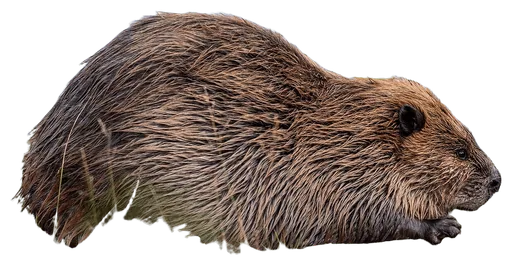
- Weight
- 23 kg51 lb
- Length
- 1.1 m3.6 ft
As heavy as 5.1 house cats
Heavier than 55% of animalsAbout 3.7 rulers long
Bigger than 50% of animalsThe North American beaver is a 20-plus-kilogram semi-aquatic engineer armed with continuously growing, self-sharpening incisors and an exceptionally efficient gnawing bite. It is not fast or heavily armored, especially on land, but in water its webbed feet, broad tail, diving specializations and strong endurance make it difficult to pin down. Its famous dam-building intelligence is ecologically extraordinary, though ABS separates that engineering skill from direct one-on-one combat power.
Detailed ratings
Research-backed ratings on one 0–100 scale for all 344 animals (updated 2026-09-27). How ratings work


Card No. 193 of 344. Every animal on Animal Battle Stats has one: its power, tier and archetype on the front; its six battle stats, abilities and signature move on the back.
Special abilities
Continuously growing incisors combine highly efficient jaw-force alignment with experimentally demonstrated self-sharpening enamel microstructure. This preserves a sharp cutting edge despite heavy wear and makes close bites dangerous.
Webbed hind feet, tail-assisted control, closable ears/nostrils, nictitating membranes and prolonged submergence let a beaver disengage and reposition far more effectively in water than on land.
Unique traits
Dam, lodge and canal construction can transform streams into defended aquatic habitat. This is a major ecological distinction, but prebuilt structures are not added directly to neutral-arena combat stats.
More than 96% of modeled incisor bite force aligns with the lower-incisor axis, an unusually efficient geometry specialized for penetrating and removing resistant material.
How it fights
Weapons
- Primary weapon: large continuously growing incisors powered by a highly efficient jaw-closing system. The combination of 550–740 N modeled incisor force, strong alignment of force with the tooth axis, and self-sharpening enamel makes this a serious cutting/gnawing weapon for an animal of roughly 23 kg.
- Secondary tools: forefeet and body leverage can grapple, brace and manipulate, while the broad tail aids aquatic repositioning. The tail is primarily a locomotor, fat-storage/physiological, and signaling structure rather than a proven primary striking weapon.
Struggles vs
- Poorer terrestrial mobility than comparably sized terrestrial mammals.
- No specialized armor or thick defensive hide.
- Close-range weapon delivery exposes the head to counters.
- Herbivorous behavior means less predatory combat specialization.
- Strong construction intelligence does not automatically translate to rapid fighting tactics.
- Weight
- 23 kg51 lb
- Height
- 40 cm15.7 in
- Length
- 1.1 m3.6 ft
- Top speed
- No reliable measurement
- Bite force
- No reliable measurement
- Lifespan
- 12 years
- Home biome
- Wetlands
- Lifestyle
- Social, nocturnal
Rated specimen: Healthy mature adult of 23.0 kg, 110.0 cm total length, and approximately 40.0 cm standing height in normal wild condition.
Fun facts
- The North American beaver is the largest rodent native to North America.
- Its upper incisors are at least about 5 mm wide and 20–25 mm long according to ADW.
- Experimental materials research shows the incisor edge self-sharpens because inner and outer enamel wear and fracture differently.
- A biomechanical model calculated roughly 556 N at incisor occlusion and 714 N at 30° gape.
- Controlled swimming experiments found the lowest energetic cost of transport around 0.9 m/s.
- Beaver lodges can have underwater entrances while the living chamber remains above water.
Closest rivals by power. Tap one for the full breakdown, or pick any opponent.
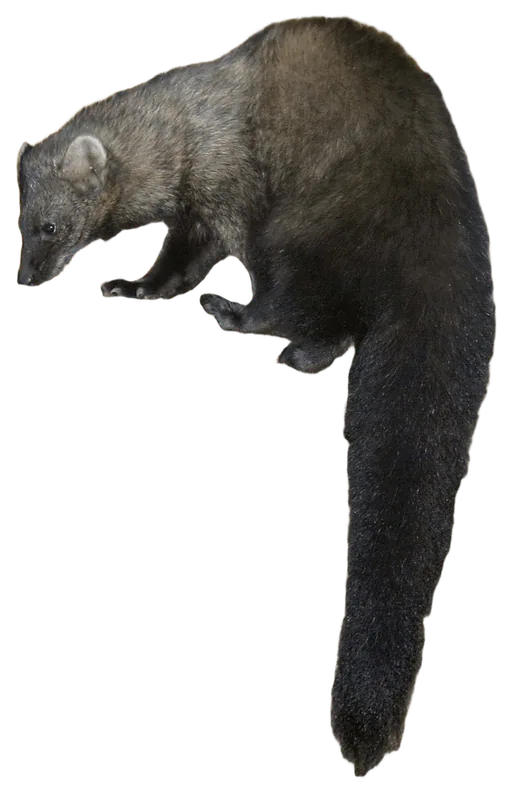
vs Red FoxWins · 56% · Toss-up 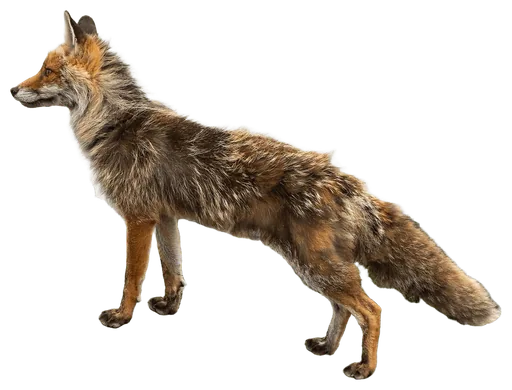 W vs FisherWins · 58% · Slight edge
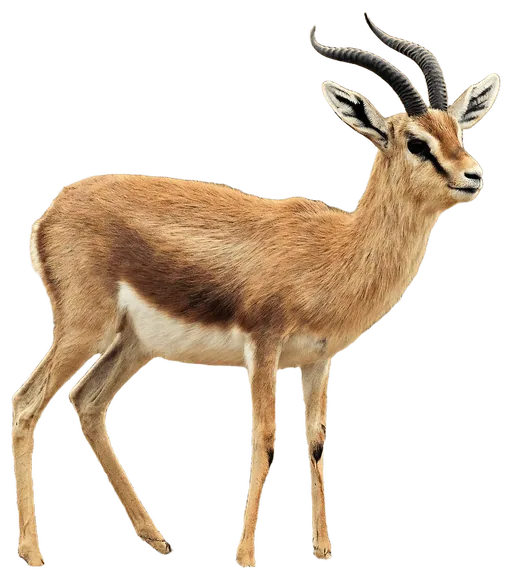
 W vs GazelleWins · 52% · Toss-up
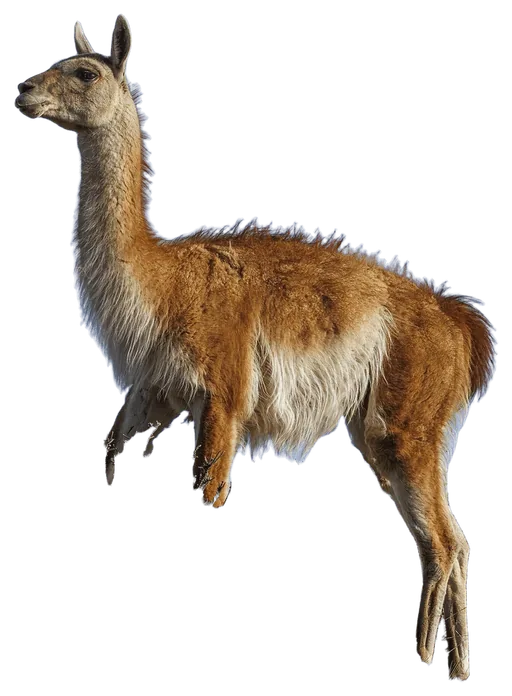
 W vs GuanacoLoses · 59% · Slight edge
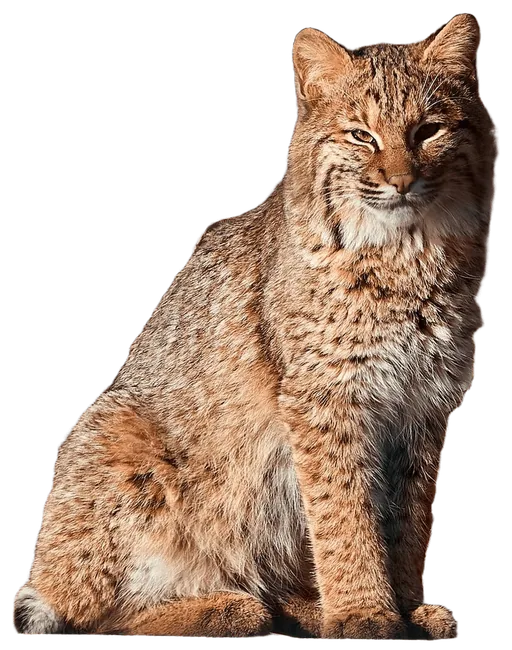
 L vs BobcatWins · 54% · Toss-up
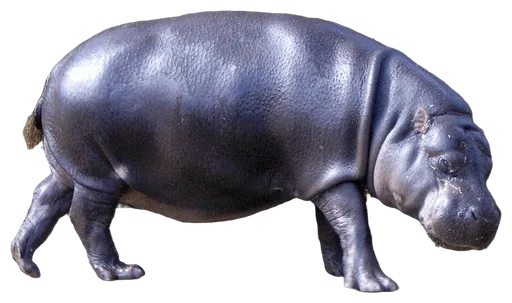
 W vs Pygmy HippopotamusLoses · 62% · Slight edge
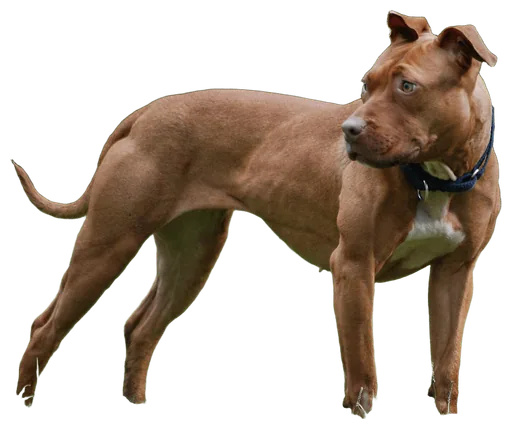
 L vs American Pit Bull TerrierLoses · 51% · Toss-up
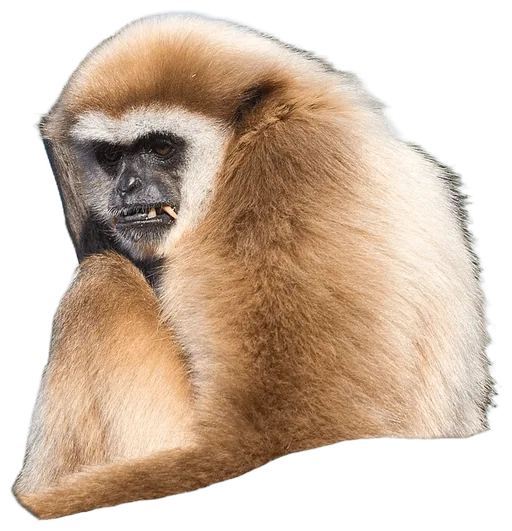
 L vs GibbonWins · 56% · Toss-up
 W
Beaver battle analysis
A beaver's reputation comes from construction, but the anatomy behind that construction also gives it a legitimate close-range weapon. The skull and jaw musculature direct an unusually large share of force along the incisors, and modern enamel research shows that the cutting edges maintain themselves through differential wear. That means the same mouth capable of repeatedly cutting woody stems can inflict serious wounds on a similarly sized unarmored opponent. Still, the beaver is not a carnivore. It lacks the pursuit speed, grappling anatomy and behavioral specialization of animals built to seize and kill vertebrate prey.
Its battle profile changes dramatically at the shoreline. On dry ground the short-legged, heavy body is a liability. In water, the animal becomes a competent diver and efficient swimmer with protected eyes, sealable openings and powerful webbed hind feet. Water also enables its normal anti-predator strategy: disappear below the surface and reach a refuge through a submerged route. ABS therefore treats the beaver as a moderate attacker with strong stamina and situational mobility, rather than inflating it from spectacular pound-for-pound gnawing feats.
The species' deepest specialty is behavioral. Beavers alter hydrology, construct lodges, repair dams, cache food and organize family territories. Those feats justify above-average intelligence and Special scores, but the calibration deliberately refuses to count an entire engineered pond as personal armor or a dam as a weapon. The canonical beaver is the animal itself, not weeks of prior construction.
Habitat & range
North American beavers occupy ponds, lakes, rivers, marshes, streams and adjacent wetlands across much of North America. Smithsonian notes absence from major desert regions of California/Nevada and parts of Utah/Arizona. Introduced populations also exist outside the native range.
Diet & hunting
Herbivorous. Beavers consume woody and non-woody plants, including bark/cambium, twigs, leaves and aquatic or herbaceous vegetation. They store woody food underwater for winter use.
Social life
Family groups commonly include a breeding pair, kits and older offspring. ADW reports colonies of up to about eight related individuals. Young may remain for roughly two years and participate in food collection, dam building and care.
Conservation
The North American beaver is widespread and has recovered dramatically from historical overtrapping in many regions. The research pass did not rely on a cached IUCN page for a formal current category, so a production conservation field should be verified directly against the current IUCN assessment before migration rather than inferred here.
Quick answers
How strong is a Beaver?
On the Animal Battle Stats scale, the Beaver has an attack rating of 42 and a power index of 49.3 out of 100, which ranks it #193 of 344 animals and puts it in C tier (Capable). Its strongest stat is stamina (68).
How much does a Beaver weigh?
A typical adult Beaver weighs about 23 kg (51 lb). Rated specimen: Healthy mature adult of 23.0 kg, 110.0 cm total length, and approximately 40.0 cm standing height in normal wild condition.
How fast is a Beaver?
There is no reliable measured top speed for the Beaver, so we do not publish one. Its agility rating, which covers acceleration, reflexes and evasion, is 57 out of 100.
What does a Beaver eat?
Herbivorous. Beavers consume woody and non-woody plants, including bark/cambium, twigs, leaves and aquatic or herbaceous vegetation. They store woody food underwater for winter use.
What animals can beat a Beaver?
Among its closest rivals, the Guanaco (59%), the Pygmy Hippopotamus (62%), the American Pit Bull Terrier (51%) would be favored against the Beaver. It would be favored against the Red Fox, the Fisher, the Gazelle, the Bobcat, the Gibbon.
Researched 2026-09-27. Ratings are editorial judgments built from these sources; measurements describe a healthy adult.
- Smithsonian National Zoo, Beaver16–30 kg mass; 1–1.2 m length; 0.3–0.5 m height; 10–12 year typical lifespan; habitat; dams/lodges
- Animal Diversity Web, Castor canadensis13–32 kg, 900–1170 mm; sexes alike; incisor dimensions; 10–20 year wild longevity; family structure, reproduction, territoriality
- Cox & Baverstock, Journal of Mammalian Evolution / University of YorkCalculated 550–740 N incisor bite force; >96% force alignment; jaw-muscle mechanics
- Hunt et al., Acta Biomaterialia / ORNLExperimentally demonstrated self-sharpening enamel mechanism; inner enamel wears ~2.5× faster than outer
- Allers & Culik 1997, Physiological Zoology / PubMedPreferred underwater speed 0.64 m/s; minimum cost of transport at 0.9 m/s; swimming energetic cost
- Rocky Mountain National Park, NPSWaterproof fur, webbed hind feet, tail alarm slap, year-round activity, up to 15 min submergence, family life
- Isle Royale National Park, NPSDam/lodge construction, underwater lodge entrance, 33–55 lb local body mass
- Wikimedia Commons, Minette Layne photographExact-species image; 3050×2184; author and CC BY-SA 2.0 provenance
Photo: “Beaver (48876665228).jpg” by GrandTetonNPS, Public domain, background removed and cropped. Original
Suggest a correction