

Basking Shark
Cetorhinus maximus
 #90 of 341
  Ocean Titan Endangered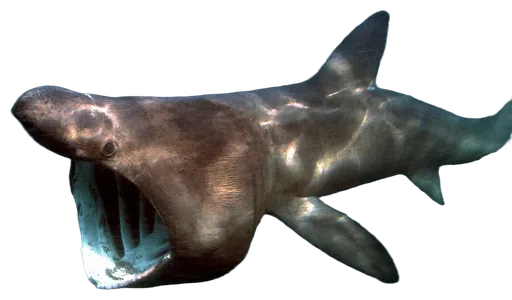
 Fight
FightPhoto: Green Fire Productions · CC BY 2.0
The basking shark is the second-largest fish alive, a 7.9-metre, 4-tonne filter feeder that cruises open-mouthed through plankton. It has no weapons and never fights, but its thick, rough skin and huge size protect it, and it can burst out of the sea as fast as a great white shark.
 Attack44
  Defense70
  Agility40
  Stamina86
  Intelligence37
  Special66
 Detailed ratings
Research-backed ratings on one 0–100 scale for all 341 animals (updated 2026-09-28). How ratings work
Special abilities
Ability 1Latent Breach PowerDespite feeding at under 1 m/s, a basking shark can rush up from about 20 m and leave the water at about 5 m/s, matching a great white shark. Four tonnes arriving at that speed is a real hazard to anything in the way.
 Ability 2Transequatorial Deep Run
Tagged basking sharks have crossed from North America to South America, spending weeks to months hundreds of metres down, and Scottish-tagged sharks travelled a median of more than 3,600 km. It can leave a fight for waters few opponents would follow.
Unique traits
 TraitCavernous Filter Mouth
A mouth up to about 1 m wide and gill slits that nearly encircle the head, with bristle-like gill rakers that are constantly shed and replaced.
TraitAbrasive GiantSkin so rough with large denticles that it has injured divers who brushed against it.
How it fights
Weapons
- The basking shark has no feeding weapon. Its tiny teeth are unused, it has no spines or venom, and it never attacks other animals. What it does have is mass and hidden power. A 4-tonne body is dangerous to anything it collides with, and breaching data show that this apparently lazy fish can generate the same vertical speed as a great white shark: about 5 m/s, with a mass-specific power output of about 5.5 W/kg (Johnston et al. 2018). Its rough skin also scrapes anything that rubs against it.
 Struggles vs
- No weapon and no attacking behavior.
- Slow routine speed and wide turning.
- Very small brain for its size.
- Docile; does not flee boats and was easily harpooned.
- Vulnerable to coordinated predators such as orcas.
- Weight
- 4 t4.4 US tons
- Height
- No reliable measurement
- Length
- 7.9 m25.9 ft
- Top speed
- 18 km/h11 mph
- Bite force
- No reliable measurement
- Lifespan
- 50 years
- Home biome
- Ocean
- Lifestyle
- Mostly solitary
Rated specimen: Healthy mature adult, 790 cm total length and 4,000 kg, representing an average adult rather than the 12.27 m Bay of Fundy record.
Fun facts
- A basking shark can burst out of the water at about 5 m/s, as fast as a breaching great white.
- One logger study counted 577 breaches by four sharks in a year.
- A 5 m basking shark can filter about 450 tonnes of seawater an hour.
- It has the smallest brain for its body weight of any shark.
- Rotting basking sharks have been mistaken for sea serpents and plesiosaurs.
- Some basking sharks cross the equator, travelling from New England to South America.
Closest rivals by power. Tap one for the full breakdown, or pick any opponent.
vs Arctic WolfLoses · 50% · Toss-up 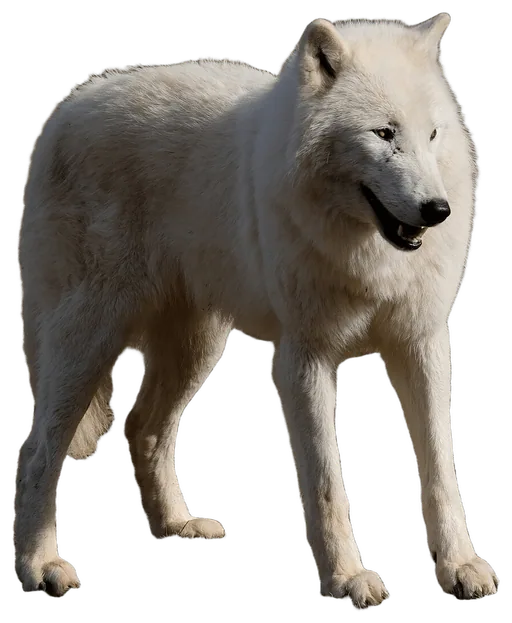 L vs Colossal SquidLoses · 50% · Toss-up
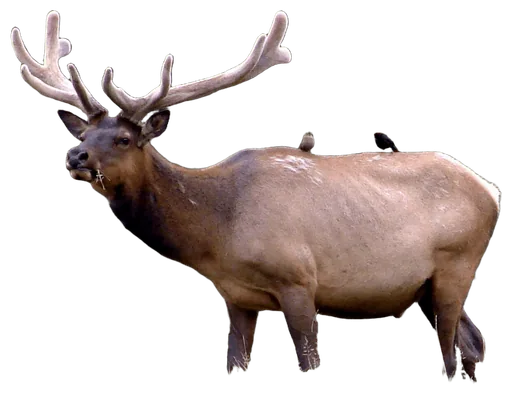
  L vs ElkLoses · 50% · Toss-up
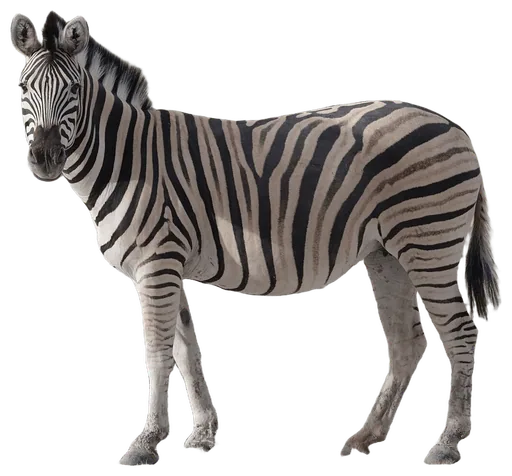
  L vs ZebraLoses · 51% · Toss-up
  L vs Green AnacondaWins · 51% · Toss-up
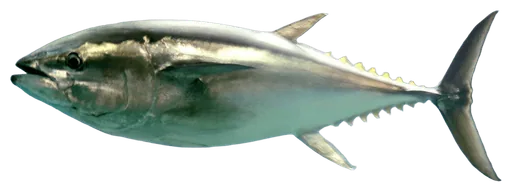
  W vs TunaWins · 53% · Toss-up
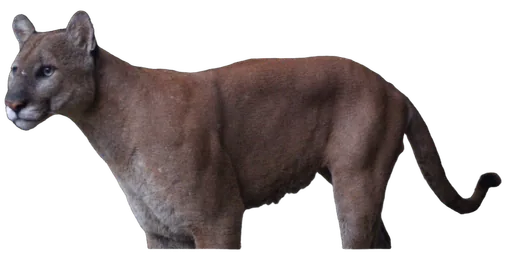
  W vs CougarLoses · 51% · Toss-up
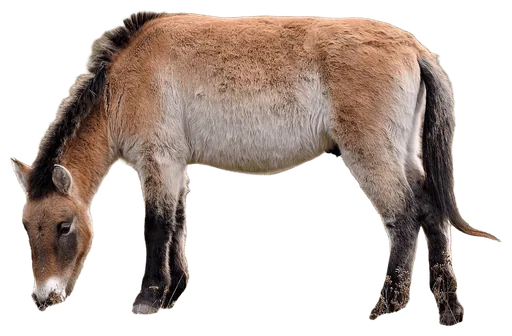
  L vs Wild HorseWins · 51% · Toss-up
  W
W  Pick any opponent
 Basking Shark battle analysis
The basking shark spends summer days at the surface with its mouth stretched open like a giant net, straining tiny copepods from the water. An average adult is about 7.9 metres long and weighs around four tonnes, yet it feeds at a slow walking pace and barely reacts to passing boats. That calm made it an easy target for centuries of harpoon fisheries hunting its oily liver.
Its lazy image hides surprising power. Loggers attached to basking sharks show them rushing up from around 20 metres and leaping clear of the sea at about 5 m/s, the same vertical speed as a great white shark, and doing so hundreds of times a year. Satellite tags show them crossing oceans and even the equator, diving hundreds of metres into the twilight zone and staying there for weeks.
In a battle, the basking shark is a pure endurer. It has no bite worth the name and no inclination to fight, but its thick, abrasive skin and massive body make it a very hard target for anything smaller than a killer whale. Orcas, working together, are the one predator known to take them, and against such opponents its only real options are its bulk and a dive into deep water.
Habitat & range
Basking sharks live in boreal to warm-temperate waters around the world, on continental shelves and in the open ocean, and occasionally enter brackish water. They prefer water of about 8–14.5 °C, are often seen at the surface in summer at hotspots such as western Scotland, the Isle of Man and the continental shelf off the north-east United States and Canada, and move deeper, to about 900 m, in winter. Some cross the tropics at depth.
Diet & hunting
A filter feeder on zooplankton, especially calanoid copepods, along with fish eggs, larvae and small invertebrates. It feeds selectively in the densest plankton patches, often along ocean fronts, and continues foraging during long migrations, including in the deep scattering layers of the mesopelagic.
Social life
Usually solitary but gathers in summer where plankton is dense. It forms small sex-segregated groups, and courtship tori of several sharks circling together have been documented in the eastern North Atlantic.
Conservation
Listed as Endangered on the IUCN Red List (2019, amended 2021) and on CITES Appendix II. Centuries of harpoon and net fisheries for its liver oil, fins and meat collapsed several populations. It is fully protected in the United Kingdom and in the Atlantic and Gulf of Mexico waters of the United States.
Quick answers
How strong is a Basking Shark?
On the Animal Battle Stats scale, the Basking Shark has an attack rating of 44 and a power index of 57.5 out of 100, which ranks it #90 of 341 animals and puts it in B tier (Strong). Its strongest stat is stamina (86).
How much does a Basking Shark weigh?
A typical adult Basking Shark weighs about 4 t (4.4 US tons). Rated specimen: healthy mature adult, 790 cm total length and 4,000 kg, representing an average adult rather than the 12.27 m Bay of Fundy record.
How fast is a Basking Shark?
The Basking Shark's top speed is about 18 km/h (11 mph). Its agility rating is 40 out of 100.
What does a Basking Shark eat?
A filter feeder on zooplankton, especially calanoid copepods, along with fish eggs, larvae and small invertebrates. It feeds selectively in the densest plankton patches, often along ocean fronts, and continues foraging during long migrations, including in the deep scattering layers of the mesopelagic.
Is the Basking Shark endangered?
The Basking Shark's conservation status is Endangered. Listed as Endangered on the IUCN Red List (2019, amended 2021) and on CITES Appendix II. Centuries of harpoon and net fisheries for its liver oil, fins and meat collapsed several populations. It is fully protected in the United Kingdom and in the Atlantic and Gulf of Mexico waters of the United States.
What animals can beat a Basking Shark?
Among its closest rivals, the Arctic Wolf (50%), the Colossal Squid (50%), the Elk (50%), the Zebra (51%), the Cougar (51%) would be favored against the Basking Shark. It would be favored against the Green Anaconda, the Tuna, the Wild Horse.
Researched 2026-09-28. Ratings are editorial judgments built from these sources; measurements describe a healthy adult.
- Wikipedia, Basking sharksize, mass, speed, filter rate, brain size, predators, life history, IUCN
- Florida Museum, Discover Fishes: Cetorhinus maximusmass, skin, danger, globsters
- Sims 2008, Advances in Marine Biology review (PubMed)size, mass, exploitation
- Johnston et al. 2018, Biology Letters, Latent power of basking sharks (PubMed)breach speed, power, mass estimate
- Rudd et al. 2021, Scientific Reports (PubMed)breaching behavior
- Year-round breaching of basking sharks, Biology Letters 2026 (PubMed)breaching frequency
- Doherty et al. 2017, Scientific Reports (PubMed)endurance, range
- Skomal et al. 2009, Current Biology (PubMed)migration, deep diving
- Circles in the sea: courtship torus behaviour, Journal of Fish Biology 2022 (PubMed)social behavior, adult sizes
- The biology and ecology of the basking shark: a review, Advances in Marine Biology 2023 (PubMed)migration context
- Wikimedia Commons, Cetorhinus maximus by greg skomalimage candidate
Photo: “Cetorhinus maximus atlantic.jpg” by Green Fire Productions, CC BY 2.0, background removed and cropped. Original
Suggest a correction