
Barracuda
Sphyraena barracudaC tier · Capable35th of 51 sea creatures
Size & speed

- Weight
- 17 kg37 lb
- Length
- 1.4 m4.6 ft
- Top speed
- 22 km/h14 mph
As heavy as 3.8 house cats
Heavier than 52% of animalsAbout 4.7 rulers long
Bigger than 59% of animalsAbout as fast as a person running
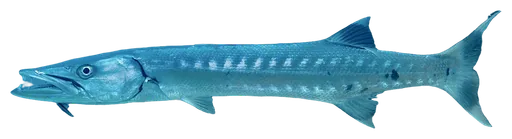
Faster than 22% of animalsGreat Barracuda (Sphyraena barracuda) is a large tropical ambush fish built around sudden acceleration and a specialized slicing bite. A representative adult is about 1.4 m long and roughly 17 kg. Rather than relying on extraordinary crushing force, it uses dagger-like teeth, a scissor-like posterior jaw and rapid head movements to cut fish too large to swallow whole. It is highly dangerous to fish-sized prey but has little armor and remains vulnerable to substantially larger marine predators.
Detailed ratings
Research-backed ratings on one 0–100 scale for all 344 animals (updated 2026-09-27). How ratings work


Card No. 192 of 344. Every animal on Animal Battle Stats has one: its power, tier and archetype on the front; its six battle stats, abilities and signature move on the back.
Special abilities
From slow patrol or near-stationary positioning, the streamlined body and caudal propulsion produce a sudden burst that sharply reduces prey reaction time and delivers the jaws into striking range.
Dagger-like palatine and mandibular teeth, posterior bite geometry, repeated closure and short lateral head shakes let the barracuda slice prey too large to engulf whole.
Unique traits
An elongated body with fins concentrated toward the rear prioritizes rapid acceleration and straight-line attack efficiency over armor or heavy-body grappling.
Biomechanical work shows relatively low bite force for body size, yet specialized tooth geometry allows effective flesh-and-bone cutting. This is a useful reminder that bite force alone does not determine weapon lethality.
How it fights
Weapons
- Primary weapon: the jaws and interlocking/cutting dentition. The barracuda does not need mammal-like crushing force to be dangerous. It combines a rapid ram attack with sharp teeth, a large gape, and posterior shearing geometry.
- Secondary weapon: whole-body acceleration and momentum. Speed is not itself a blade, but it determines how quickly the mouth reaches the target, reduces reaction time, and contributes to ram capture.
Struggles vs
- No meaningful armor or specialized trauma-resistant covering.
- Damage delivery requires bringing the head and jaws into close contact.
- Raw bite force is modest relative to many similarly sized predatory fishes; cutting teeth compensate but do not create crushing force.
- Burst speed can be overvalued if treated as sustained speed.
- Vision-dependent ambush is less dominant when visibility or approach geometry is poor.
- Weight
- 17 kg37 lb
- Height
- No reliable measurement
- Length
- 1.4 m4.6 ft
- Top speed
- 22 km/h14 mph
- Bite force
- No reliable measurement
- Lifespan
- 14 years
- Home biome
- Ocean
- Lifestyle
- Social
Rated specimen: Healthy mature adult of approximately 1.40 m total length and 17.0 kg in normal wild condition.
Fun facts
- A great barracuda can cut prey larger than its gape into manageable pieces instead of relying on swallowing everything whole.
- High-speed video has captured repeated biting and short head shakes that position prey against the stronger posterior cutting region of the jaws.
- Its bite force is relatively low for its body size among fishes, yet the animal remains a highly effective predator because tooth shape and cutting geometry matter enormously.
- A modern muscle-physiology study estimated barracuda maximum swimming speed at 6.2 ± 1.0 m/s, much lower than some famous internet speed claims.
- Two satellite-tagged great barracuda traveled minimum straight-line distances of 471 km and 1,231 km in only 15 days.
- FishBase reports a common length around 1.4 m but a maximum reported length of 2.0 m, illustrating why record-size animals should not define the canonical ABS specimen.
Closest rivals by power. Tap one for the full breakdown, or pick any opponent.
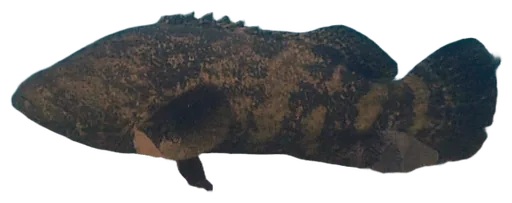
vs StingrayLoses · 54% · Toss-up 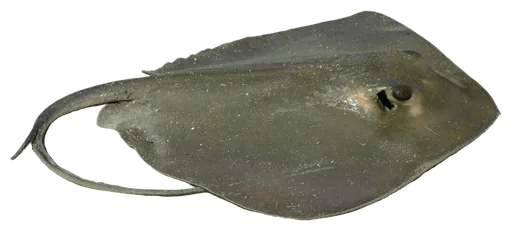 L vs Goliath GrouperLoses · 62% · Slight edge
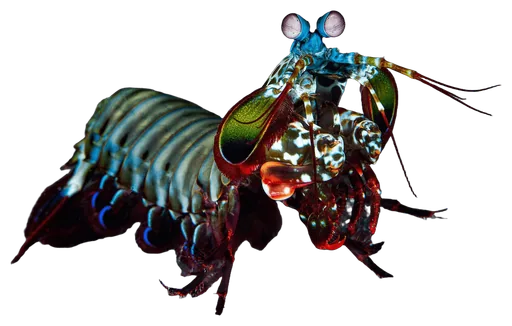
 L vs Mantis ShrimpWins · 76% · Clear edge
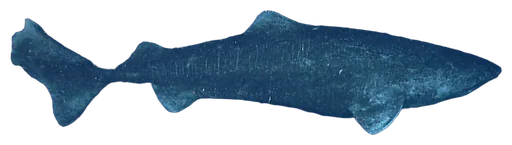
 W vs Greenland SharkLoses · 66% · Slight edge
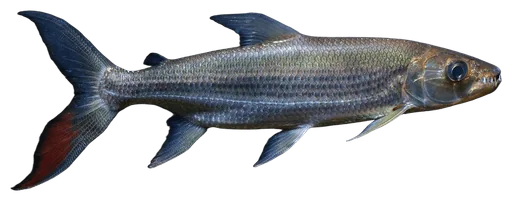
 L vs Goliath TigerfishLoses · 55% · Toss-up
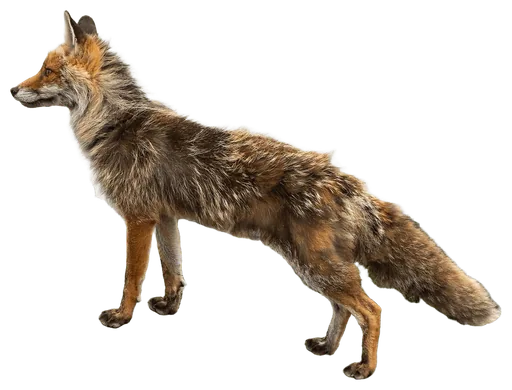
 L vs Red FoxWins · 55% · Toss-up
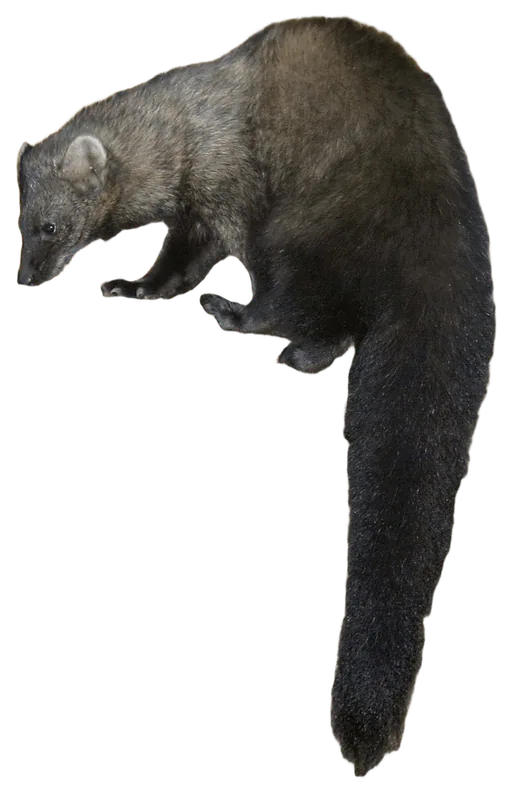
 W vs FisherWins · 57% · Toss-up
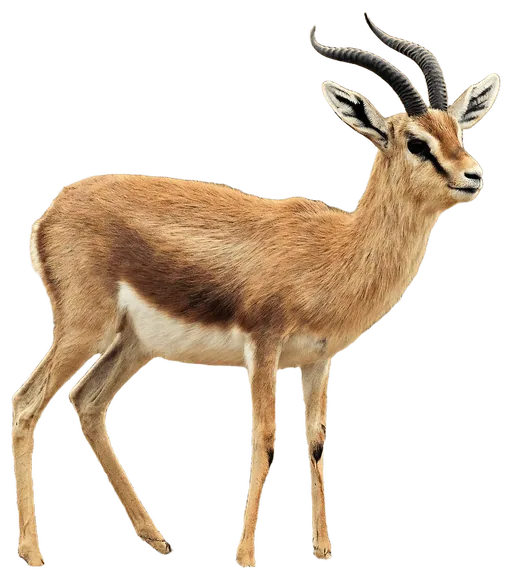
 W vs GazelleDraw · 50-50 · Dead even
 D
Barracuda battle analysis
The great barracuda is a study in efficient weapon design. Its reputation often produces exaggerated speed and bite-force claims, but the measured biology is more interesting. A representative adult is long and streamlined rather than massively built. It can spend time hovering or moving slowly through reef habitat, relying on vision to detect a favorable target. Once the attack begins, caudal propulsion converts that quiet posture into a rapid ram toward the prey.
At contact, the barracuda's jaws solve a problem that many predators face: prey can be too large to swallow. Instead of requiring enormous crushing force, the mouth uses sharp, dagger-like teeth and favorable posterior geometry. Experimental and biomechanical work shows that prey can be struck across the body, shifted toward the corner of the mouth and cut by repeated bites and lateral head movement. The result is a predator whose practical damage output exceeds what a simple bite-force ranking would suggest.
That specialization has limits. The barracuda is not armored, does not have a shark's scale of jaw force, and is not built to wrestle massive opponents. Its best combat geometry is open water, where it can choose distance, align a burst and attempt a disabling cut before the opponent can respond. If a much larger shark, grouper or other powerful aquatic predator survives the first exchange and establishes contact, the barracuda's defensive options diminish quickly.
Its endurance also deserves nuance. Burst attacks are short, but tagging demonstrates that great barracuda can cover very large distances over days and make substantial vertical movements. The correct ABS profile is therefore neither “fragile one-second sprinter” nor “endurance superfish.” It is a mobile reef and coastal predator with strong travel capacity whose actual attack output is concentrated into rapid ambush bursts.
Habitat & range
Great barracuda occupy tropical and subtropical marine and estuarine environments, especially nearshore coral reefs, seagrass beds, mangroves, sandy reef-adjacent areas and open coastal water. Florida Museum reports occurrence from near the surface to roughly 100 m, while tagging work has documented brief excursions substantially deeper than 100 m.
The species is broadly circumtropical. FishBase and Florida Museum document the western Atlantic from Massachusetts and Bermuda through the Caribbean and Gulf of Mexico to Brazil, plus the eastern Atlantic, Red Sea and Indo-Pacific to Hawaii and central Pacific islands. It is rare or absent in much of the eastern Pacific.
Diet & hunting
Primarily piscivorous. Documented prey include jacks, grunts, groupers, snappers, small tunas, mullets, killifishes, herrings and anchovies, with cephalopods and occasional crustaceans also reported by institutional references. Its trophic position is high; FishBase gives a modeled trophic level around 4.5.
Social life
Adults tend toward solitary behavior but may occur in small aggregations. Younger barracuda are more likely to school. No colony or pack-level combat bonus should be assigned to the canonical adult.
Conservation
Great barracuda are widely distributed and are important recreational/game fish in many regions. Florida FWC identifies them as native top reef predators. FishBase flags high fishing vulnerability despite broad distribution, which is compatible with relatively slow population turnover. Conservation labeling should be rechecked directly against the current IUCN species account during production migration rather than inferred from generic barracuda summaries.
Quick answers
How strong is a Barracuda?
On the Animal Battle Stats scale, the Barracuda has an attack rating of 48 and a power index of 49.4 out of 100, which ranks it #192 of 344 animals and puts it in C tier (Capable). Its strongest stat is agility (70).
How much does a Barracuda weigh?
A typical adult Barracuda weighs about 17 kg (37 lb). Rated specimen: Healthy mature adult of approximately 1.40 m total length and 17.0 kg in normal wild condition.
How fast is a Barracuda?
The Barracuda's top speed is about 22 km/h (14 mph). Its agility rating is 70 out of 100.
What does a Barracuda eat?
Primarily piscivorous. Documented prey include jacks, grunts, groupers, snappers, small tunas, mullets, killifishes, herrings and anchovies, with cephalopods and occasional crustaceans also reported by institutional references. Its trophic position is high; FishBase gives a modeled trophic level around 4.5.
What animals can beat a Barracuda?
Among its closest rivals, the Stingray (54%), the Goliath Grouper (62%), the Greenland Shark (66%), the Goliath Tigerfish (55%) would be favored against the Barracuda. It would be favored against the Mantis Shrimp, the Red Fox, the Fisher. It is dead even with the Gazelle: a draw.
Researched 2026-09-27. Ratings are editorial judgments built from these sources; measurements describe a healthy adult.
- FishBase, Sphyraena barracudaTaxon, common/max length, max mass, maturity, age, distribution, trophic context, length-weight model
- Florida Museum, Great BarracudaMorphology, habitat, diet, records, longevity, predation, feeding behavior, popular speed context
- Svendsen et al. 2016, Biology Open / PubMedModern maximum-speed estimate
- Walters 1966, NatureHistorical speed conflict
- Habegger et al. 2011, Journal of ZoologyBite force through ontogeny
- Habegger et al., functional morphology / PubMedRam biting, cutting mechanics, jaw morphology
- Habegger 2009 USF thesisBite-force comparison and ontogeny
- Hansen & Kerstetter 2015, Gulf and Caribbean ResearchMovement, depth use, endurance context
- Florida Fish and Wildlife Conservation CommissionFlorida ecology, max size, diet, ciguatera
- Virginia AquariumInstitutional cross-check for habitat, range, lifespan and size
- Wikimedia Commons, HectonichusPrimary image candidate and licensing
- NOAA / Wikimedia CommonsFallback image and visual feeding evidence
Photo: “Gran barracuda (Sphyraena barracuda), Yeda, Arabia Saudita, 2025-05-20, DD 118.jpg” by Diego Delso, CC BY-SA 4.0, background removed and cropped. Original
Suggest a correction