
Barn Owl
Tyto albaD tier · Underdog48th of 55 birds
Size & speed
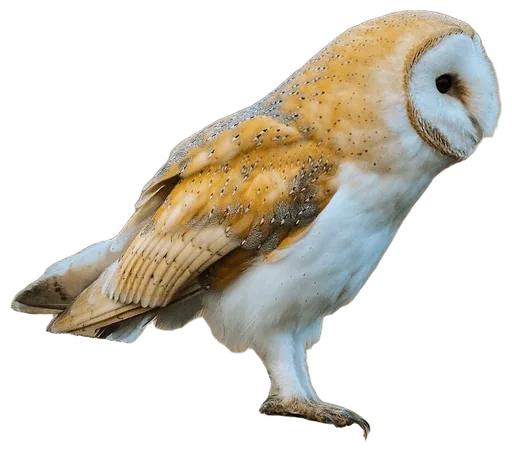
- Weight
- 350 g12.3 oz
- Length
- 37 cm14.6 in
As heavy as 1.7 smartphones
Heavier than 13% of animalsAbout 1.2 rulers long
Bigger than 18% of animalsThe Barn Owl is a lightweight nocturnal raptor built for precision rather than brute force. A heart-shaped acoustic ruff, extraordinary directional hearing and noise-reducing wing feathers let it locate small mammals in darkness and approach with little warning. Its talons are deadly at rodent scale, but at only about 0.35 kg it has very low absolute power and durability against larger animals. In ABS terms, the Barn Owl is an elite sensory, stealth and aerial-control specialist whose success depends on avoiding a direct strength contest.
Detailed ratings
Research-backed ratings on one 0–100 scale for all 344 animals (updated 2026-09-27). How ratings work


Card No. 282 of 344. Every animal on Animal Battle Stats has one: its power, tier and archetype on the front; its six battle stats, abilities and signature move on the back.
Special abilities
Specialized leading-edge, trailing-edge and velvet-like feather structures reduce flight noise, shrinking an opponent's acoustic warning window during a low-speed approach.
The facial ruff and highly specialized binaural auditory system allow precise localization of prey sounds, including attacks when visual information is severely limited.
Unique traits
The heart-shaped facial ruff is a functional acoustic structure that shapes incoming sound and improves spatial localization rather than being merely ornamental plumage.
Broad-winged, controlled flight close to the ground lets the owl systematically scan open habitat and transition from search to a steep foot-first strike.
How it fights
Weapons
- Primary: two raptorial feet with long toes and curved talons. The owl descends onto small terrestrial prey and uses its feet to seize, puncture and restrain.
- Secondary: hooked bill for biting, tearing and processing prey after capture. The bill matters in close quarters but should not be scored as if it had a demonstrated high mammalian bite force.
Struggles vs
- Extremely low absolute mass on the 225-animal scale.
- No armor or high trauma tolerance.
- Feet require close contact to deliver damage.
- Limited ability to restrain opponents much larger than normal prey.
- Broad wings need room to maneuver.
- Weight
- 350 g12.3 oz
- Height
- No reliable measurement
- Length
- 37 cm14.6 in
- Top speed
- No reliable measurement
- Bite force
- No reliable measurement
- Lifespan
- 4 years
- Home biome
- Forest
- Lifestyle
- Social
Rated specimen: Healthy fully mature adult female, approximately 0.35 kg, in normal flight condition.
Fun facts
- Barn owls do not give the classic deep owl hoot; their vocal repertoire prominently includes screeches and hisses.
- Experimental work shows they can orient to prey sounds with remarkable accuracy even without useful visual cues.
- The facial ruff is part of the hearing apparatus: experimentally removing its acoustic contribution impairs localization, especially elevation.
- BTO's maximum ringed age exceeds 15 years, despite typical life expectancy after reaching breeding age being only about four years.
- Their specialized wing surfaces are so unusual that engineers study them for aeroacoustic noise reduction.
- Barn owls swallow small prey largely whole and later regurgitate compact pellets containing fur and bones.
Closest rivals by power. Tap one for the full breakdown, or pick any opponent.
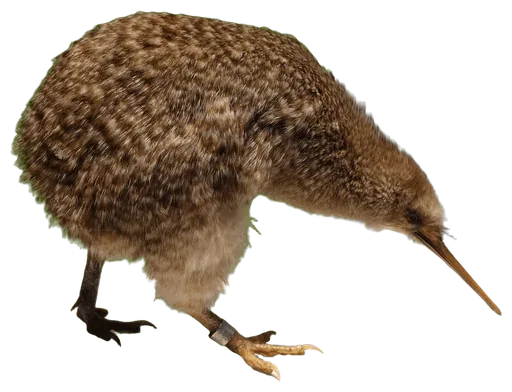
vs Sun ConureWins · 57% · Toss-up 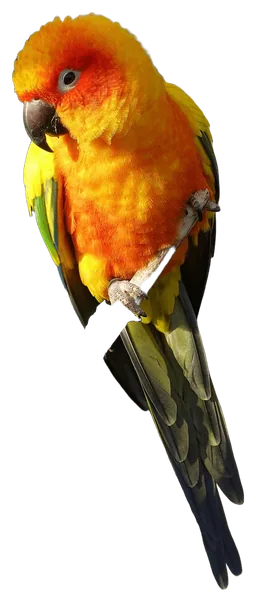 W vs KiwiLoses · 64% · Slight edge
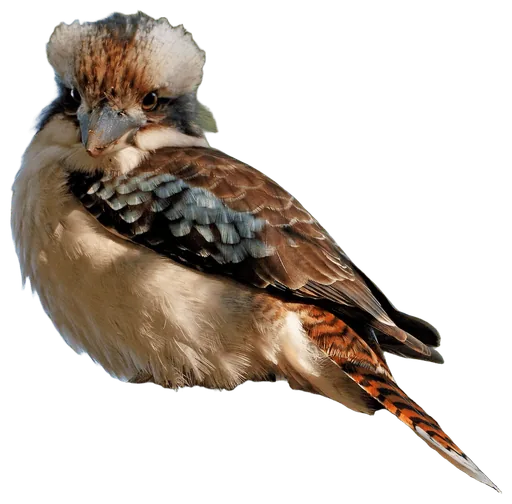
 L vs KookaburraDraw · 50-50 · Dead even
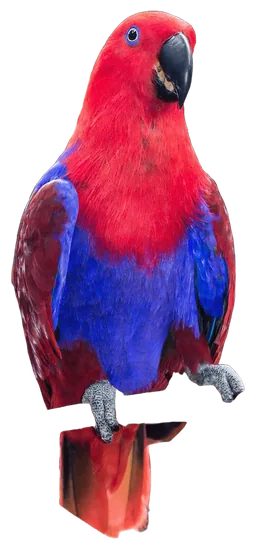
 D vs Eclectus ParrotLoses · 53% · Toss-up
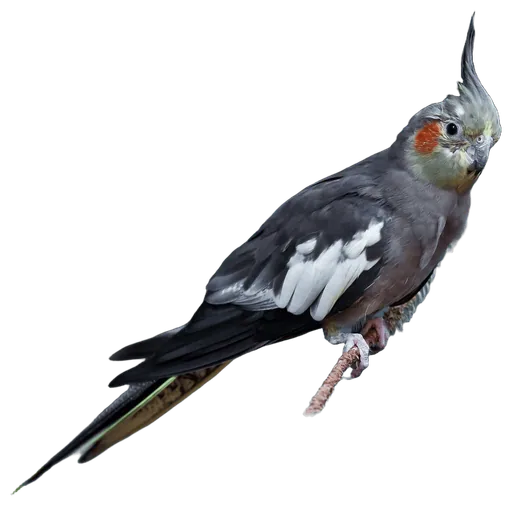
 L vs CockatielWins · 60% · Slight edge
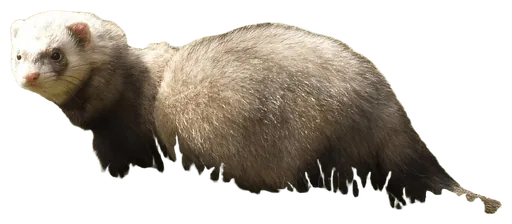
 W vs FerretLoses · 58% · Slight edge
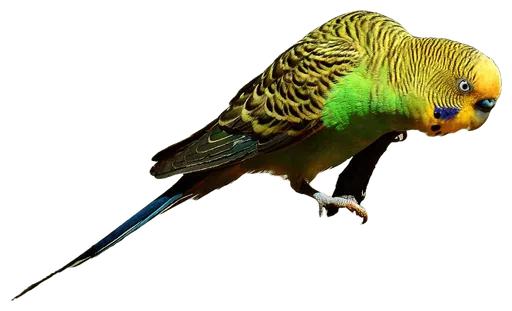
 L vs BudgerigarWins · 66% · Slight edge
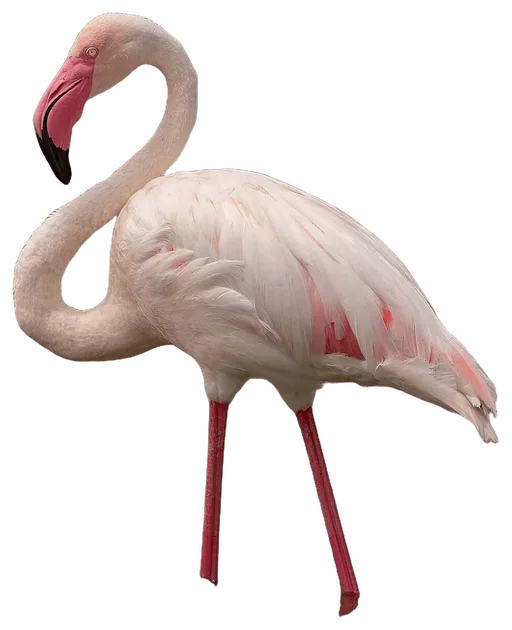
 W vs FlamingoLoses · 66% · Slight edge
 L
Barn Owl battle analysis
Few animals demonstrate the difference between specialization and raw power as clearly as the Barn Owl. Its body is light even by raptor standards, so a direct contest against a badger, wolf or eagle is mechanically unfavorable. What makes the owl formidable within its ecological niche is the chain connecting detection, approach and strike.
The heart-shaped face is an acoustic device. The ruff modifies incoming sound before it reaches the ears, while the auditory system extracts timing and spectral differences to map where a noise originated. Laboratory work has shown that barn owls can orient with striking precision and that disrupting the ruff's acoustic contribution degrades localization. This gives the owl access to prey that is visually hidden in vegetation or darkness.
The next link is approach. Barn-owl feathers carry specialized structures associated with quiet flight. Controlled experiments show that parts of this system genuinely reduce noise. That matters because prey cannot respond to a predator it detects too late. The owl's broad wings also favor slow, controlled hunting flight rather than relying on extreme velocity. It quarters across open ground, continually listening, then converts a sensory fix into a rapid descent.
The final link is the feet. Long toes and curved talons seize and puncture small mammals. At the owl's normal prey scale, this is decisive. Across the ABS roster, however, it cannot be translated into inflated raw-power numbers. A few hundred grams of bird cannot deliver the absolute mechanical damage of a multi-kilogram eagle, mustelid or canid. Its combat profile is therefore intentionally extreme: low Attack and Defense, very high Agility, Senses and Special.
This also explains its vulnerabilities. A clean grab by a much larger opponent can end the encounter quickly. Heavy rain, strong wind, cramped spaces or wing damage undermine the very systems that make the owl successful. Barn Owl is not a miniature powerhouse. It is a highly optimized nocturnal targeting platform whose real biology becomes more impressive, not less, when the ratings preserve that distinction.
Habitat & range
Barn owls favor open habitats that support small mammals and permit low hunting flight: grasslands, farmland, marshes, meadows, field edges, savanna-like landscapes and some open woodland. They roost and nest in cavities, cliffs, barns, abandoned buildings and nest boxes.
Under the conventional Tyto alba concept, barn owls have an exceptionally broad distribution across temperate and tropical regions and occur on every continent except Antarctica. Modern taxonomic splits can change the exact limits assigned to T. alba, so production copy should keep the taxonomic treatment explicit.
Diet & hunting
Primarily small mammals. Voles, mice, shrews and rats dominate many regional diets, with birds, amphibians, reptiles and large invertebrates taken less often. The prey mix shifts geographically with availability.
Social life
Typically solitary while hunting. Breeding birds generally form monogamous pairs, although polygyny has been reported. Pairs use cavities or structures for nesting and may reuse suitable sites.
Conservation
The global status referenced by BTO/BirdLife is Least Concern, but local populations can be threatened or legally protected. Habitat loss, road mortality and rodenticide exposure are important regional concerns. A global Least Concern label must not be interpreted as absence of local conservation problems.
Quick answers
How strong is a Barn Owl?
On the Animal Battle Stats scale, the Barn Owl has an attack rating of 13 and a power index of 38.9 out of 100, which ranks it #282 of 344 animals and puts it in D tier (Underdog). Its strongest stat is agility (82).
How much does a Barn Owl weigh?
A typical adult Barn Owl weighs about 350 g (12.3 oz). Rated specimen: Healthy fully mature adult female, approximately 0.35 kg, in normal flight condition.
How fast is a Barn Owl?
There is no reliable measured top speed for the Barn Owl, so we do not publish one. Its agility rating, which covers acceleration, reflexes and evasion, is 82 out of 100.
What does a Barn Owl eat?
Primarily small mammals. Voles, mice, shrews and rats dominate many regional diets, with birds, amphibians, reptiles and large invertebrates taken less often. The prey mix shifts geographically with availability.
Is the Barn Owl endangered?
No. The Barn Owl is listed as Least Concern. The global status referenced by BTO/BirdLife is Least Concern, but local populations can be threatened or legally protected. Habitat loss, road mortality and rodenticide exposure are important regional concerns. A global Least Concern label must not be interpreted as absence of local conservation problems.
What animals can beat a Barn Owl?
Among its closest rivals, the Kiwi (64%), the Eclectus Parrot (53%), the Ferret (58%), the Flamingo (66%) would be favored against the Barn Owl. It would be favored against the Sun Conure, the Cockatiel, the Budgerigar. It is dead even with the Kookaburra: a draw.
Researched 2026-09-27. Ratings are editorial judgments built from these sources; measurements describe a healthy adult female.
- British Trust for Ornithology, Barn Owl BirdFactsSex-specific mass, wing length, lifespan, clutch, incubation, fledging, conservation
- University of Florida IFAS, Barn OwlBody length, dimorphism, hearing, diet
- Animal Diversity Web, Tyto albaMorphology, length, wingspan, dimorphism, ecology
- Knudsen & Konishi, Mechanisms of sound localizationAuditory localization mechanism
- Spitzer & Takahashi, Sound Localization by Barn Owls in a Simulated Echoic EnvironmentAccuracy of sound localization under echoes
- Hausmann et al., virtual facial-ruff removalFunctional effect of facial ruff
- Geyer et al., Silent owl flight: leading-edge combQuiet-flight mechanism
- LePiane & Clark, dorsal velvet experimentQuiet-flight feather function
- Canada federal Barn Owl recovery strategyHabitat, diet, prey composition, threats
- Barn Owl Trust, hunting and feedingBritish diet, nightly feeding, weather limitation
- Wikimedia Commons, “Barn owl arp.jpg”Image identity, sex, dimensions, provenance
Photo: “Tyto alba tylluan wen.jpg” by Alun Williams333, CC BY-SA 4.0, background removed and cropped. Original
Suggest a correction