
Bald Eagle
Haliaeetus leucocephalusC tier · Capable21st of 55 birds
Size & speed

- Weight
- 5.3 kg12 lb
- Length
- 91 cm35.8 in
About as heavy as a house cat
Heavier than 38% of animalsAbout 3 rulers long
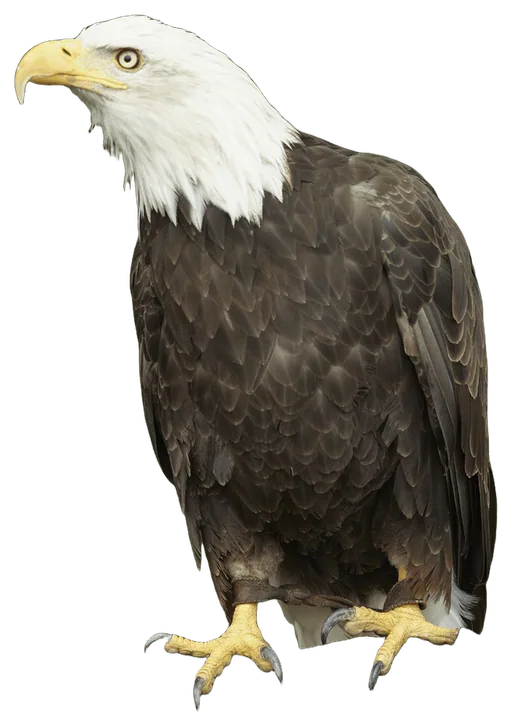
Bigger than 42% of animalsThe Bald Eagle is a large North American sea eagle built around aerial control rather than brute force. A representative adult female weighs about 5.3 kg but carries formidable curved talons, exceptional visual targeting and broad wings that let her attack, disengage and patrol from three dimensions. Fish dominate the diet, yet bald eagles also hunt birds and mammals, scavenge carrion and steal prey from other raptors. In ABS terms, the eagle's greatest advantages are Agility, Senses, Stamina and precise weapon delivery, while its modest absolute mass and lack of armor prevent inflated Attack or Defense scores.
Detailed ratings
Research-backed ratings on one 0–100 scale for all 344 animals (updated 2026-09-27). How ratings work


Card No. 188 of 344. Every animal on Animal Battle Stats has one: its power, tier and archetype on the front; its six battle stats, abilities and signature move on the back.
Special abilities
The eagle converts altitude, flight control and foot-first approach into a rapid talon grab that lets it attack from angles unavailable to terrestrial opponents.
Strong curved talons and precise surface-flight control specialize the eagle for seizing slippery aquatic prey without needing to land or fully enter the water.
Unique traits
Broad wings exploit thermals and updrafts for energy-efficient reconnaissance and long-distance movement, preserving stamina while searching from altitude.
Exceptional visual surveillance combines with flexible kleptoparasitic behavior, allowing the eagle to identify prey, carcasses and opportunities to steal food from other raptors.
How it fights
Weapons
- Primary: large anisodactyl feet with four strongly curved talons. The rear hallux is particularly important in grasping. The feet seize, puncture and restrain prey while the bird uses body momentum and wing control to maintain position.
- Secondary: hooked bill for tearing, biting and close processing once an opponent is controlled. Wing strikes and body collisions can create space, but should not be scored as if the wings were specialized clubs.
Struggles vs
- Very low absolute mass compared with serious mammalian combatants.
- No armor and limited tolerance for crushing or grappling trauma.
- Primary weapons are dangerous but short-reach once an opponent closes past the feet.
- Grounded performance is dramatically worse than aerial performance.
- Large wings need operating space.
- Weight
- 5.3 kg12 lb
- Height
- No reliable measurement
- Length
- 91 cm35.8 in
- Top speed
- No reliable measurement
- Bite force
- No reliable measurement
- Lifespan
- 25 years
- Home biome
- Wetlands
- Lifestyle
- Mostly solitary
Rated specimen: Healthy fully mature adult female, approximately 5.3 kg, with full adult plumage.
Fun facts
- Females are larger than males, reversing the size pattern familiar from many mammals.
- Adults do not acquire the iconic white head and tail until roughly 4-5 years old.
- USGS telemetry documented Florida-hatched subadults migrating more than 2,000 km on average along one major route.
- Bald eagles can build and reuse nests for years; USFWS describes nests reaching roughly 10 ft across and around 2,000 lb in some cases.
- Field studies show that food theft is not random: body size, vigilance, displays and food scarcity alter contest outcomes.
- Subadult eagles have been observed watching adults steal food and joining piracy events, evidence consistent with learned foraging behavior.
Closest rivals by power. Tap one for the full breakdown, or pick any opponent.
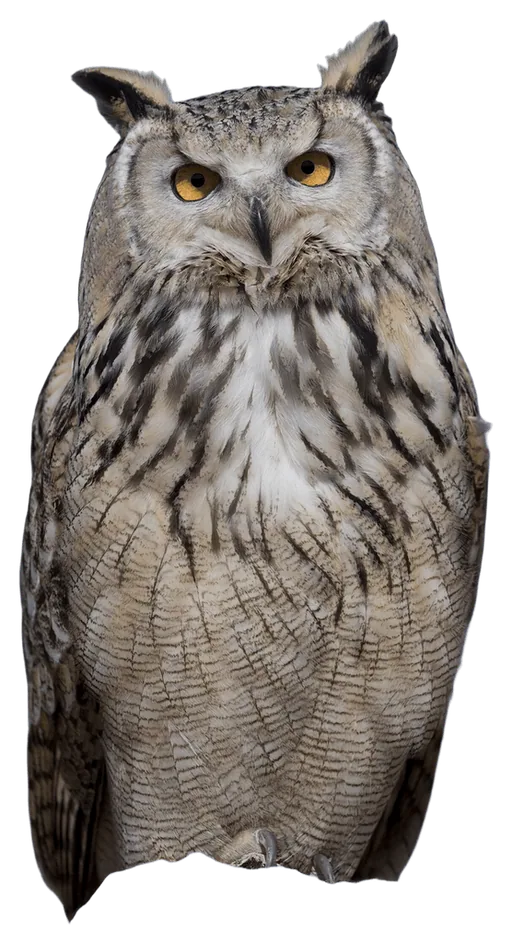
vs CondorLoses · 54% · Toss-up 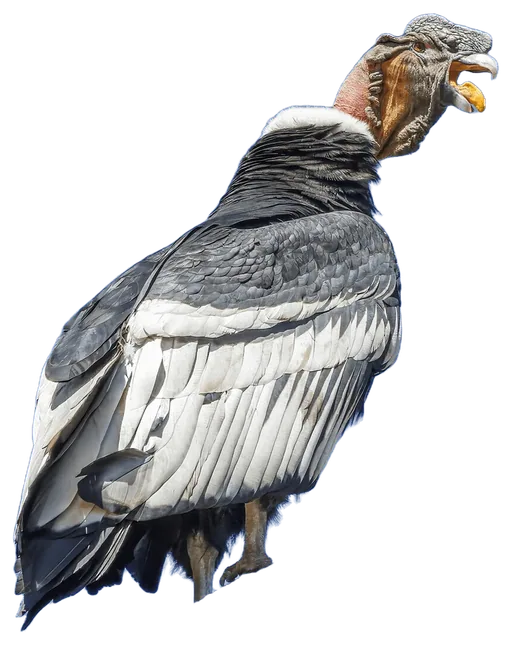 L vs Great Horned OwlWins · 57% · Toss-up
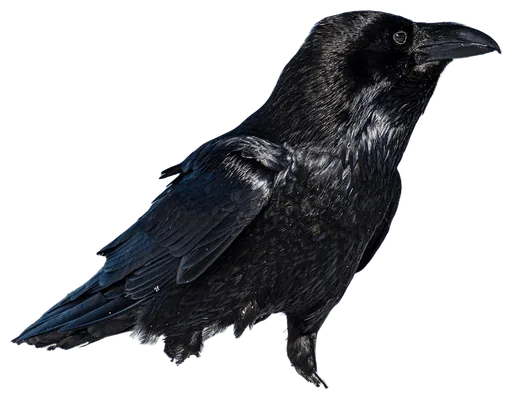
 W vs RavenWins · 59% · Slight edge
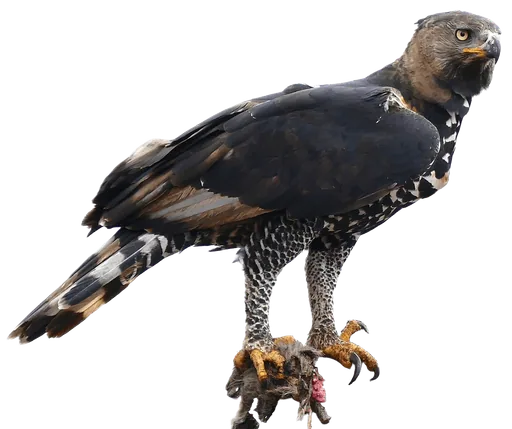
 W vs Crowned EagleDraw · 50-50 · Dead even
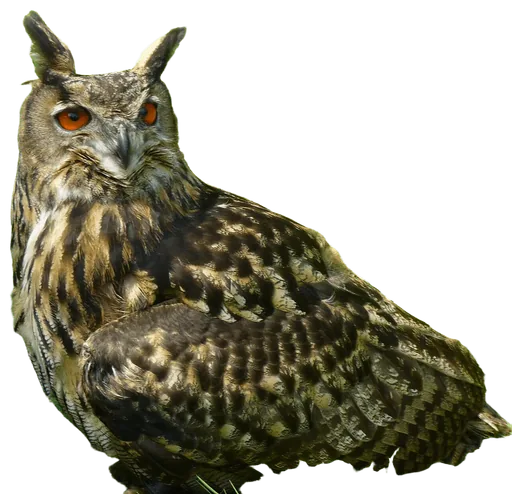
 D vs Eurasian Eagle-OwlWins · 52% · Toss-up
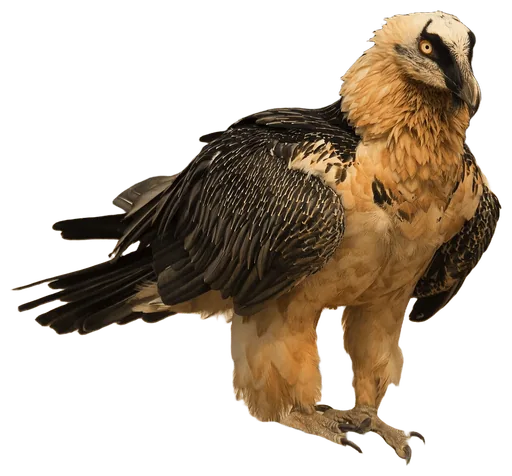
 W vs Bearded VultureWins · 51% · Toss-up
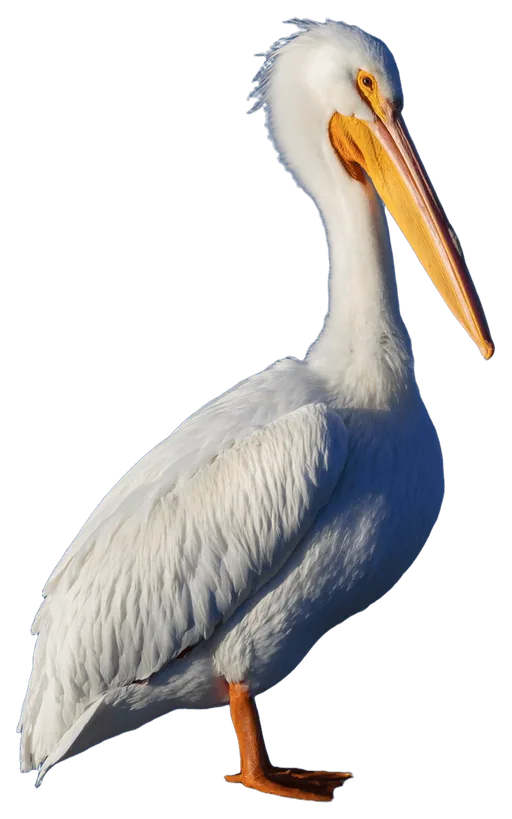
 W vs PelicanDraw · 50-50 · Dead even
 D vs OspreyWins · 54% · Toss-up
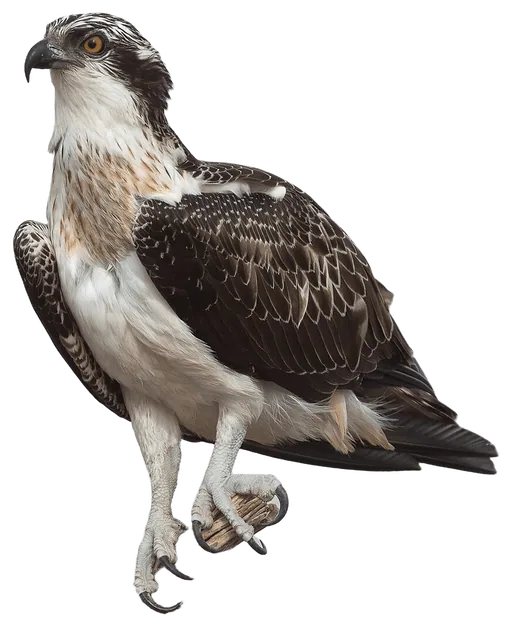 W
Bald Eagle battle analysis
A bald eagle is not a miniature terrestrial super-predator. Its biology solves a different combat problem. The bird needs to find prey across huge landscapes, reach it cheaply, strike accurately and leave before the costs of close combat rise. Broad wings exploit rising air, exceptional vision searches shorelines from altitude, and the feet become the decisive weapon only at the instant of contact.
That distinction matters for ABS scaling. A five-kilogram eagle cannot equal a wolf, big cat or great ape in absolute muscular power simply because its talons look formidable. What it can do is impose a highly asymmetric engagement. A ground animal may have far more raw force but no clean way to reach an eagle circling overhead. The eagle can choose when to descend, present the talons first, abort an approach and regain altitude. Against small, lightly protected animals, that delivery system makes the talons disproportionately effective without violating absolute scaling.
Bald eagles are also behaviorally flexible. They hunt fish, attack birds and small mammals, eat carrion and steal from competitors. Field research on winter feeding contests shows that larger birds win more piracy attempts and that vigilance and displays influence outcomes. Other observations indicate younger birds can learn piracy behavior by watching adults. This is useful tactical intelligence, but it should not be confused with the open-ended problem solving of the roster's highest-cognition primates and corvids.
Their famous conservation history adds ecological context rather than combat power. DDT and persecution nearly eliminated breeding populations from much of the contiguous United States, yet legal protection and contaminant control enabled an extraordinary recovery. Modern bald eagles again occupy waterways across the continent, demonstrating how a specialized fish-eating raptor can also thrive through opportunism.
Habitat & range
Bald eagles are strongly associated with large bodies of water, including coasts, estuaries, rivers, reservoirs, lakes and marshes, especially where large trees or other secure structures provide nesting and perching sites and fish are accessible.
The species is native to North America, from Alaska and Canada through the contiguous United States, with distribution extending into northern Mexico. Northern populations may migrate when water freezes; other populations remain resident where food and open water persist.
Diet & hunting
Primarily fish, supplemented by waterfowl and other birds, small mammals, reptiles, marine invertebrates and carrion. Bald eagles are opportunistic and readily switch between active predation, scavenging and kleptoparasitism.
Social life
Breeding adults form long-term pair bonds and defend nesting territories. Outside breeding contexts, concentrations can form around rich food sources. Feeding assemblages have dominance interactions strongly influenced by size, age, attentiveness and resource conditions.
Conservation
The bald eagle was removed from the U.S. Endangered Species Act list in 2007 after a major recovery. USFWS estimated 316,700 individuals and 71,467 occupied nests in the lower 48 from 2018-2019 data. It remains protected under the Bald and Golden Eagle Protection Act and Migratory Bird Treaty Act. Globally it is generally treated as Least Concern.
Quick answers
How strong is a Bald Eagle?
On the Animal Battle Stats scale, the Bald Eagle has an attack rating of 36 and a power index of 49.6 out of 100, which ranks it #188 of 344 animals and puts it in C tier (Capable). Its strongest stat is agility (79).
How much does a Bald Eagle weigh?
A typical adult Bald Eagle weighs about 5.3 kg (12 lb). Rated specimen: Healthy fully mature adult female, approximately 5.3 kg, with full adult plumage.
How fast is a Bald Eagle?
There is no reliable measured top speed for the Bald Eagle, so we do not publish one. Its agility rating, which covers acceleration, reflexes and evasion, is 79 out of 100.
What does a Bald Eagle eat?
Primarily fish, supplemented by waterfowl and other birds, small mammals, reptiles, marine invertebrates and carrion. Bald eagles are opportunistic and readily switch between active predation, scavenging and kleptoparasitism.
Is the Bald Eagle endangered?
The Bald Eagle's conservation status is Endangered. The bald eagle was removed from the U.S. Endangered Species Act list in 2007 after a major recovery. USFWS estimated 316,700 individuals and 71,467 occupied nests in the lower 48 from 2018-2019 data. It remains protected under the Bald and Golden Eagle Protection Act and Migratory Bird Treaty Act. Globally it is generally treated as Least Concern.
What animals can beat a Bald Eagle?
Among its closest rivals, the Condor (54%) would be favored against the Bald Eagle. It would be favored against the Great Horned Owl, the Raven, the Eurasian Eagle-Owl, the Bearded Vulture, the Osprey. It is dead even with the Crowned Eagle, the Pelican: a draw.
Researched 2026-09-27. Ratings are editorial judgments built from these sources; measurements describe a healthy adult female.
- U.S. Fish & Wildlife Service, Eagle Fun Facts for EducatorsAdult dimensions, female larger, lifespan, diet, nests, reproduction
- Smithsonian National Zoo, Bald EagleMass, wingspan, geographic size variation, adult plumage
- USFWS, Eagles and RaptorsDiet, visual hunting, longevity, maturity
- USGS, Mojica et al. 2008, Migration of Florida sub-adult Bald EaglesMigration/endurance
- USGS, Knight & Skagen 1988, Agonistic asymmetriesSocial contests, dominance, tactical behavior
- USGS, Jorde & Lingle 1988, KleptoparasitismLearned piracy / flexible foraging
- Appleton 2016, Journal of Raptor ResearchTalon morphology
- USFWS, Bald Eagle species profileRecovery, legal status, population
- USFWS, 2007 delisting final actionConservation history
- Wikimedia Commons, Gregory Moine photographPrimary image candidate
Photo: “This is Cheyenne, a seven-year-old female bald eagle, who appeared as part of a presentation by HawkQuest, a nonprofit environmental-education organization that employs birds of prey such as hawks, LCCN2015633472.tif” by Carol M. Highsmith, Public domain, background removed and cropped. Original
Suggest a correction