

Asian Elephant
Elephas maximus
 #6 of 273
  Jungle Tank Endangered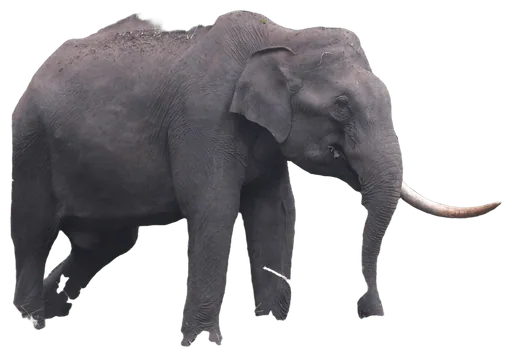
 Fight
FightPhoto: Rohitjahnavi · CC BY 4.0
The Asian elephant is a multi-tonne forest giant whose prime bulls combine crushing mass, tusks, a powerful grasping trunk and the testosterone-fuelled aggression of musth. Slightly smaller and less heavily tusked than its African cousin, it is still one of the roster's strongest land animals, and it pairs that power with some of the best-documented intelligence of any non-primate.
 Attack89
  Defense90
  Agility46
  Stamina80
  Intelligence88
  Special66
 Detailed ratings
Research-backed ratings on one 0–100 scale for all 273 animals (updated 2026-09-28). How ratings work
Special abilities
Ability 1Musth SurgePeriodic testosterone-driven state in adult bulls that sharply raises aggression and fighting drive; a smaller bull in musth can defeat a larger one that is not. In a matchup it names a real escalation of commitment, not extra strength from nowhere.
 Ability 2Trunk Strike and Grip
The boneless, highly muscular trunk can strike, grab, lift and throw, giving the elephant a precise close-range tool on top of its tusks and mass.
Unique traits
 TraitTusker or Makhna
Only males carry tusks, and in some populations most males are tuskless makhnas; the species' weapon kit varies more between individuals than in almost any other roster animal.
TraitMirror-Aware MindThe Asian elephant is one of the few animals shown to pass a mirror mark test, alongside strong evidence for cooperative problem solving.
How it fights
Weapons
- The Asian bull's offense is built on mass. A 4.5-tonne animal can shove, butt, pin and trample almost any terrestrial opponent, and a tusked bull adds a stabbing and levering weapon backed by that whole body. The trunk is a strong, precise limb that can strike, grab and throw. Against predators the practical threats are a charge, a tusk thrust, a trunk blow and crushing under the feet.
- Tusks are smaller and less universal than in African savanna bulls. Many bulls in Sri Lanka and some mainland regions are tuskless makhnas, which still fight effectively with head, trunk and mass but lose the penetrating weapon.
 Struggles vs
- Low absolute agility and no jumping; slow to turn at speed.
- Heat and water dependence limit prolonged exertion.
- Many bulls lack tusks, removing the penetrating weapon.
- Large target; calves are vulnerable to tigers.
- Weaker eyesight than hearing and smell.
- Weight
- 4.5 t5 US tons
- Height
- 2.75 m9 ft
- Length
- 6 m19.7 ft
- Top speed
- 24 km/h15 mph
- Bite force
- No reliable measurement
- Lifespan
- 60 years
- Home biome
- Jungle
- Lifestyle
- Social
Rated specimen: Healthy mature adult male (bull) of about 4,500 kg and 275 cm shoulder height, carrying tusks.
Fun facts
- A 2003 Nature study timed Asian elephants at up to 25 km/h and found they "run" with a bouncing body but never lift all four feet at once.
- An Asian elephant at the Bronx Zoo passed a mirror mark test, one of very few animals to do so.
- In a cooperative rope task, elephants waited up to 45 seconds for a partner before pulling.
- Only about 7% of Sri Lankan males carry tusks.
- Wild Asian elephants react differently to tiger and leopard growls, retreating quietly from tigers but confronting leopards.
- An adult can eat around 150 kg of food in a day.
Closest rivals by power. Tap one for the full breakdown, or pick any opponent.
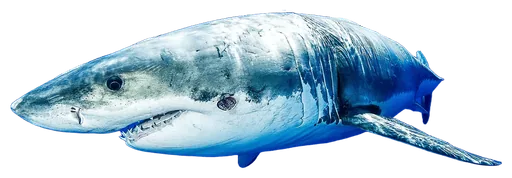
vs African ElephantLoses · 54% · Toss-up 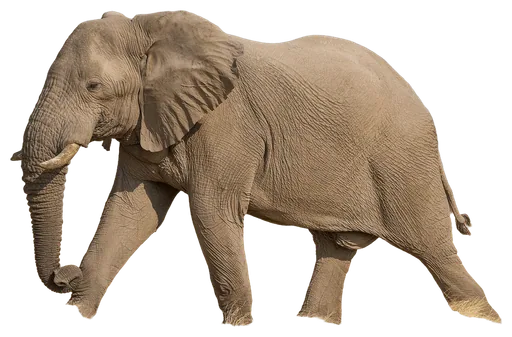 L vs Great White SharkLoses · 52% · Toss-up
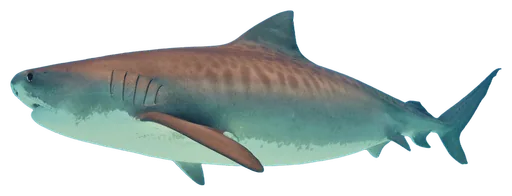
  L vs Tiger SharkWins · 52% · Toss-up
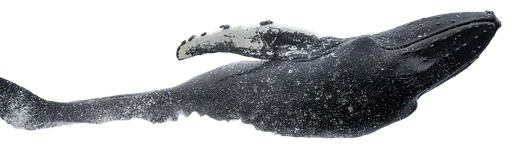
  W vs Humpback WhaleWins · 54% · Toss-up
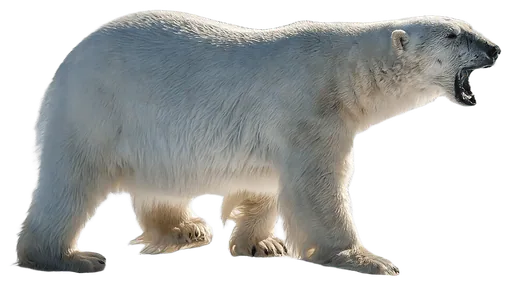
  W vs Polar BearWins · 56% · Toss-up
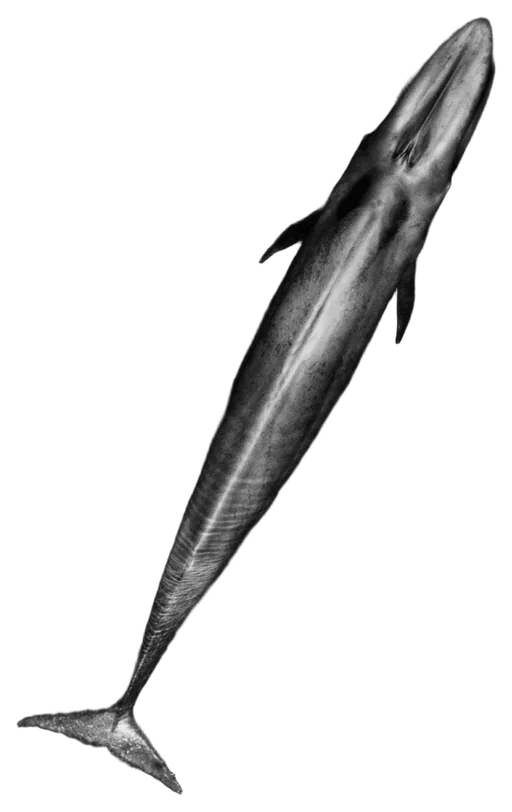
  W vs Blue WhaleWins · 54% · Toss-up
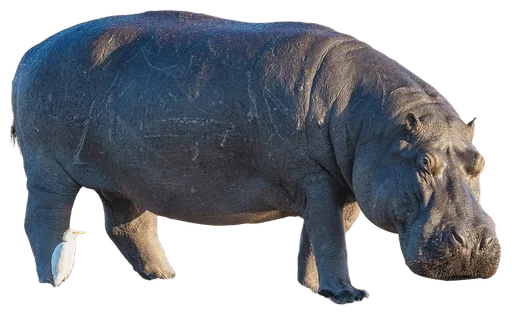
  W vs HippopotamusWins · 57% · Toss-up
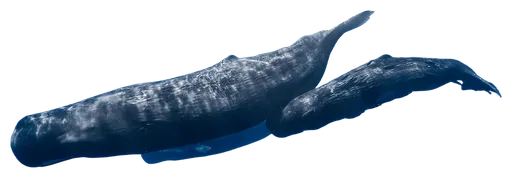
  W vs Sperm WhaleLoses · 58% · Slight edge
  L
L  Pick any opponent
 Asian Elephant battle analysis
A mature Asian bull weighs around four and a half tonnes and stands close to three metres at the shoulder. That mass is the core of its fighting ability. It can shove over trees, pin an opponent and trample with feet that carry a tonne each, and a tusked bull adds a stabbing weapon driven by the whole body. The trunk works like a strong, precise extra limb, able to deliver a blow or seize a limb. Almost nothing on land can absorb a committed charge from an animal this heavy.
The species is not simply a smaller African elephant. Tusks are shorter and far less universal: many males, especially in Sri Lanka, carry none at all and fight with head, trunk and bulk. Asian elephants live mostly in forest and forest-grassland mosaics rather than open savanna, and they are skilled at climbing wooded slopes, crossing rivers and moving quietly through cover. Their measured top speed of about 25 km/h is enough to catch a running person but far below any predator's sprint.
Its mind is its other great weapon. Asian elephants have passed the mirror mark test, cooperated in rope-pulling experiments and discriminated between the growls of tigers and leopards according to the danger each poses. In musth, adult bulls become intensely aggressive, and a smaller bull in musth can drive off a larger rival. For ABS purposes the Asian elephant sits just below the African savanna elephant in size, power and weaponry, close to it in cognition, and well above rhinoceros and bovid heavyweights in overall defense.
Habitat & range
Asian elephants live in 13 range countries across South and Southeast Asia, from India and Sri Lanka through Myanmar, Thailand, Malaysia and Indonesia. They use dense tropical evergreen forest, dry and wet deciduous forest, scrubland and grassland, often moving between forest cover and open feeding areas.
Diet & hunting
They are bulk herbivores that eat grasses, bark, roots, leaves, stems and fruit, needing around 150 kg of food a day. By opening forest paths, dispersing seeds and shaping vegetation, they act as important ecosystem engineers. Crops near forest edges attract them and drive conflict with people.
Social life
Family groups of related females and their young are led by an older matriarch. Adult bulls leave their birth group and live alone or in loose associations, joining family groups mainly to breed. Communication uses rumbles, trumpets, touch and scent.
Conservation
Endangered on the IUCN Red List, a status held since 1986, after declines of at least 50% over three generations. An IUCN-compiled 2018 set of national estimates totalled roughly 48,000–52,000 wild elephants, with wide uncertainty. Habitat loss and fragmentation, conflict with people, and poaching for ivory and other body parts are the main threats. Removing tuskers through poaching also skews sex ratios in some populations.
Quick answers
How strong is an Asian Elephant?
On the Animal Battle Stats scale, the Asian Elephant has an attack rating of 89 and a power index of 78.7 out of 100, which ranks it #6 of 273 animals and puts it in S tier (Apex). Its strongest stat is defense (90).
How much does an Asian Elephant weigh?
A typical adult Asian Elephant weighs about 4.5 t (5 US tons). Rated specimen: healthy mature adult male (bull) of about 4,500 kg and 275 cm shoulder height, carrying tusks.
How fast is an Asian Elephant?
The Asian Elephant's top speed is about 24 km/h (15 mph). Its agility rating is 46 out of 100.
What does an Asian Elephant eat?
They are bulk herbivores that eat grasses, bark, roots, leaves, stems and fruit, needing around 150 kg of food a day. By opening forest paths, dispersing seeds and shaping vegetation, they act as important ecosystem engineers. Crops near forest edges attract them and drive conflict with people.
Is the Asian Elephant endangered?
The Asian Elephant's conservation status is Endangered. Endangered on the IUCN Red List, a status held since 1986, after declines of at least 50% over three generations. An IUCN-compiled 2018 set of national estimates totalled roughly 48,000–52,000 wild elephants, with wide uncertainty. Habitat loss and fragmentation, conflict with people, and poaching for ivory and other body parts are the main threats. Removing tuskers through poaching also skews sex
What animals can beat an Asian Elephant?
Among its closest rivals, the African Elephant (54%), the Great White Shark (52%), the Sperm Whale (58%) would be favored against the Asian Elephant. It would be favored against the Tiger Shark, the Humpback Whale, the Polar Bear, the Blue Whale, the Hippopotamus.
Researched 2026-09-28. Ratings are editorial judgments built from these sources; measurements describe a healthy adult male.
- Animal Diversity Web, Elephas maximusmass, height, dimorphism, tusks
- Smithsonian's National Zoo, Asian elephantmass range, captive bull example
- Hutchinson et al. 2003, Naturespeed, gait
- Hutchinson et al. 2006, Journal of Experimental Biologylocomotion
- Plotnik, de Waal & Reiss 2006, PNASintelligence
- Plotnik et al. 2011, PNAScooperation
- Thuppil & Coss 2013, Biology Letterssenses, predator defense
- Serum testosterone and musth, Zoo Biologymusth physiology
- Denver Zoo, "If You Musth Know"musth behavior
- WWF, Asian elephantsrange, habitat, diet
- Our World in Data, elephant populationspopulation
- Wikipedia, Asian elephantIUCN status summary
- National Geographic, wild vs zoo elephant lifespanslifespan
- Nature Communications 2018, wild-caught vs captive-bornlifespan
- The Wire Science, human-elephant conflicthuman interaction
- Business Standard, conflict datahuman interaction
- Wikipedia, Sri Lankan elephanttusk frequency
- Wildlife SOS, tuskers and makhnastuskless males
- Günther et al. 2004, Geophysical Research Lettersseismic communication
- HERD, trunk musclestrunk anatomy fun fact
Photo: “Asian Elephant Elephas maximus Single Tusk Nagarahole Tiger Reserve DSCN6868 01.jpg” by Rohitjahnavi, CC BY 4.0, background removed and cropped. Original
Suggest a correction