
Army Ant
Eciton burchelliiF tier · Snack30th of 30 bugs & spiders
Size & speed
- Weight
- 10 mg0.00037 oz
- Length
- 1.1 cm0.4 in
96 of them weigh as much as a paperclip
The lightest animal on the siteSmaller than a coin
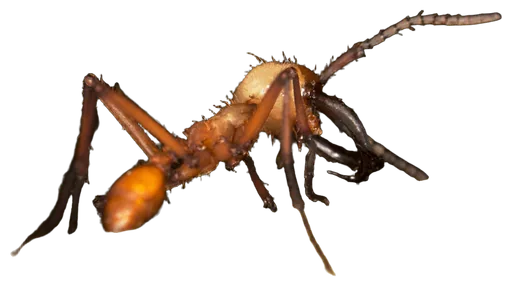
Bigger than 1% of animalsBurchell's army ant is a tiny but intensely specialized Neotropical predator. A single soldier is only about a centimeter long and has almost no absolute power against large animals, but it carries huge hooked defensive jaws and belongs to one of nature's most coordinated hunting societies. Colonies form living nests, bridges, and trail repairs while launching leaderless swarm raids involving tens of thousands of workers. In individual ABS combat its raw Attack and Defense stay near the roster floor; its real strengths are fine-scale Agility and extraordinary colony-dependent behavior.
Detailed ratings
Research-backed ratings on one 0–100 scale for all 344 animals (updated 2026-09-27). How ratings work


Card No. 344 of 344. Every animal on Animal Battle Stats has one: its power, tier and archetype on the front; its six battle stats, abilities and signature move on the back.
Special abilities
The major's elongated sickle-shaped mandibles are specialized for defense and can hook and clamp small intruders. The mechanism is highly effective at ant scale but has extremely short absolute reach.
E. burchellii workers possess a functional sting used in prey subdual. It can add pain and chemical injury after close contact, but no unsupported potency or vertebrate-lethality claim is assigned to a single worker.
Unique traits
Tarsal hooks let workers interlock into bridges, bivouacs, and even size-matched trail “pothole” plugs that improve colony traffic. This trait is real but explicitly requires nestmates.
Pheromone trails and local worker interactions generate leaderless fan-shaped raids and coordinated transport. In a one-on-one ABS matchup this is mainly contextual; in a future colony/team mode it would become a major tactical trait.
How it fights
Weapons
- The soldier's primary weapon is its pair of huge falcate mandibles, which are specialized for colony defense. At the species level workers also possess a functional sting used in prey subdual. Both systems are formidable at arthropod scale, but the canonical soldier is only about a centimeter long and roughly ten milligrams dry mass, so absolute damage remains tiny against most of the ABS roster.
Beats
- Other tiny arthropods near its own size
- Soft-bodied insects that can be gripped or stung
- Small opponents in cluttered substrate where fine maneuverability matters
- Colony-context encounters where many workers can coordinate, if a separate team mode is ever implemented
Struggles vs
- Virtually any vertebrate in a one-on-one fight
- Heavily armored arthropods much larger than one soldier
- Opponents that can crush, engulf, wash away, or flick off the ant
- Open, hot, dry environments
- Weight
- 10 mg0.00037 oz
- Height
- No reliable measurement
- Length
- 1.1 cm0.4 in
- Top speed
- No reliable measurement
- Bite force
- No reliable measurement
- Lifespan
- 0.3 years
- Home biome
- Jungle
- Lifestyle
- Social
Rated specimen: A representative healthy adult major/soldier worker, the colony caste specialized for defense.
Fun facts
- A mature colony can contain hundreds of thousands of workers, with some sources giving values up to about two million.
- Up to roughly 200,000 workers can participate in a major raid.
- The temporary nest, or bivouac, is made from the ants' own linked bodies rather than a permanent constructed nest.
- Workers can use their bodies to plug holes in a rough trail, creating a smoother living roadway for prey carriers.
- Majors are specialized defenders and were absent from prey-transport samples in comparative Eciton research.
- Army-ant raids support entire communities of ant-following birds, mites, beetles, and other associated organisms.
Closest rivals by power. Tap one for the full breakdown, or pick any opponent.
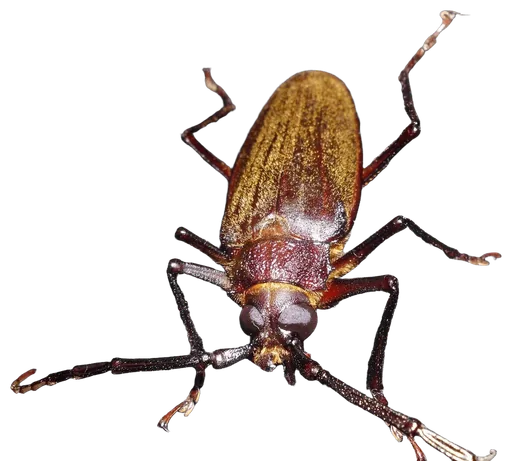
vs Stag BeetleLoses · 78% · Clear edge 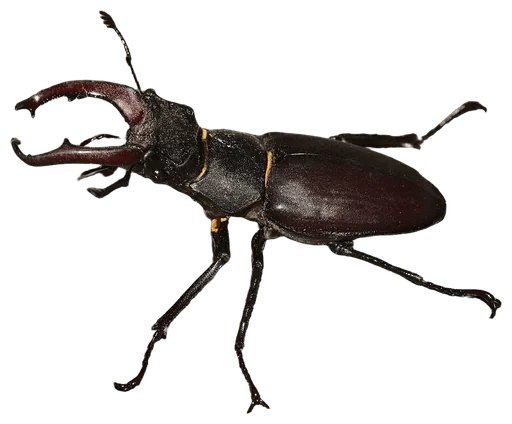 L vs Titan BeetleLoses · 87% · Decisive
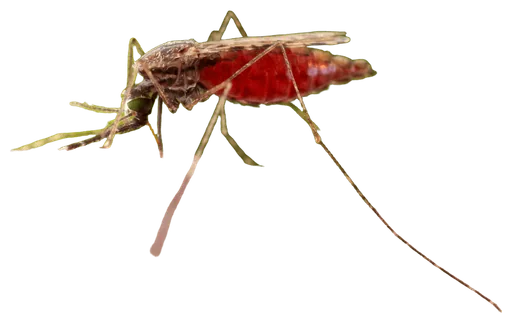
 L vs MosquitoWins · 58% · Slight edge
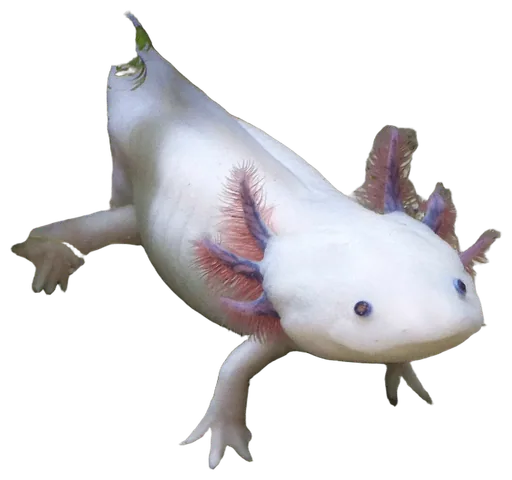
 W vs AxolotlLoses · 91% · Decisive
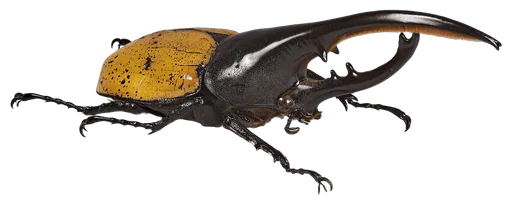
 L vs Hercules BeetleLoses · 89% · Decisive
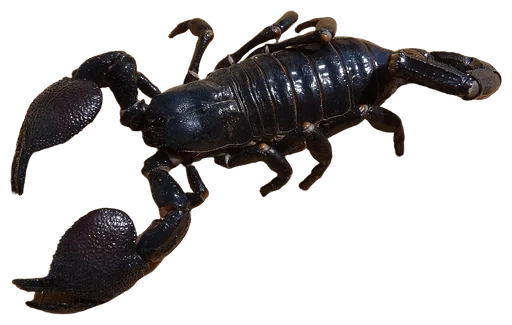
 L vs Emperor ScorpionLoses · 90% · Decisive
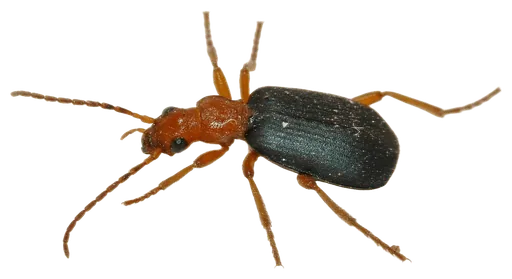
 L vs Bombardier BeetleLoses · 63% · Slight edge
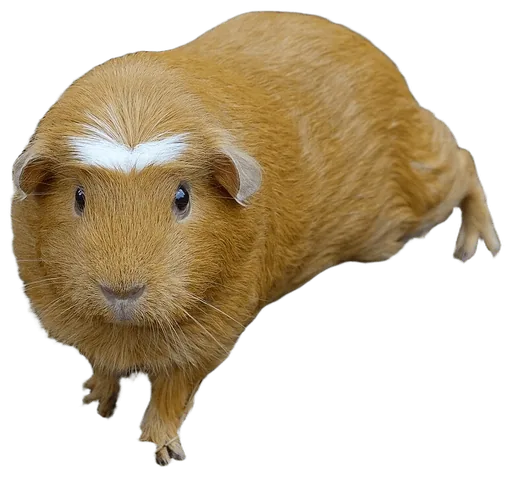
 L vs Guinea PigLoses · 95% · Decisive
 L
Army Ant battle analysis
The army ant is one of the clearest tests of ABS's absolute-scaling rule. Eciton burchellii looks terrifying under a macro lens, and at arthropod scale it is. A major worker has a pale enlarged head and long black sickle-shaped mandibles designed for defense. Yet the same major has a directly measured dry mass of only about ten milligrams. A gorilla, wolf, alligator, or even armadillo operates in a completely different mechanical universe. Giving the ant a high Attack because it is “strong for its size” would be exactly the pound-for-pound leakage the overhaul is designed to eliminate.
What makes the species exceptional is organization. Individual workers follow local chemical and tactile information, but collectively they create broad swarm fronts, transport networks, living bridges, bivouacs, and dynamically repaired trails. There is no commander. The impressive intelligence belongs mainly to the distributed system rather than to a single ant brain. ABS should therefore separate individual combat ratings from colony-context traits.
The canonical soldier is still the correct individual fighter. Majors are the largest worker caste and their falcate jaws are explicitly specialized for defense. They can clamp tiny opponents, while workers more generally possess a sting used to subdue prey. Long legs and extremely low inertia make the ant agile through leaf litter and narrow spaces. Against similarly tiny arthropods, those features are meaningful. Against almost any vertebrate, the soldier's offensive and defensive values collapse toward the absolute floor.
This distinction creates a useful future design opportunity. A standard ABS profile should remain one soldier versus one opponent. A separate colony/team mode could model “Swarm Strength,” worker count, raid frontage, collective transport, bridge construction, and attrition. That would let the real ecological power of army ants shine without corrupting one-on-one scaling.
Habitat & range
Humid, shaded Neotropical forests, especially forest floor and understory environments with dense litter and protected bivouac sites. Thermal ecology research shows that high exposed-surface temperatures can constrain movement, reinforcing the importance of forest cover.
Neotropical Central and South America. Authoritative databases and museum-linked taxonomy place E. burchellii broadly through tropical America; literature commonly reports Mexico/Central America south through much of tropical South America. Exact subspecies boundaries and northern/southern limits should be treated conservatively in production copy.
Diet & hunting
Obligate animal prey at the colony level, especially other ants and social-insect brood plus cockroaches, crickets, spiders, scorpions, beetles, and other litter arthropods. Occasional attacks on small vertebrates occur, but these do not imply that one worker is a vertebrate predator.
Social life
Highly eusocial colonies with one queen, brood, and hundreds of thousands of workers divided into size/task classes. Published colony estimates vary substantially, from roughly 100,000 to 2,000,000 adults/workers depending on source and colony state. The variation should be preserved rather than forcing a single “normal” number.
Conservation
No species-level IUCN threatened category was identified during this run. Eciton ecology is nevertheless strongly tied to intact, humid forest. A 2021 review argues that Eciton army ants can serve as umbrella species for Neotropical forest conservation because colonies require large, connected forest areas and support diverse associated organisms.
Quick answers
How strong is an Army Ant?
On the Animal Battle Stats scale, the Army Ant has an attack rating of 1.8 and a power index of 20.6 out of 100, which ranks it #344 of 344 animals and puts it in F tier (Snack). Its strongest stat is agility (66).
How much does an Army Ant weigh?
A typical adult Army Ant weighs about 10 mg (0.00037 oz). Rated specimen: A representative healthy adult major/soldier worker, the colony caste specialized for defense.
How fast is an Army Ant?
There is no reliable measured top speed for the Army Ant, so we do not publish one. Its agility rating, which covers acceleration, reflexes and evasion, is 66 out of 100.
What does an Army Ant eat?
Obligate animal prey at the colony level, especially other ants and social-insect brood plus cockroaches, crickets, spiders, scorpions, beetles, and other litter arthropods. Occasional attacks on small vertebrates occur, but these do not imply that one worker is a vertebrate predator.
What animals can beat an Army Ant?
Among its closest rivals, the Stag Beetle (78%), the Titan Beetle (87%), the Axolotl (91%), the Hercules Beetle (89%), the Emperor Scorpion (90%), the Bombardier Beetle (63%), the Guinea Pig (95%) would be favored against the Army Ant. It would be favored against the Mosquito.
Researched 2026-09-27. Ratings are editorial judgments built from these sources; measurements describe a healthy adult female.
- Powell & Franks, Functional Ecology (2006), “Ecology and the evolution of worker morphological diversity”Major mass, caste function, polymorphism
- Animal Diversity Web, Eciton burchelliiWorker length, sting, diet, raids, lifespan, colony biology
- Powell & Franks, Animal Behaviour / University of Bristol, “How a few help all”Living pothole plugging, traffic optimization
- Meisel, Ecological Applications (2006), “Thermal Ecology Of The Neotropical Army Ant Eciton Burchellii”Environmental limitation / thermal ecology
- Kaspari et al., Journal of Animal Ecology (2011)Raid ecology, worker size context
- Diversity (2021), “Eciton Army Ants—Umbrella Species for Conservation in Neotropical Forests”Colony size, diet, nomadic cycle, prey capture, conservation ecology
- AntWiki, Eciton burchelliiColony/raid context, leaderless advance, bivouac behavior
- Wikimedia Commons, Graham Wise photographPrimary image provenance
- Wikimedia Commons, Alex Wild photographFallback image provenance
Photo: “Eciton burchellii (14336577830).jpg” by Graham Wise from Brisbane, Australia, CC BY 2.0, background removed and cropped. Original
Suggest a correction