
Anteater
Myrmecophaga tridactylaC tier · Capable128th of 163 mammals
Size & speed

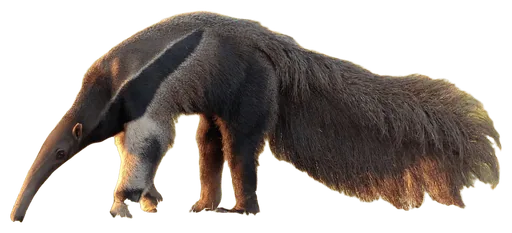
- Weight
- 40 kg88 lb
- Length
- 2 m6.6 ft
As heavy as 8.9 house cats
Heavier than 61% of animalsAbout as long as a person is tall
Bigger than 71% of animalsThe giant anteater (Myrmecophaga tridactyla) is a roughly 40 kg South American insect specialist with no teeth, a long sticky tongue and some of the most formidable foreclaws of any mammal its size. It normally avoids conflict, but when cornered it can rear upright and slash or grapple with powerful forelimbs, a defense capable of causing deep and even fatal wounds. Its poor passive armor and modest agility keep it below major predators overall, while its claw system gives it far more Attack than its peaceful diet suggests.
Detailed ratings
Research-backed ratings on one 0–100 scale for all 344 animals (updated 2026-09-27). How ratings work


Card No. 234 of 344. Every animal on Animal Battle Stats has one: its power, tier and archetype on the front; its six battle stats, abilities and signature move on the back.
Special abilities
When trapped at close range, the giant anteater can rear, seize or brace against an attacker with its powerful forelimbs, and bring enlarged claws into repeated puncturing/slashing range. Medical cases establish that this can produce catastrophic vascular injury.
Highly developed olfaction allows fine scent-guided prey and environmental discrimination. In a matchup it improves detection and close-range awareness, while not compensating fully for weak vision.
Unique traits
The animal walks with its enlarged foreclaws folded/protected, preserving a digging and defensive weapon system that would otherwise interfere with normal locomotion.
It has no teeth and strongly reduced jaw musculature, shifting virtually all meaningful combat offense away from the mouth and into the forelimbs, an unusual configuration for a mammal of its size.
How it fights
Weapons
- Enlarged foreclaws backed by unusually powerful forelimbs. Mammalian Species notes that forelimb musculature weighs roughly twice the hindlimb musculature. The claws are built to tear open resistant insect nests, but the same system can inflict deep punctures and lacerations.
- This is not hypothetical danger. Peer-reviewed medical literature documents rare human fatalities in which defensive giant anteaters caused penetrating wounds, severe hemorrhage and femoral-artery injury. The species is normally nonaggressive, so these cases demonstrate weapon potential rather than typical behavior.
Beats
- Smaller or similarly sized unarmored opponents that must close frontally
- Attackers vulnerable to deep claw punctures or vascular trauma
- Opponents that underestimate it and enter grappling range
Struggles vs
- Heavier large carnivores able to attack from angles and control the neck/back
- Heavily armored reptiles
- Large horned or tusked herbivores with superior reach/mass
- Great apes or megafauna with overwhelming absolute power
- Ranged biological attackers such as potent venom-delivery specialists if they can avoid the forelimbs
- Weight
- 40 kg88 lb
- Height
- 60 cm23.6 in
- Length
- 2 m6.6 ft
- Top speed
- No reliable measurement
- Bite force
- No reliable measurement
- Lifespan
- 15 years
- Home biome
- Savanna
- Lifestyle
- Mostly solitary
Rated specimen: Representative healthy mature adult, approximately 40 kg.
Fun facts
- Giant anteaters are the largest living anteaters and average roughly two meters in total length.
- They have no teeth.
- Their tongue can move roughly 150-160 times per minute while feeding.
- The tongue is supported by an unusually specialized muscular system extending toward the sternum.
- They protect their huge foreclaws by walking on the sides/knuckles of the forefeet.
- Forelimb musculature has been reported at roughly twice the mass of hindlimb musculature.
Closest rivals by power. Tap one for the full breakdown, or pick any opponent.
vs BadgerWins · 56% · Toss-up 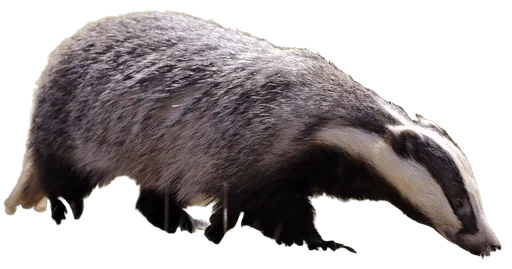 W vs SkunkWins · 63% · Slight edge
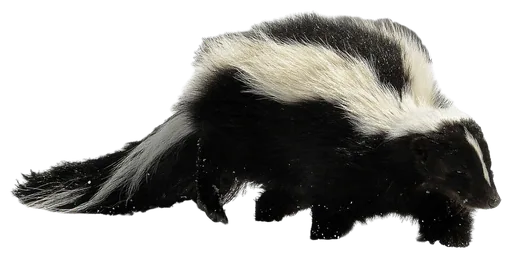 W vs MeerkatWins · 71% · Clear edge
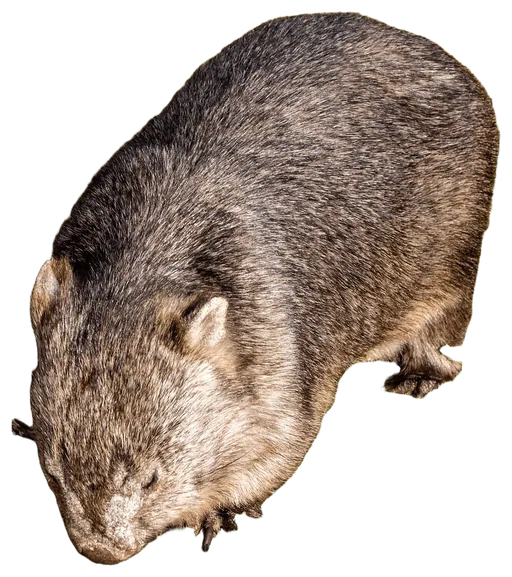
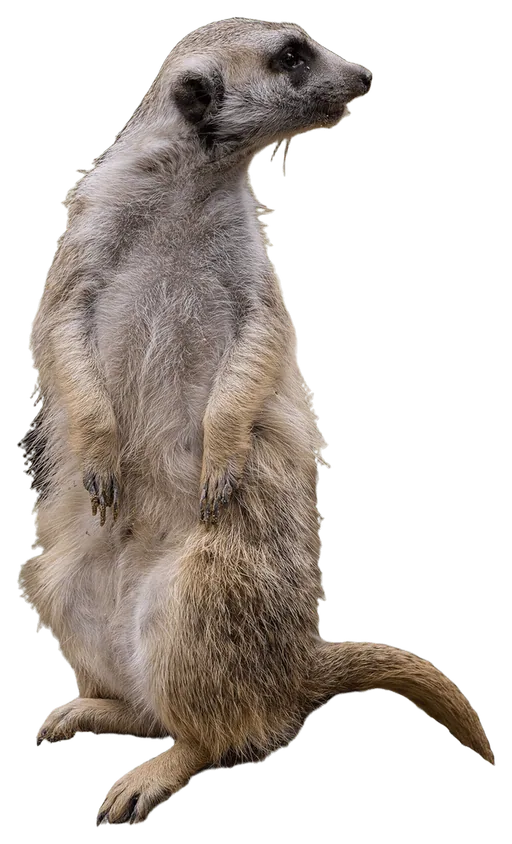 W vs WombatWins · 53% · Toss-up
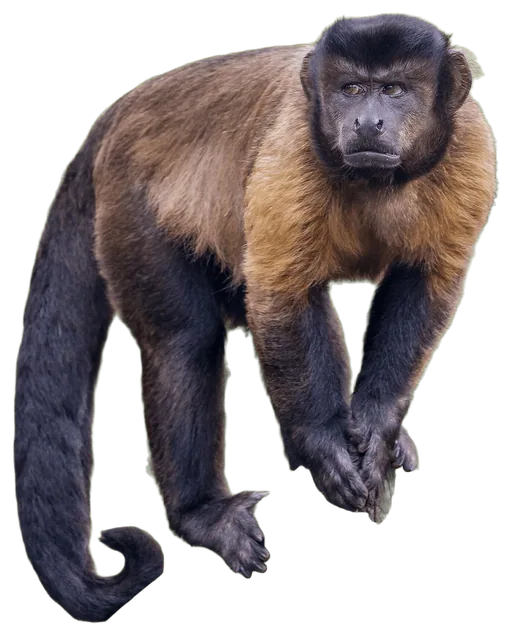
 W vs Capuchin MonkeyWins · 62% · Slight edge
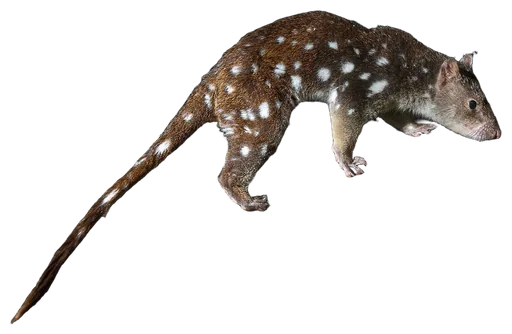
 W vs QuollWins · 63% · Slight edge
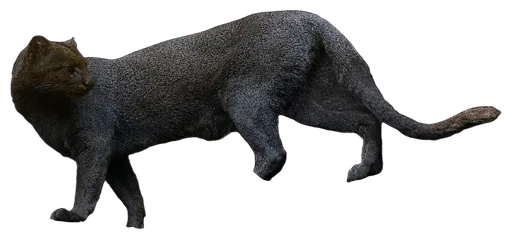
 W vs JaguarundiWins · 59% · Slight edge
 W vs Ring-tailed LemurWins · 67% · Slight edge
 W
Anteater battle analysis
The roster's generic Anteater entry is best represented by the giant anteater, Myrmecophaga tridactyla. It is the largest living anteater and one of the most morphologically specialized terrestrial mammals. A representative adult weighs around 40 kg and measures roughly two meters from snout to tail tip, though much of that apparent length comes from its elongated skull and enormous bushy tail.
Almost everything about its feeding anatomy is strange by ordinary mammalian standards. It has no teeth, reduced jaw musculature, a tiny mouth opening and a long narrow tongue capable of extremely rapid protrusion and retraction. Its primary prey is not subdued by biting. Instead, the animal tears open ant and termite nests using massive forelimbs, then harvests insects with sticky saliva and rapid tongue movements.
Those nest-opening forelimbs are what transform the giant anteater from a seemingly harmless specialist into a legitimate close-range threat. The third manual claw is especially enlarged, and scientific literature reports claws reaching about 6.5 cm. The forelimb musculature is disproportionately developed. When threatened, an anteater can rear onto its hindlimbs, use its tail and stance for stability, and meet an attacker with the claws. Rare human fatalities from penetrating vascular trauma establish that these weapons are not merely intimidating.
That does not make the giant anteater a high-tier predator. It lacks a killing bite, armor, pursuit anatomy and predatory tactics. Jaguars and pumas can prey upon it. Its normal response is avoidance or escape, and serious attacks are exceptional defensive events. Its physiology also includes a low body temperature and limited thermoregulatory capacity, with field studies showing movement patterns shifting in response to ambient temperature.
ABS should therefore treat the animal as a dangerous defensive specialist rather than a miniature apex predator. Its Attack comes from unusually effective claws, while its Defense, Agility and Ferocity remain moderate or low. This separation preserves the absolute roster scale and avoids turning one impressive feature into inflated scores across every category.
Habitat & range
Giant anteaters occupy a broad mosaic including grasslands, savannas, wetlands, tropical forests and forest edges across Central and South America. Temperature can influence when they are active and how strongly they use forest cover.
The species occurs from portions of Central America through much of South America east of the Andes into northern Argentina. It has disappeared from parts of its former range.
Diet & hunting
Specialist insectivore feeding primarily on ants and termites, with occasional other soft-bodied foods reported. It opens nests with the foreclaws and uses a long sticky tongue for rapid collection.
Social life
Mostly solitary except for mating associations and mothers with offspring. Individuals use scent and marking behavior. Aggressive encounters can include posturing and claw strikes.
Conservation
Vulnerable. Major threats include habitat loss and fragmentation, fires, road mortality, hunting and conflict with domestic dogs. Populations have disappeared from parts of the historical range.
Quick answers
How strong is an Anteater?
On the Animal Battle Stats scale, the Anteater has an attack rating of 53 and a power index of 45 out of 100, which ranks it #234 of 344 animals and puts it in C tier (Capable). Its strongest stat is attack (53).
How much does an Anteater weigh?
A typical adult Anteater weighs about 40 kg (88 lb). Rated specimen: Representative healthy mature adult, approximately 40 kg.
How fast is an Anteater?
There is no reliable measured top speed for the Anteater, so we do not publish one. Its agility rating, which covers acceleration, reflexes and evasion, is 41 out of 100.
What does an Anteater eat?
Specialist insectivore feeding primarily on ants and termites, with occasional other soft-bodied foods reported. It opens nests with the foreclaws and uses a long sticky tongue for rapid collection.
Is the Anteater endangered?
The Anteater's conservation status is Vulnerable. Vulnerable. Major threats include habitat loss and fragmentation, fires, road mortality, hunting and conflict with domestic dogs. Populations have disappeared from parts of the historical range.
What animals can beat an Anteater?
The Anteater is favored against all of its closest rivals, including the Badger, the Skunk, the Meerkat, the Wombat, the Capuchin Monkey, the Quoll, the Jaguarundi, the Ring-tailed Lemur.
Researched 2026-09-27. Ratings are editorial judgments built from these sources; measurements describe a healthy adult.
- Gaudin et al., Mammalian Species, Myrmecophaga tridactylaTaxonomy, dimensions, mean mass, dimorphism, forelimb anatomy, tongue/jaw anatomy
- Smithsonian National ZooSize, habitat, locomotion, lifespan, senses, feeding, defensive posture
- San Diego Zoo Wildlife AllianceManaged size/lifespan, life history, low body temperature, diet
- Braga et al. / Brazilian Zoology paper on marking behaviorClaw length, dimensions, solitary behavior
- Haddad Jr. & Nunes 2016, Wilderness & Environmental MedicineWeapon lethality, defensive behavior
- Grillo et al. 2022, Jornal Vascular BrasileiroClaw injury and 6.5 cm dimension
- Giroux et al. 2022, Integrative ZoologyStamina/environment/thermoregulation
- Medri & Mourão 2005, Journal of ZoologyHome range and sustained landscape use
- McAdam & Way 1967, NatureOlfactory specialization
- Animal Diversity WebDiet, predation, claws, tongue, predator defense
- Pitman & Safina 2023, Frontiers in Ecology and the EnvironmentAnti-predator significance of claws
- Wikimedia Commons selected imageImage provenance
Photo: “Oso hormiguero (Myrmecophaga tridactyla) (8697865538).jpg” by Fernando Flores from Caracas, Venezuela, CC BY-SA 2.0, background removed and cropped. Original
Suggest a correction