
Anglerfish
Ceratias holboelliD tier · Underdog47th of 51 sea creatures
Size & speed

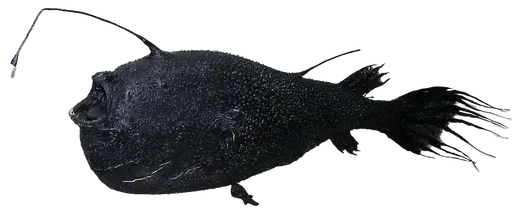
- Length
- 77 cm30.3 in
About 2.6 rulers long
Bigger than 37% of animalsKrøyer's deep-sea anglerfish is a bathypelagic ambush predator built for darkness rather than open combat. The large female uses a luminous lure to bring scarce prey within reach of a wide, tooth-lined mouth. Its physical Attack and Defense are modest on an absolute roster scale, but its specialized deep-sea biology, bioluminescent deception, and extraordinary male-female reproductive fusion give it one of the stranger Special profiles in the database.
Detailed ratings
Research-backed ratings on one 0–100 scale for all 344 animals (updated 2026-09-27). How ratings work


Card No. 313 of 344. Every animal on Animal Battle Stats has one: its power, tier and archetype on the front; its six battle stats, abilities and signature move on the back.
Special abilities
The modified dorsal spine and luminous esca provide a biological lure that can draw prey toward the mouth in darkness. Its matchup value rises sharply in dark aquatic environments where visual deception is effective.
Dark coloration, deep-water habitat, and an energy-conserving ambush strategy make the female difficult for suitable prey to detect before close-range attack. This is concealment and positioning, not true invisibility.
Unique traits
Males can permanently attach to females and establish anatomical/tissue integration. Research on sexually parasitic anglerfishes shows major immune-system modifications associated with tolerating this fusion.
The combat-capable female is enormously larger than the reproductive male form, making sex selection essential when defining the species' ABS specimen.
How it fights
Weapons
- The primary direct weapon is the mouth. The jaws and recurved/inward-pointing teeth are built to seize prey and make escape difficult. This is effective against prey within the fish's size envelope but does not translate into high absolute damage against large terrestrial or marine roster animals.
Struggles vs
- Low absolute body mass relative to serious roster combatants.
- Little structural armor.
- Specialized ambush offense rather than high-speed pursuit.
- Extreme dependence on aquatic habitat.
- Lure is less useful against opponents that do not interpret it as prey.
- Weight
- No reliable measurement
- Height
- No reliable measurement
- Length
- 77 cm30.3 in
- Top speed
- No reliable measurement
- Bite force
- No reliable measurement
- Lifespan
- No reliable measurement
- Home biome
- Ocean
- Lifestyle
- Mostly solitary
Rated specimen: Representative healthy adult female, approximately 77 cm total length.
Fun facts
- A common adult female length is around 77 cm, while the reproductive male form can be tiny by comparison.
- Females can reach about 120 cm, making C. holboelli unusually large among deep-sea ceratioids.
- A documented 48 cm standard-length female had an illicium about 9.42 cm long, nearly one-fifth of standard length.
- The species has been recorded as deep as 4,400 m.
- Male-female fusion is so extensive that anglerfish sexual parasitism has become an important model for understanding immune tolerance.
- The famous grotesque appearance is functional: a huge mouth and retaining teeth are valuable where missing a rare meal can be costly.
Closest rivals by power. Tap one for the full breakdown, or pick any opponent.
vs Bullet AntWins · 68% · Slight edge 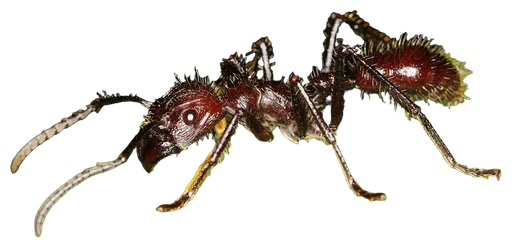 W vs HornetWins · 72% · Clear edge
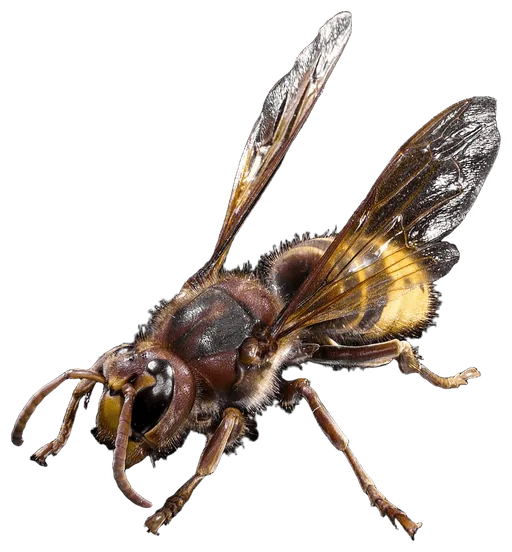 W vs Japanese Spider CrabLoses · 76% · Clear edge
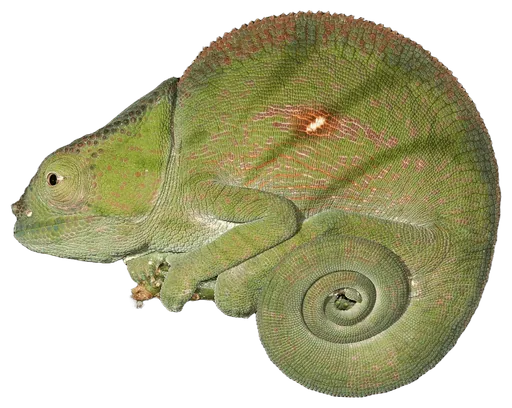
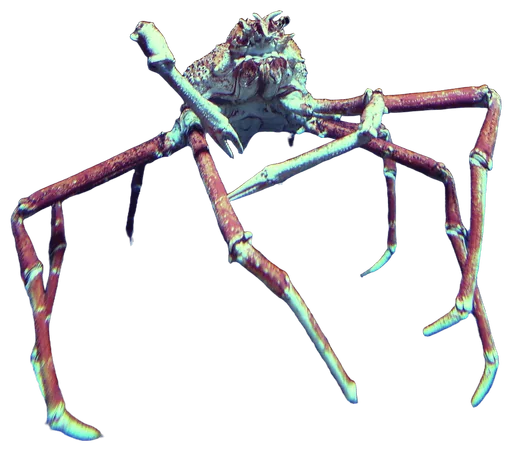 L vs ChameleonWins · 51% · Toss-up
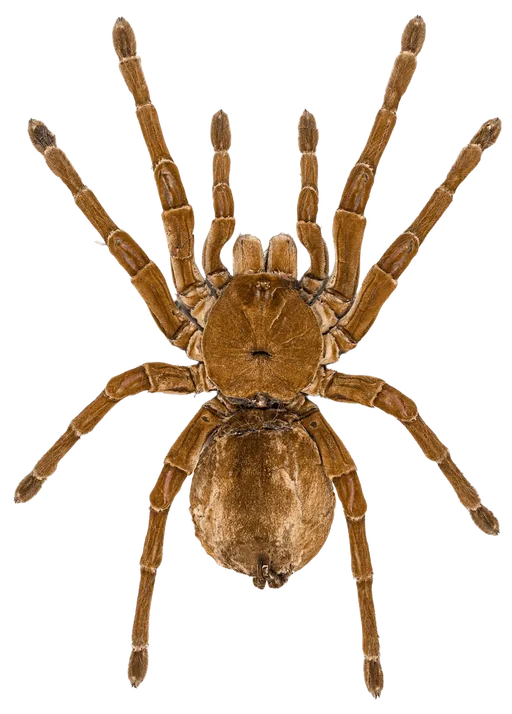
 W vs Goliath BirdeaterLoses · 57% · Toss-up
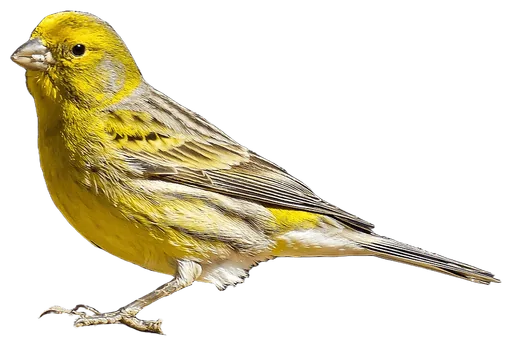
 L vs CanaryWins · 57% · Toss-up
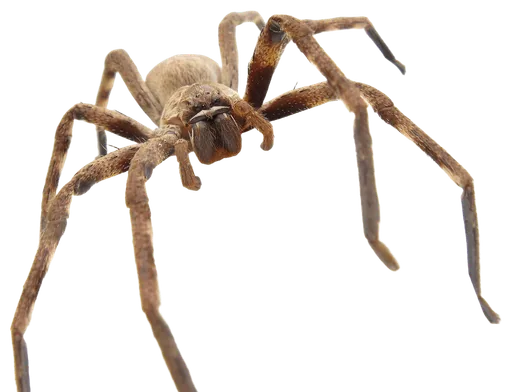
 W vs Huntsman SpiderLoses · 56% · Toss-up
 L vs RabbitLoses · 72% · Clear edge
 L
Anglerfish battle analysis
The name “anglerfish” covers many unrelated-looking members of Lophiiformes, so ABS needs a precise representative. Ceratias holboelli is a strong choice because it embodies the classic deep-sea anglerfish concept while also being among the largest warty seadevils. The canonical animal is an adult female. That choice is not cosmetic: the sexes effectively live different biological lives.
A female drifts and maneuvers through dark midwater hundreds to thousands of meters below the surface. In this environment, continuous pursuit is expensive and encounters with prey can be rare. The anglerfish solves that problem by turning part of its dorsal fin into fishing equipment. Its illicium projects a luminous esca near the mouth, creating a close-range target for other organisms in a habitat with almost no sunlight. When prey comes close enough, the fish can use its oversized mouth and pointed inward-oriented teeth to seize and retain it.
That system is formidable as an ecological specialization but should not be confused with high absolute combat power. A roughly 77 cm fish with no heavy armor and no demonstrated extreme bite force is nowhere near the damage output or durability of an alligator, lion, giant constrictor, or elephant. ABS therefore gives it restrained Attack and Defense scores. Its real competitive identity is Special: it changes the information environment around a matchup by using light and concealment in darkness.
Reproduction is even stranger. The male is dwarfed and built to solve the problem of locating a female in the enormous deep ocean. In sexually parasitic anglerfishes, a male can attach to a female and the pair can fuse tissues and circulation. Genomic research has shown that these reproductive systems are associated with extraordinary changes in acquired immunity, helping explain how the female tolerates what would resemble a permanent tissue graft in other vertebrates.
For battle simulation, environment matters more for this species than for many roster animals. In deep black water against small prey, the anglerfish's lure, camouflage, and three-dimensional ambush geometry are meaningful advantages. In bright water against a large informed opponent, its most distinctive weapon loses much of its deception value. On land, it is effectively nonfunctional. That extreme environmental dependence should remain explicit rather than being hidden inside inflated universal scores.
Habitat & range
Bathypelagic/open-ocean deep water. FishBase reports 400 to 4,400 m, usually about 400 to 2,000 m.
Circumglobal across tropical and temperate oceans, with adults also recorded in boreal/subarctic waters. FishBase gives a broad latitudinal range of roughly 67°N to 45°S.
Diet & hunting
Predatory. Exact species-level diet composition is less well documented in accessible authoritative sources than its morphology and reproduction. The large mouth, inward-oriented teeth, and luminous lure establish an ambush-predator feeding mode. Production copy should avoid unsupported lists of specific prey species unless sourced separately.
Social life
Not social in the conventional pack/herd sense. The extraordinary exception is reproductive attachment: tiny males locate females and may become permanently fused to them.
Conservation
FishBase reports Least Concern, based on the IUCN assessment dated 9 May 2013. The species is widely distributed and not presently treated as threatened globally.
Quick answers
How strong is an Anglerfish?
On the Animal Battle Stats scale, the Anglerfish has an attack rating of 27 and a power index of 32.6 out of 100, which ranks it #313 of 344 animals and puts it in D tier (Underdog). Its strongest stat is special (76).
How much does an Anglerfish weigh?
A typical adult Anglerfish weighs about 50 g (1.8 oz). Rated specimen: representative healthy adult female, approximately 77 cm total length.
How fast is an Anglerfish?
There is no reliable measured top speed for the Anglerfish, so we do not publish one. Its agility rating, which covers acceleration, reflexes and evasion, is 39 out of 100.
What does an Anglerfish eat?
Predatory. Exact species-level diet composition is less well documented in accessible authoritative sources than its morphology and reproduction. The large mouth, inward-oriented teeth, and luminous lure establish an ambush-predator feeding mode. Production copy should avoid unsupported lists of specific prey species unless sourced separately.
Is the Anglerfish endangered?
No. The Anglerfish is listed as Least Concern. FishBase reports Least Concern, based on the IUCN assessment dated 9 May 2013. The species is widely distributed and not presently treated as threatened globally.
What animals can beat an Anglerfish?
Among its closest rivals, the Japanese Spider Crab (76%), the Goliath Birdeater (57%), the Huntsman Spider (56%), the Rabbit (72%) would be favored against the Anglerfish. It would be favored against the Bullet Ant, the Hornet, the Chameleon, the Canary.