
Albatross
Diomedea exulansC tier · Capable34th of 55 birds
Size & speed

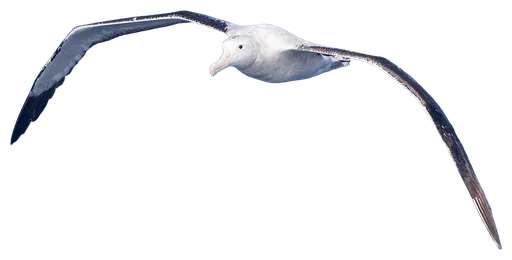
- Weight
- 10.5 kg23 lb
- Length
- 1.2 m3.9 ft
- Top speed
- 72 km/h45 mph
As heavy as 2.3 house cats
Heavier than 47% of animalsAbout 4 rulers long
Bigger than 53% of animals1.6× Usain Bolt's top speed
Faster than 92% of animalsThe wandering albatross is the ultimate endurance flier: a roughly 10 kg Southern Ocean seabird carrying the widest wings of any living bird. It is not a powerful close-range fighter, but dynamic soaring lets it turn ocean winds into extraordinary speed, range and stamina. Its hooked bill provides modest offense while its true advantage is staying mobile for days and thousands of kilometers at a time.
Detailed ratings
Research-backed ratings on one 0–100 scale for all 344 animals (updated 2026-09-27). How ratings work


Card No. 232 of 344. Every animal on Animal Battle Stats has one: its power, tier and archetype on the front; its six battle stats, abilities and signature move on the back.
Special abilities
Harvests energy from wind gradients above ocean waves, allowing rapid long-range flight with exceptionally low locomotor cost. In a matchup, this creates extraordinary range control and endurance when wind/open space are available.
Combines long-range sensory input, navigation and flexible search behavior to operate across thousands of kilometers of feature-poor Southern Ocean. This supports pursuit, disengagement and environmental positioning rather than direct damage.
Unique traits
Wandering albatrosses possess the largest known wingspan of any living bird, reaching roughly 3.5 m at the species extreme.
Adult morphology, especially in larger males, is tuned to powerful Southern Ocean winds; the same specialization that enables extraordinary soaring also makes calm-air take-off comparatively demanding.
How it fights
Weapons
- Hooked bill: Best direct weapon. Useful for grabbing, cutting/tearing soft tissue and defensive snapping at an approaching opponent.
- Wing/body strikes: The enormous wings can buffet or create space, but they are flight structures and should not be treated like specialized striking limbs.
Struggles vs
- Low body mass on the full ABS roster scale
- No armor
- No raptorial feet
- Modest direct killing power
- Long wings are awkward in close quarters
- Weight
- 10.5 kg23 lb
- Height
- No reliable measurement
- Length
- 1.2 m3.9 ft
- Top speed
- 72 km/h45 mph
- Bite force
- No reliable measurement
- Lifespan
- 60 years
- Home biome
- Ocean
- Lifestyle
- Social
Rated specimen: Healthy mature adult male wandering albatross.
Fun facts
- Wandering albatrosses have the largest known wingspan of any living bird, reaching about 3.5 m.
- Tracked individuals can travel thousands to roughly 15,000 km on a single foraging trip.
- Their flight can be so efficient that tracked energy expenditure shows time spent flying is not necessarily the dominant energetic cost of a foraging trip.
- Males are roughly 20% larger than females and respond differently to wind because of their greater wing loading.
- They may live for many decades, with albatross longevity extending beyond 60 years and some albatrosses surpassing 70.
- They normally produce only one egg in a breeding attempt, making every adult survivor disproportionately important to population stability.
Closest rivals by power. Tap one for the full breakdown, or pick any opponent.
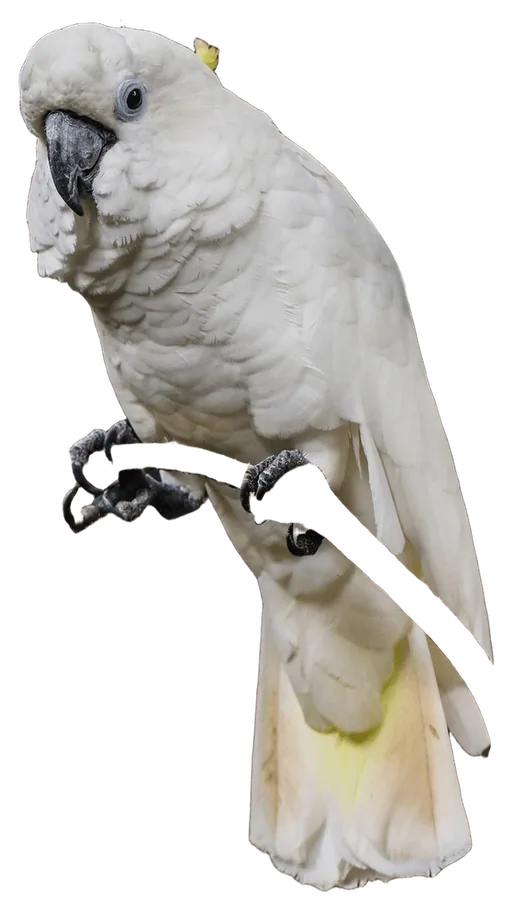
vs Southern Ground HornbillWins · 55% · Toss-up 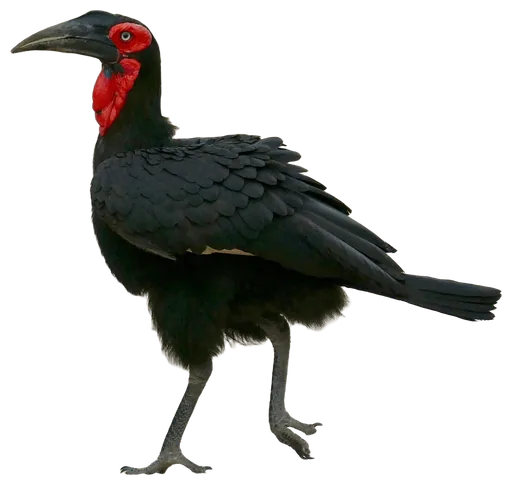 W vs CockatooWins · 64% · Slight edge
 W vs Wild TurkeyWins · 51% · Toss-up
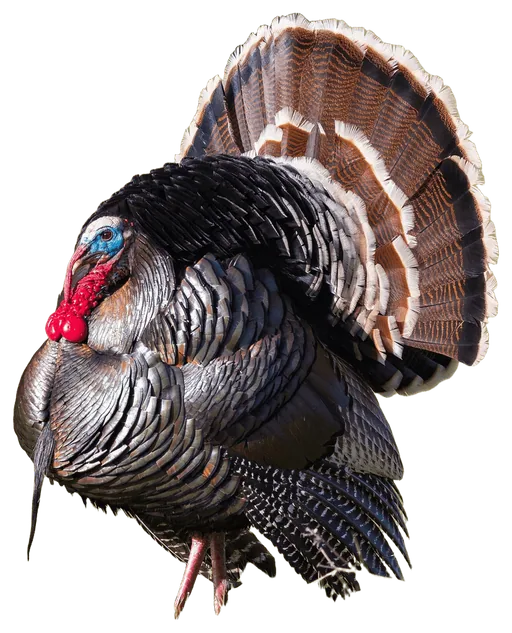 W vs KeaWins · 62% · Slight edge
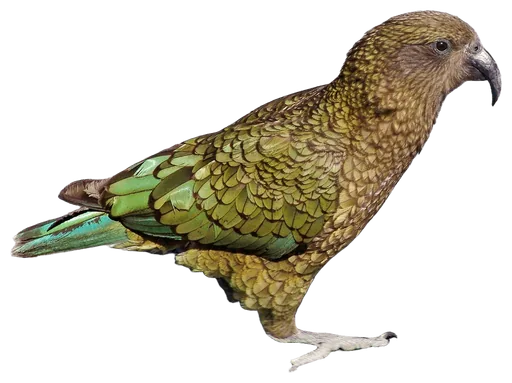 W vs GooseWins · 54% · Toss-up
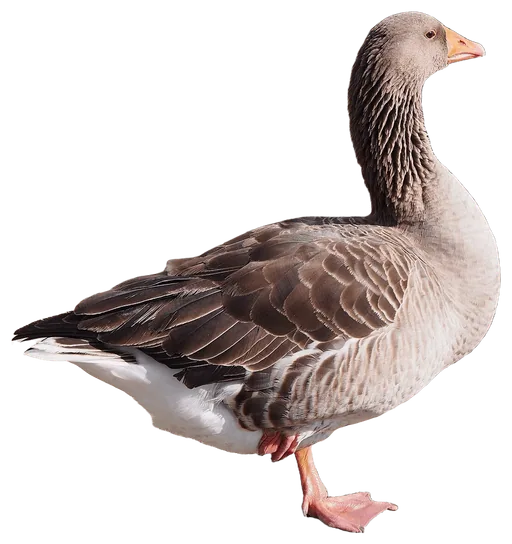 W vs MacawWins · 60% · Slight edge
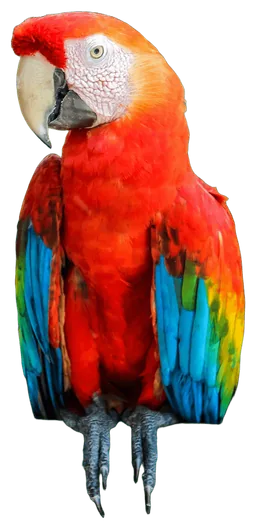 W vs SwanWins · 52% · Toss-up
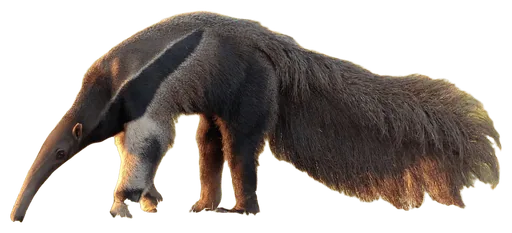
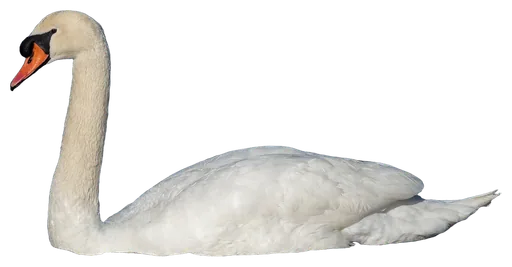 W vs AnteaterLoses · 58% · Slight edge
 L
Albatross battle analysis
A wandering albatross is a striking example of why ABS must separate direct combat power from specialized performance. On the ground, a healthy adult male is only around ten kilograms and possesses no armor, grappling claws or crushing jaw. Against a lion, wild dog or elephant in forced close quarters, its size and weaponry are plainly inadequate. Its hooked bill can cut and defend, but the bird is not built to trade blows.
Put the same animal over open Southern Ocean water and its profile changes completely. Its three-meter-plus wings are aerodynamic tools for dynamic soaring. By repeatedly crossing wind gradients above waves, the bird can replace much of the energy that another flier would have to supply through constant muscular flapping. GPS and wind studies show that wandering albatross airspeed changes with wind conditions and approaches about 20 m/s in the empirically observed high-speed regime. Tracking studies show journeys of thousands of kilometers, while energetic measurements demonstrate how cheaply this travel can be achieved.
That makes Stamina the albatross’s defining ABS statistic. A score in the mid-90s is justified not because the bird is “strong for its size,” but because its absolute ability to remain mobile over immense distances is genuinely exceptional across animals of any size. Its Agility is also strong, but the category needs nuance. It has superb control in open wind fields and can repeatedly arc through dynamic-soaring cycles, yet a 3 m wing span is not ideal for sharp enclosed-space maneuvers. Larger males even wait for stronger winds before taking off, illustrating the trade-off between enormous efficient wings and low-speed flexibility.
Its Special score captures that unusual wind-harvesting system. Dynamic soaring is not merely “good stamina” repeated under a second label: it changes how the animal acquires locomotor energy and therefore how terrain and weather affect a matchup. In open windy environments, an opponent may be unable to force contact at all. In a calm enclosed arena, much of that advantage collapses.
The wandering albatross also deserves respectable Intelligence and Senses ratings. Long-range navigation over a visually repetitive ocean, wind-aware route choice, flexible responses to ships and prey-search patterns documented by GPS all require substantial information processing. That should not be confused with the generalized manipulation/problem-solving abilities of great apes, corvids or cetaceans, so the rating remains moderate on the full ABS roster.
Ecologically, this bird is built around survival and patience rather than violence. Adults can live for decades, mature slowly and invest heavily in a single egg. That life history helps explain why fisheries bycatch is so damaging: a population that depends on long adult survival cannot quickly replace mature birds lost to hooks and cables. The result is a species whose greatest “battle” assets are mobility, efficiency and persistence rather than killing power.
Habitat & range
Pelagic Southern Ocean and adjacent subtropical waters, with adults spending most of their lives at sea and returning to remote subantarctic islands to breed.
Breeding populations occur on islands including South Georgia, the Crozet Islands, Kerguelen Islands, Prince Edward Islands and Macquarie Island. At sea they range across vast portions of the Southern Ocean and into subtropical latitudes.
Diet & hunting
Primarily cephalopods and fish, supplemented by carrion and other marine food. Their opportunism can bring them into dangerous association with fishing vessels and baited longlines.
Social life
Generally dispersed while foraging but socially complex at breeding colonies. Adults form long-term pair bonds and perform elaborate courtship/display behavior. Both parents invest heavily in a single offspring.
Conservation
BirdLife identifies the wandering albatross as Vulnerable. Fisheries bycatch remains a major threat. Tracking work around South Georgia shows frequent encounters with fishing vessels, and the species’ low reproductive rate makes adult losses difficult to replace.
Quick answers
How strong is an Albatross?
On the Animal Battle Stats scale, the Albatross has an attack rating of 17 and a power index of 45 out of 100, which ranks it #232 of 344 animals and puts it in C tier (Capable). Its strongest stat is stamina (96).
How much does an Albatross weigh?
A typical adult Albatross weighs about 10.5 kg (23 lb). Rated specimen: Healthy mature adult male wandering albatross.
How fast is an Albatross?
The Albatross's top speed is about 72 km/h (45 mph). Its agility rating is 74 out of 100.
What does an Albatross eat?
Primarily cephalopods and fish, supplemented by carrion and other marine food. Their opportunism can bring them into dangerous association with fishing vessels and baited longlines.
Is the Albatross endangered?
The Albatross's conservation status is Vulnerable. BirdLife identifies the wandering albatross as Vulnerable. Fisheries bycatch remains a major threat. Tracking work around South Georgia shows frequent encounters with fishing vessels, and the species’ low reproductive rate makes adult losses difficult to replace.
What animals can beat an Albatross?
Among its closest rivals, the Anteater (58%) would be favored against the Albatross. It would be favored against the Southern Ground Hornbill, the Cockatoo, the Wild Turkey, the Kea, the Goose, the Macaw, the Swan.
Researched 2026-09-27. Ratings are editorial judgments built from these sources; measurements describe a healthy adult male.
- British Antarctic Survey, Albatrossesmass, wingspan, longevity, range, life history
- Australian Museum publication, classic satellite tracking summaryadult male mass/span, trip distances
- British Antarctic Survey, sexual differencessexual dimorphism
- British Antarctic Survey, wind/take-off study newssex-specific flight performance
- Sachs et al., flight speed/performance, PMCspeed, dynamic soaring
- Observations/models of across-wind flight, PMCdynamic-soaring mechanics, speed caveat
- Wandering albatross take-off study, PMCtake-off mechanics
- BAS foraging energeticsendurance/energy efficiency
- New Zealand Birds Onlinelength, mass, identification
- BirdLife, Albatrosswingspan, conservation/longevity context
- BirdLife, bycatch riskconservation, vessel interactions, olfactory attraction
- BAS cephalopod prey studydiet
- Foraging success of biological Lévy flights, PMCsearch behavior / cognition
- Wikimedia Commons selected imageimage provenance
Photo: “Diomedea exulans in flight - SE Tasmania.jpg” by JJ Harrison ( https://tiny.jjharrison.com.au/t/fCEqOJC1cJUcoIOa ), CC BY-SA 3.0, background removed and cropped. Original
Suggest a correction