

Africanized Honey Bee
Apis mellifera scutellata hybrid
 #252 of 273
  Savanna Swarm Not Evaluated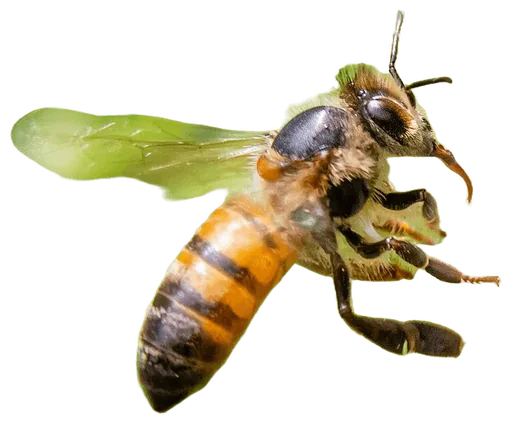
 Fight
FightPhoto: Carlos Eduardo Joos · CC BY 2.0
The Africanized honey bee is a hybrid of African and European honey bees that has spread from Brazil across the Americas. One worker carries only a small venom dose and dies after stinging, but its tear-away sting keeps pumping and marks the target with banana-scented alarm pheromone. Its reputation comes from colonies that attack in huge numbers and pursue for hundreds of metres.
 Attack7
  Defense3
  Agility72
  Stamina42
  Intelligence50
  Special72
 Detailed ratings
Research-backed ratings on one 0–100 scale for all 273 animals (updated 2026-09-28). How ratings work
Special abilities
Ability 1Tear-Away Venom PumpThe barbed sting lodges in skin and tears free with the venom sac, muscles and nerve ganglion, which keep pumping venom after the bee has gone.
 Ability 2Banana-Scent Target Marking
The sting apparatus releases alarm pheromone, mainly isopentyl acetate, that marks the victim and brings guards and other workers to the same spot.
Unique traits
 TraitLong-Range Pursuit
Africanized colonies chase threats up to about 400 m, sting 4–10 times more often and send 10–30 times more bees than European colonies.
TraitWaggle Dance NavigatorWorkers tell nestmates the direction and distance of food with a dance, and young bees get better at it by following experienced dancers.
How it fights
Weapons
- The primary weapon is the barbed venom sting, which can be used once against a mammal. The secondary weapon is chemical: the alarm pheromone, mainly isopentyl acetate (smelling like banana oil), released from the sting apparatus marks the target and recruits more defenders. The mandibles can nip but do little.
 Struggles vs
- Each worker can sting a mammal only once and then dies.
- Small venom dose per bee; one sting rarely matters to a large animal.
- Tiny, fragile body.
- Poorer tolerance of cold climates than European bees, which limits its spread north.
- Colony defense is strongest near the nest and fades with distance.
- Weight
- 0.1 g0 oz
- Height
- No reliable measurement
- Length
- 1.2 cm0.5 in
- Top speed
- No reliable measurement
- Bite force
- No reliable measurement
- Lifespan
- 0.1 years
- Home biome
- Savanna
- Lifestyle
- Social
Rated specimen: A healthy adult female worker acting as a guard or forager.
Fun facts
- Africanized bees came from 26 swarms that escaped a Brazilian research apiary in 1957.
- Each Africanized worker carries less venom than a European honey bee: about 94 µg versus 147 µg.
- Their danger lies in numbers: colonies send up to 10–30 times more bees after a threat.
- They may chase a threat for about 400 m.
- The alarm pheromone smells like bananas.
- A detached sting keeps pumping venom after the bee flies off.
Closest rivals by power. Tap one for the full breakdown, or pick any opponent.
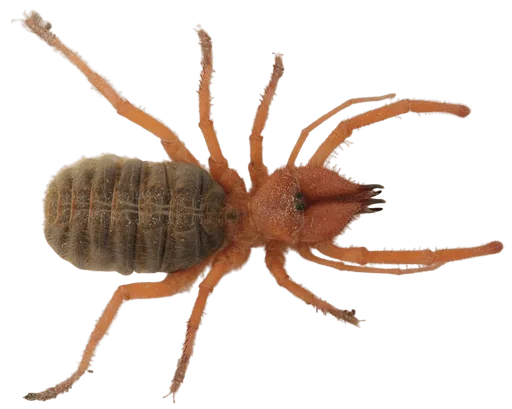
vs Black WidowLoses · 50% · Toss-up 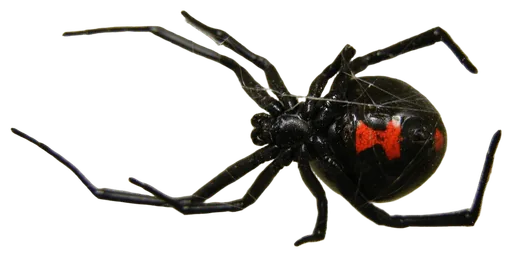 L vs Camel SpiderWins · 50% · Toss-up
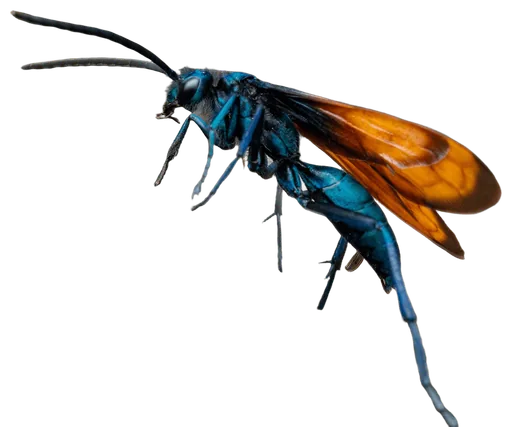
  W vs Tarantula HawkLoses · 51% · Toss-up
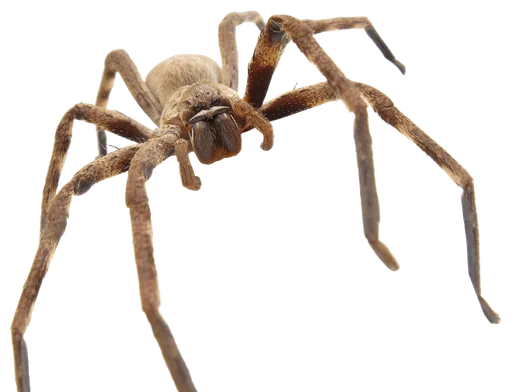
  L vs Huntsman SpiderLoses · 51% · Toss-up
  L vs SlothWins · 50% · Toss-up
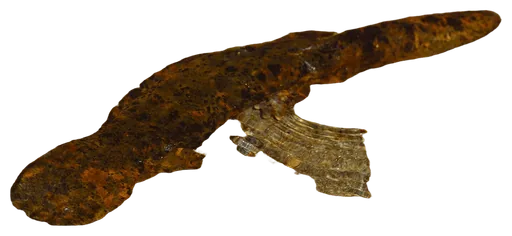
  W vs HellbenderLoses · 50% · Toss-up
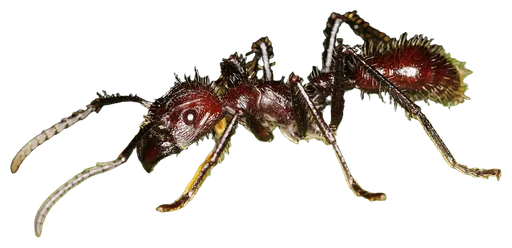
  L vs Bullet AntLoses · 53% · Toss-up
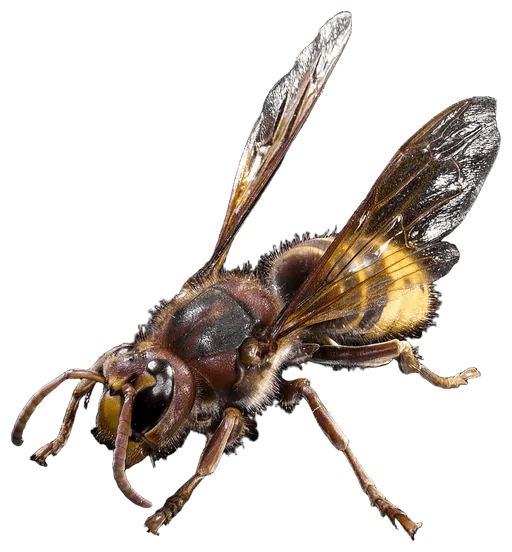
  L vs HornetLoses · 53% · Toss-up
  L
L  Pick any opponent
 Africanized Honey Bee battle analysis
The Africanized honey bee began with an accident. In 1957, 26 swarms of African honey bees escaped from a research apiary in Brazil and bred with local European bees. Their descendants spread through South and Central America and Mexico and reached Texas in 1990. They look almost identical to European honey bees, a little smaller, and they make honey and pollinate crops in the same way.
The difference is behaviour. Disturb an Africanized colony and it reacts faster, sends 10–30 times more bees, stings 4–10 times more often and chases for up to about 400 m. Each worker's barbed sting tears away and keeps pumping venom, while the sting apparatus releases isopentyl acetate, an alarm scent that marks the victim for the next wave. Research shows the venom per bee is actually smaller than a European bee's; people are hurt by the sheer number of stings.
On the absolute battle scale, the ratings describe one worker, and one worker is a tiny, fragile insect with a single small dose of venom. It gets low Attack and Defense but strong Agility, high Ferocity and one of the best insect Intelligence scores, thanks to the learning and waggle-dance communication honey bees are famous for. The colony-scale threat is recorded in the profile and traits rather than inflated into one bee's physical ratings.
Habitat & range
The pure African subspecies A. m. scutellata lives in the savannas and open country of eastern and southern Africa. The Africanized hybrid spread from southern Brazil after 1957 through much of South America, Central America and Mexico, and has been in the southern United States since 1990. It does best in warm climates and nests in cavities, including in and around buildings.
Diet & hunting
Workers collect nectar (stored as honey) and pollen, plus water and plant resins. As pollinators they visit many crops and wild plants. Predators include birds and other insects that eat bees, and the honey and brood attract nest raiders.
Social life
A colony has one egg-laying queen, thousands of female workers and seasonal male drones. Workers change jobs with age, from nursing and nest work to guarding and foraging. Africanized colonies swarm very often, up to 16 times a year, and readily abscond.
Conservation
Not Evaluated: no IUCN Red List assessment of the Africanized hybrid was located in this pass. It is an abundant, widespread and in many places invasive hybrid; in the Americas it is managed as a public-safety issue and also kept by beekeepers.
Quick answers
How strong is an Africanized Honey Bee?
On the Animal Battle Stats scale, the Africanized Honey Bee has an attack rating of 7 and a power index of 30.8 out of 100, which ranks it #252 of 273 animals and puts it in F tier (Snack). Its strongest stat is agility (72).
How much does an Africanized Honey Bee weigh?
A typical adult Africanized Honey Bee weighs about 0.1 g (0 oz). Rated specimen: a healthy adult female worker acting as a guard or forager.
How fast is an Africanized Honey Bee?
There is no reliable measured top speed for the Africanized Honey Bee, so we do not publish one. Its agility rating, which covers acceleration, reflexes and evasion, is 72 out of 100.
What does an Africanized Honey Bee eat?
Workers collect nectar (stored as honey) and pollen, plus water and plant resins. As pollinators they visit many crops and wild plants. Predators include birds and other insects that eat bees, and the honey and brood attract nest raiders.
Is the Africanized Honey Bee endangered?
The Africanized Honey Bee's conservation status is Not Evaluated. Not Evaluated: no IUCN Red List assessment of the Africanized hybrid was located in this pass. It is an abundant, widespread and in many places invasive hybrid; in the Americas it is managed as a public-safety issue and also kept by beekeepers.
What animals can beat an Africanized Honey Bee?
Among its closest rivals, the Black Widow (50%), the Tarantula Hawk (51%), the Huntsman Spider (51%), the Hellbender (50%), the Bullet Ant (53%), the Hornet (53%) would be favored against the Africanized Honey Bee. It would be favored against the Camel Spider, the Sloth.
Researched 2026-09-28. Ratings are editorial judgments built from these sources; measurements describe a healthy adult female.
- UF/IFAS ENY-147, Differences between European and African honey beesbehaviour, swarming
- UF/IFAS EDIS, African honey bee species profileidentity, biology
- UF/IFAS Solutions for Your Life, Africanized honey beesswarming, stinging
- UC Davis California Master Beekeeper Program, defensivenessdefensive behaviour
- Wikipedia, Africanized beehistory, pursuit, deaths
- Schmidt et al. 1990, Am J Trop Med Hygvenom quantity and potency
- Otis 1982, J Apicultural Research: weights of worker honeybees in swarmssize difference
- FABIS manual (Fast Africanized Bee Identification System)identification, forewing
- Melittin, the major pain-producing substance of bee venom (PMC)venom chemistry
- Apilic antivenom for massive Africanized bee attacks (PMC)mass stinging effects
- IntechOpen, toxicosis of honeybee and other venomshuman sting thresholds
- Nouvian et al. 2016, J Exp Biol: defensive response of the honeybeealarm pheromone, targeting
- Functional anatomy of the worker honeybee stinger (ScienceDirect)sting mechanics
- Wikipedia, Bee stingsting autotomy
- University of Bristol, bee pheromones (isopentyl acetate)alarm pheromone
- Dong et al. 2023, Science: social learning of the waggle dancelearning, communication
- Beekman & Ratnieks, Long-range foraging by the honey-beeforaging range
- Couvillon et al. 2014, waggle dance distances (PMC)foraging distance
- Variant reference data set for the Africanized honeybee (PMC)spread, colony traits
- Florida Department of Agriculture and Consumer Servicessafety guidance
Photo: “Africanized bee (51557216226).jpg” by Carlos Eduardo Joos, CC BY 2.0, background removed and cropped. Original
Suggest a correction