
African Wild Dog
Lycaon pictusB tier · Strong84th of 163 mammals
Size & speed

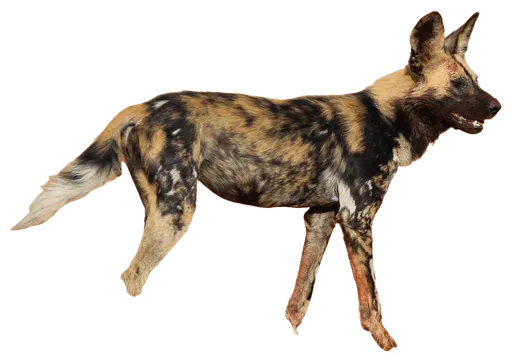
- Weight
- 25 kg55 lb
- Length
- 1 m3.3 ft
- Top speed
- 68 km/h43 mph
As heavy as 5.6 house cats
Heavier than 56% of animalsAbout 3.3 rulers long
Bigger than 44% of animals1.5× Usain Bolt's top speed
Faster than 87% of animalsThe African wild dog (Lycaon pictus) is a 25 kg cursorial hypercarnivore built around speed, stamina, slicing bite mechanics and extraordinary social cooperation. A healthy adult can reach about 19 m/s and packs routinely cover long distances while hunting antelope across African savannas and woodlands. Individually it lacks the mass, armor and grappling weapons of larger predators such as lions, but its endurance, pursuit control and efficient carnassial bite make it a dangerous specialist. The species is Endangered and survives mainly in fragmented populations across eastern and southern Africa.
Detailed ratings
Research-backed ratings on one 0–100 scale for all 344 animals (updated 2026-09-27). How ratings work


Card No. 134 of 344. Every animal on Animal Battle Stats has one: its power, tier and archetype on the front; its six battle stats, abilities and signature move on the back.
Special abilities
Long-limbed cursorial anatomy, stabilized forelimbs and exceptional repeat-chase capacity allow sustained pressure and repeated high-speed engagements. In a matchup, this improves the ability to disengage, reposition and exploit fatigue.
Hypercarnivore skull geometry, strong mechanical advantage and specialized carnassial dentition produce efficient gripping and flesh-slicing performance for the animal's size.
Unique traits
Lycaon pictus is uniquely specialized among living canids with four functional toes on each foot and no typical first digit, associated with cursorial efficiency.
Every individual has a distinctive mottled coat, while the species uses rich vocal, scent and social communication within an unusually cooperative pack system.
How it fights
Weapons
- Claws are not a major killing system. Unlike a lion, the African wild dog cannot rely on powerful forelimb grappling and retractile claws to pin a similarly sized opponent.
Beats
- Similar-sized terrestrial animals with weaker bite mechanics or lower endurance
- Opponents that fatigue quickly and cannot force a static engagement
- Smaller prey lacking armor or dangerous long-reach weapons
- Slow opponents that can be repeatedly approached and disengaged from
Struggles vs
- Large felids and hyenas that combine far greater mass with strong close-range weapons
- Armored or shelled animals that cannot be efficiently opened by slicing bites
- Large bovids and other horned/hoofed animals in a one-on-one fight
- Megafauna such as elephants, rhinos and hippos
- Aquatic specialists in deep water
- Weight
- 25 kg55 lb
- Height
- 70 cm27.6 in
- Length
- 1 m3.3 ft
- Top speed
- 68 km/h43 mph
- Bite force
- No reliable measurement
- Lifespan
- 10 years
- Home biome
- Savanna
- Lifestyle
- Social
Rated specimen: ABS should use a healthy mature adult male.
Fun facts
- Each African wild dog's coat pattern is individually distinctive, functioning almost like a visual fingerprint.
- It is the only living species in the genus Lycaon.
- It has four functional toes on each foot rather than the typical canid arrangement with a first digit/dewclaw.
- Instrumented field studies have measured speeds around 19 m/s, about 68 km/h.
- Packs can travel more than 40 km in a day, and dispersing animals have recorded even longer daily movements.
- Litter sizes are exceptionally large for a carnivore, averaging around ten pups in major species accounts.
Closest rivals by power. Tap one for the full breakdown, or pick any opponent.
vs BonoboLoses · 53% · Toss-up  L vs DonkeyLoses · 60% · Slight edge
 L vs Giant Forest HogLoses · 62% · Slight edge
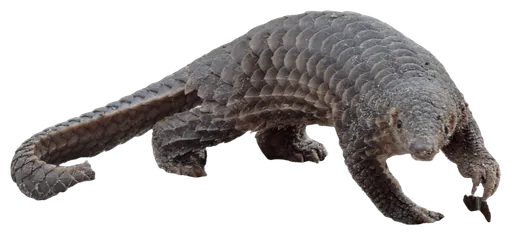
 L vs PangolinWins · 57% · Toss-up
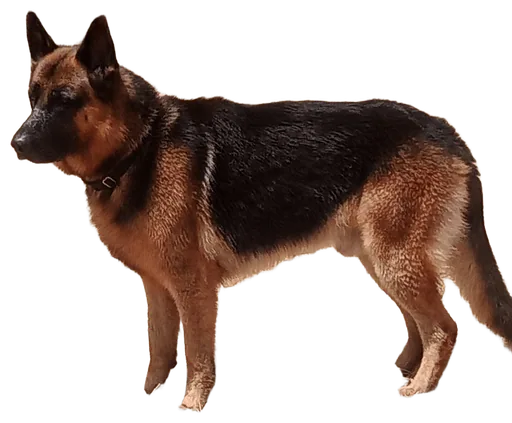
 W vs German ShepherdLoses · 51% · Toss-up
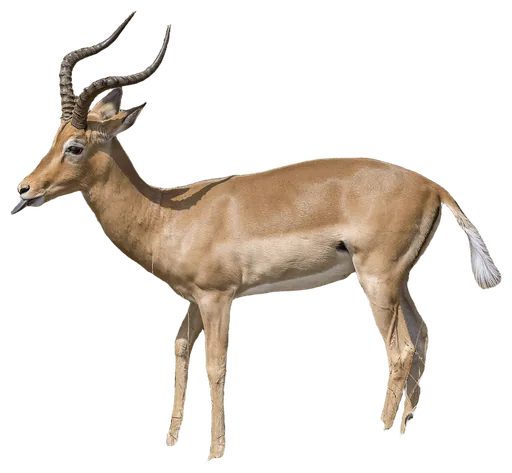
 L vs ImpalaLoses · 55% · Toss-up
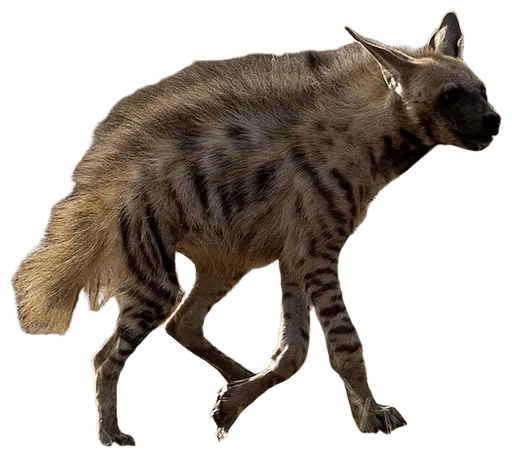
 L vs Striped HyenaLoses · 53% · Toss-up
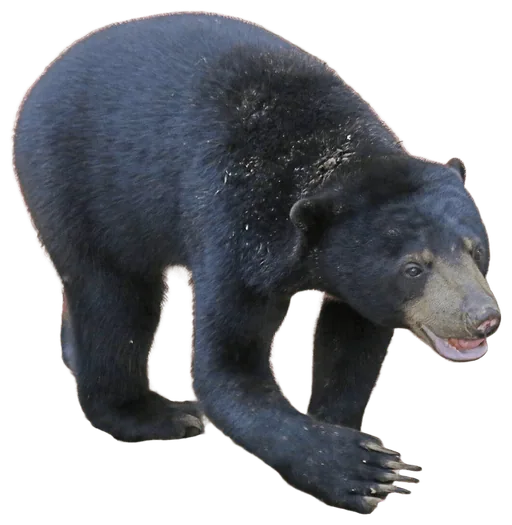
 L vs Sun BearLoses · 55% · Toss-up
 L
African Wild Dog battle analysis
African wild dogs are a useful test of whether ABS can separate proportional impressiveness from absolute battle power. At roughly 25 kg, an adult is much smaller than the site's large felids and tiny beside megafauna. Giving it lion-like Attack or Defense because it is an exceptionally successful predator would violate the absolute scaling rule. Its body simply cannot deliver or absorb the same absolute forces as a 190 kg male lion.
Where the wild dog legitimately climbs the roster is locomotion. Modern collars and inertial sensors have measured speeds around 19 m/s, and long-term field studies show repeated high-speed chases layered on top of large daily travel distances. Anatomical studies provide a mechanical explanation: long cursorial limbs, reduced wrist-rotation musculature and the absent first digit favor stable, efficient forward running. This is not merely a fast animal. It is a predator whose entire locomotor system is tuned to repeatedly cover ground.
The skull is similarly specialized. Lycaon is a hypercarnivore with a robust cranium, strong mechanical advantage and carnassial dentition suited to holding and slicing. Recent anatomical work reinforces older biomechanical findings that its bite performance is exceptional relative to body size. ABS should reward that through Weaponry and a strong Attack for its mass, but should not convert relative bite-force claims into an invented PSI number or inflate the animal to large-felid absolute damage levels.
Social behavior is the other defining feature. Packs share food, cooperatively raise pups, communicate extensively and alter hunting behavior with habitat and prey. Yet field instrumentation has corrected an oversimplified popular story: in woodland habitats, pack success can emerge from multiple opportunistic short pursuits and food sharing rather than perfectly synchronized relay hunting. That makes the species more interesting, not less. Its strength is behavioral flexibility and additive group opportunity, not fictional hive-mind coordination.
In a one-on-one ABS fight, the wild dog loses one of its largest ecological advantages: numbers. A lone animal remains fast, persistent and dangerous with its teeth, but it is physically subordinate to a lion, spotted hyena or many armed ungulates. Its best individual strategy is movement, repeated engagement and exploitation of fatigue, not a frontal wrestling match. This profile therefore places its Stamina among its highest ratings while keeping Size, Defense and Raw Power appropriately low on the full 225-animal scale.
Habitat & range
African wild dogs occupy grasslands, savannas, open woodlands, scrub and some montane savanna. Historically they occupied much of sub-Saharan Africa except the densest rainforest and driest desert. Modern populations often require enormous landscapes because packs range widely and occur at low density.
The range is now highly fragmented. Major remaining populations are concentrated in southern and eastern Africa, including Botswana, Tanzania, Zimbabwe, South Africa, Mozambique, Zambia, Namibia and Kenya, with smaller or uncertain populations elsewhere.
Diet & hunting
They are hypercarnivores. Common prey includes impala, puku, gazelles, nyala, kudu and other antelopes. Diet changes strongly with local prey communities. Some populations rely heavily on small antelopes such as dik-dik, while packs elsewhere take larger ungulates and juveniles of species such as wildebeest.
Social life
Packs are highly cooperative. Typically one dominant breeding pair produces most pups, while other members hunt, guard, provision and regurgitate food for pups and breeding adults. Published pack sizes vary widely, with groups of several to more than 20 adults/yearlings documented. Social cooperation is central to survival and reproduction.
Conservation
The species is Endangered. The 2022 Mammalian Species review summarized approximately 6,700 individuals and about 1,400 mature adults from the then-current IUCN assessment. Major threats include habitat fragmentation, conflict with humans, road mortality, disease transmitted from domestic dogs, and competition with larger carnivores. Current conservation organizations still describe fewer than roughly 7,000 remaining across Africa.
Quick answers
How strong is an African Wild Dog?
On the Animal Battle Stats scale, the African Wild Dog has an attack rating of 47 and a power index of 53.3 out of 100, which ranks it #134 of 344 animals and puts it in B tier (Strong). Its strongest stat is stamina (82).
How much does an African Wild Dog weigh?
A typical adult African Wild Dog weighs about 25 kg (55 lb). Rated specimen: ABS should use a healthy mature adult male.
How fast is an African Wild Dog?
The African Wild Dog's top speed is about 68 km/h (43 mph). Its agility rating is 69 out of 100.
What does an African Wild Dog eat?
They are hypercarnivores. Common prey includes impala, puku, gazelles, nyala, kudu and other antelopes. Diet changes strongly with local prey communities. Some populations rely heavily on small antelopes such as dik-dik, while packs elsewhere take larger ungulates and juveniles of species such as wildebeest.
Is the African Wild Dog endangered?
The African Wild Dog's conservation status is Endangered. The species is Endangered. The 2022 Mammalian Species review summarized approximately 6,700 individuals and about 1,400 mature adults from the then-current IUCN assessment. Major threats include habitat fragmentation, conflict with humans, road mortality, disease transmitted from domestic dogs, and competition with larger carnivores. Current conservation organizations still describe fewer than rou
What animals can beat an African Wild Dog?
Among its closest rivals, the Bonobo (53%), the Donkey (60%), the Giant Forest Hog (62%), the German Shepherd (51%), the Impala (55%), the Striped Hyena (53%), the Sun Bear (55%) would be favored against the African Wild Dog. It would be favored against the Pangolin.
Researched 2026-09-27. Ratings are editorial judgments built from these sources; measurements describe a healthy adult male.
- Bucci, Nicholson & Krausman, Mammalian Species (2022), “Lycaon pictus (Carnivora: Canidae)”Taxonomy, dimensions, range, morphology, ecology, diet, reproduction, conservation, social behavior
- Hubel et al., Nature Communications (2016), “Energy cost and return for hunting in African wild dogs and cheetahs”Speed, repeated chases, daily movement, hunting energetics
- Creel et al., recent long-term energetics analysis (PMC)Speed, pursuit length, prey, energetic ecology
- Hartstone-Rose et al. / anatomical study, Anatomical Record (2024)Jaw musculature, hypercarnivore specializations, bite mechanics
- Hartstone-Rose et al., cursorial forelimb anatomy (2020)Four-toed condition, limb anatomy, endurance-running specialization
- San Diego Zoo Wildlife Alliance, Painted DogInstitutional size/lifespan cross-check, litter/fun facts
- Animal Diversity Web, Lycaon pictusReproduction, life expectancy, cooperative breeding
- Woodroffe et al., Journal of Mammalogy (2007)Diet flexibility and pack hunting
- Hall et al., Journal of Mammalogy (2021)Modern diet variation
- Hubel et al., Nature Communications (2016), additive opportunistic captureHunting tactics
- Food-resource competition study (2024 PMC)Competitive hierarchy
- Wikimedia Commons, Charles J. Sharp male Okavango photoImage candidate
Photo: “African wild dog (Lycaon pictus pictus).jpg” by Charles J. Sharp, CC BY-SA 4.0, background removed and cropped. Original
Suggest a correction