
African Elephant
Loxodonta africanaS tier · Apex2nd of 163 mammals
Size & speed

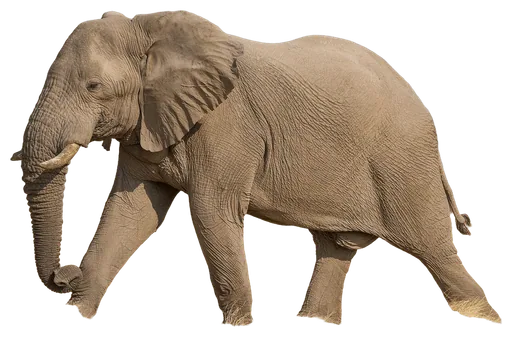
- Weight
- 5.5 t6.1 US tons
- Length
- 6.6 m21.7 ft
- Top speed
- 24 km/h15 mph
As heavy as 3.7 cars
Heavier than 98% of animals3.8× a person's height
Bigger than 97% of animalsAbout as fast as a person running
Faster than 23% of animalsThe African savanna elephant is the living terrestrial heavyweight: a multi-tonne bull armed with tusks, crushing mass and exceptional sensory intelligence. It is difficult to disable and devastating at close range, but its immense size limits fine agility and it lacks exotic mechanisms such as venom or armor.
Detailed ratings
Research-backed ratings on one 0–100 scale for all 344 animals (updated 2026-09-27). How ratings work


Card No. 4 of 344. Every animal on Animal Battle Stats has one: its power, tier and archetype on the front; its six battle stats, abilities and signature move on the back.
Special abilities
Long ivory incisors combine with multi-tonne forward force for stabbing, levering and displacement.
Exceptional low-frequency hearing, chemical sensing and trunk-based sampling improve detection and assessment over large distances.
Unique traits
The largest living terrestrial animal combines huge body depth with a weaponized head and feet.
The trunk provides unusually precise grasping, smelling and tactile manipulation without bones.
How it fights
Weapons
- Tusks provide penetrating reach, leverage, shoving and stabbing potential. The multi-tonne head, shoulders and body provide extraordinary absolute force, while the feet can inflict crushing trauma. The trunk is a dexterous manipulator and sensory organ that can push, pull and reposition at close range, but it should not be fictionalized as the main killing weapon. Bull contests demonstrate real same-size combat mechanics involving assessment, pushing, tusk contact and escalation.
- Weight
- 5.5 t6.1 US tons
- Height
- 3.6 m11.8 ft
- Length
- 6.6 m21.7 ft
- Top speed
- 24 km/h15 mph
- Bite force
- No reliable measurement
- Lifespan
- 65 years
- Home biome
- Savanna
- Lifestyle
- Social
Rated specimen: Canonical combat specimen is a healthy mature bull because males are materially larger and more heavily armed.
Fun facts
- It is the largest living land animal.
- A bull can exceed five tonnes without being a record specimen.
- Tusks are incisors, not canine teeth.
- The trunk combines the nose and upper lip into an extraordinarily dexterous muscular hydrostat.
- Poaching has measurably shifted tusk size in studied populations.
- Elephant communication includes very low-frequency calls that can travel long distances.
Closest rivals by power. Tap one for the full breakdown, or pick any opponent.
vs Asian ElephantWins · 55% · Toss-up 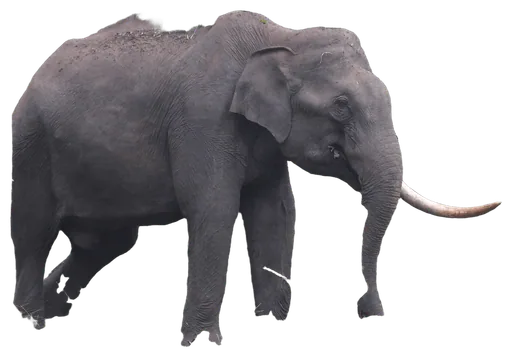 W vs Great White SharkWins · 62% · Slight edge
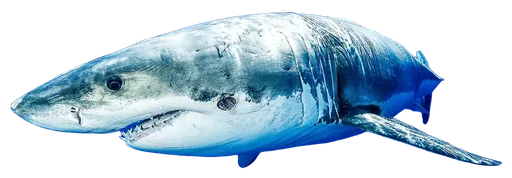 W vs Sperm WhaleLoses · 65% · Slight edge
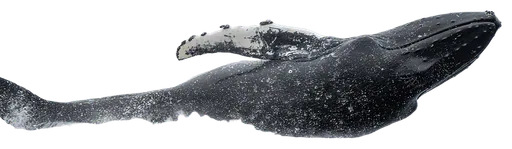
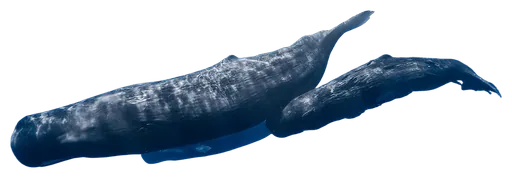 L vs Humpback WhaleLoses · 52% · Toss-up
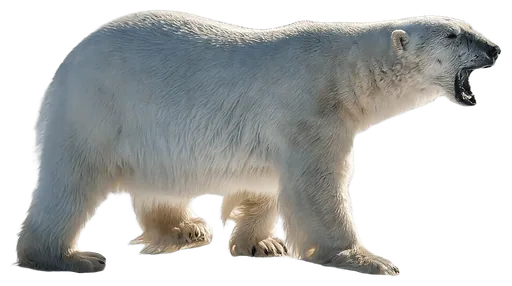
 L vs Polar BearWins · 72% · Clear edge
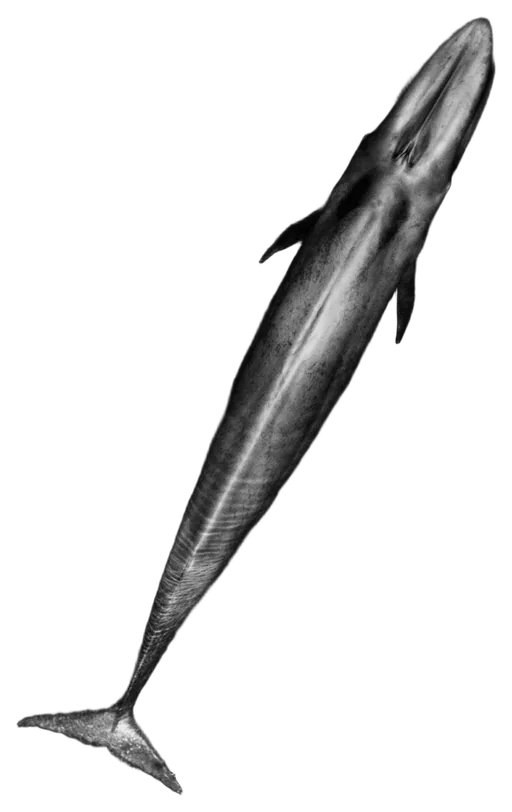
 W vs Blue WhaleLoses · 60% · Slight edge
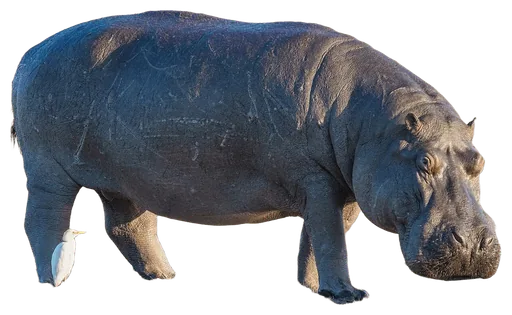
 L vs HippopotamusWins · 66% · Slight edge
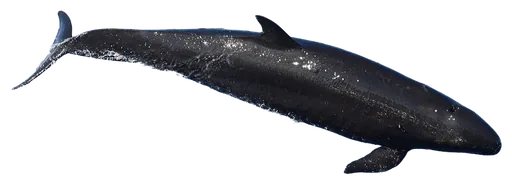
 W vs False Killer WhaleWins · 69% · Slight edge
 W
African Elephant battle analysis
A prime African savanna elephant bull wins terrestrial matchups primarily through scale that remains biologically usable. The animal is not merely heavy. Its tusks project a penetrating weapon system in front of a massive head and shoulder complex, its feet support and can weaponize several tonnes of body mass, and its trunk adds tactile and olfactory precision. The same body that makes the elephant difficult to injure also limits tight evasive movement, so the profile should not inflate Agility merely because elephants can move quickly. Cognitively, elephants bring memory, assessment and sophisticated communication that distinguish them from similarly massive herbivores. Their battle profile is therefore an unusual combination of extreme terrestrial force and defense, high intelligence and senses, moderate agility, and no unrealistic invulnerability.
Habitat & range
Savannas, grasslands, woodlands, scrub and semi-arid habitats across sub-Saharan Africa. The species remains broadly distributed but fragmented and pressured by habitat loss and poaching.
Diet & hunting
Herbivorous browser/grazer consuming grasses, leaves, bark, roots, fruits and woody vegetation. Elephants are major ecosystem engineers, opening vegetation, dispersing seeds, digging for water and physically restructuring habitat.
Social life
Females and young form matriarchal family societies with rich long-term relationships. Mature males increasingly live independently or in male associations and interact with female groups during reproductive periods.
Conservation
The African savanna elephant is listed Endangered by IUCN. Major threats include ivory poaching, habitat conversion and human-elephant conflict.
Quick answers
How strong is an African Elephant?
On the Animal Battle Stats scale, the African Elephant has an attack rating of 92 and a power index of 80.9 out of 100, which ranks it #4 of 344 animals and puts it in S tier (Apex). Its strongest stat is defense (94).
How much does an African Elephant weigh?
A typical adult African Elephant weighs about 5.5 t (6.1 US tons). Rated specimen: Canonical combat specimen is a healthy mature bull because males are materially larger and more heavily armed.
How fast is an African Elephant?
The African Elephant's top speed is about 24 km/h (15 mph). Its agility rating is 45 out of 100.
What does an African Elephant eat?
Herbivorous browser/grazer consuming grasses, leaves, bark, roots, fruits and woody vegetation. Elephants are major ecosystem engineers, opening vegetation, dispersing seeds, digging for water and physically restructuring habitat.
Is the African Elephant endangered?
The African Elephant's conservation status is Endangered. The African savanna elephant is listed Endangered by IUCN. Major threats include ivory poaching, habitat conversion and human-elephant conflict.
What animals can beat an African Elephant?
Among its closest rivals, the Sperm Whale (65%), the Humpback Whale (52%), the Blue Whale (60%) would be favored against the African Elephant. It would be favored against the Asian Elephant, the Great White Shark, the Polar Bear, the Hippopotamus, the False Killer Whale.
Researched 2026-09-27. Ratings are editorial judgments built from these sources; measurements describe a healthy adult male.
- Animal Diversity Web, Loxodonta africanaAdult male/female mass and height, skin thickness, tusks, morphology
- Laws 1966, African Journal of EcologyGrowth, male/female maximum mass, shoulder-height asymptotes, age/tusk growth
- Chiyo et al. 2015, Ecology and EvolutionTusk-size decline linked to selective ivory harvest
- African Wildlife FoundationBroad size, lifespan, habitat, diet, conservation context
- National Geographic, African savanna elephantSize/lifespan, musth and life-history overview
- Wikimedia Commons, Charles J. Sharp 2024 male KrugerExact-species male image, 6000×4000, CC BY-SA 4.0, Quality Image
Photo: “178 Male African bush elephant in Etosha National Park Photo by Giles Laurent.jpg” by Giles Laurent, CC BY-SA 4.0, background removed and cropped. Original
Suggest a correction